


Showing posts with label corporate accountability. Show all posts
Showing posts with label corporate accountability. Show all posts
Resource: Citizens for Legitimate Government
"A multi-partisan activist group established to expose and resist US imperialism, corpora-terrorism, and the New World Order:" http://www.legitgov.org/index.html

Economic Policy: Foreclosuregate in 30 seconds
At Mother Jones, Andy Kroll neatly summarizes the complex mess otherwise known as "Foreclosuregate:"
You've got "robo signers," the mortgage servicing employees who scrawled their signatures on hundreds of thousands of crucial legal filings without knowing what they said (violating federal rules), and "foreclosure mills," the full-steam-ahead law firms that cut corners and allegedly broke the law in foreclosing on homeowners quick and dirty (and are now facing multiple investigations). There's trusts and mortgage-backed securities and securitization itself. The list goes on and on.Or, he says, you can cut to the heart of the problem as Damon Silvers, policy director at the AFL-CIO and member of the bailout watchdog Congressional Oversight Panel, did in recent testimony:
The Financial Mess: Self-regulation is a joke
Damage from the bursting of the housing bubble was vastly compounded by an industry-wide conspiracy of Wall Street bankers to create a market for worthless financial products, in particular collections of mortgage bonds known as collateralized debt obligations, or CDOs.
According to the non-profit investigative news organization ProPublica, when faced with increasing difficulty in selling the mortgage-backed securities that had been among their most lucrative products, the banks -- primarily Merrill Lynch, but also Citigroup, UBS and others -- "hit on a solution that preserved their quarterly earnings and huge bonuses: They created fake demand," buying and trading their own products to crank up an assembly line that in a prudently regulated economy would have been flagged to a stop.
The rest of the story: Banks’ Self-Dealing Super-Charged Financial Crisis by Jake Bernstein and Jesse Eisinger (ProPublica 2010-08-27).
See, also: Wall Street's Big Win by Matt Taibbi (Rolling Stone 2010-08-04); Misnamed Financial Services “Reform” Bill Passes, Systemic Risk is Alive and Well by Yves Smith (Naked Capitalism 2010-07-26).
According to the non-profit investigative news organization ProPublica, when faced with increasing difficulty in selling the mortgage-backed securities that had been among their most lucrative products, the banks -- primarily Merrill Lynch, but also Citigroup, UBS and others -- "hit on a solution that preserved their quarterly earnings and huge bonuses: They created fake demand," buying and trading their own products to crank up an assembly line that in a prudently regulated economy would have been flagged to a stop.
As the housing boom began to slow in mid-2006, investors became skittish about the riskier parts of those investments. So the banks created -- and ultimately provided most of the money for -- new CDOs. Those new CDOs bought the hard-to-sell pieces of the original CDOs. The result was a daisy chain that solved one problem but created another: Each new CDO had its own risky pieces. Banks created yet other CDOs to buy those.In the last years of the boom, CDOs had become the dominant purchaser of CDOs and CDO slices, in deals organized by the banks themselves that largely replaced legitimate investors like pension funds. For example, "[i]n the last two years of the boom, nearly half of all CDOs sponsored by market leader Merrill Lynch bought significant portions of other Merrill CDOs."
Individual instances of these questionable trades have been reported before, but ProPublica's investigation, done in partnership with NPR's Planet Money, shows that by late 2006 they had become common industry practice.
ProPublica also found 85 instances during 2006 and 2007 in which two CDOs bought pieces of each other's unsold inventory. These trades, which involved $107 billion worth of CDOs, underscore the extent to which the market lacked real buyers. Often the CDOs that swapped purchases closed within days of each other, the analysis shows.There were supposed to be protections against this sort of double dealing, of course. The CDOs were overseen by managers who, though selected by the banks, were legally bound to protect the interests of the CDOs. Paid by the CDOs, not the banks, the "independent" managers were supposed to serve as a bulwark against self-dealing by the financial institutions, the only ones with even an inkling of how the complex and virtually unregulated mortgage bonds worked.
It rarely worked out that way. The managers were beholden to the banks that sent them the business. On a billion-dollar deal, managers could earn a million dollars in fees, with little risk. Some small firms did several billion dollars of CDOs in a matter of months.Unfortunately for us, nothing in the Wall Street-dominated federal financial reforms will prevent it from happening again. What a laugh.
The rest of the story: Banks’ Self-Dealing Super-Charged Financial Crisis by Jake Bernstein and Jesse Eisinger (ProPublica 2010-08-27).
See, also: Wall Street's Big Win by Matt Taibbi (Rolling Stone 2010-08-04); Misnamed Financial Services “Reform” Bill Passes, Systemic Risk is Alive and Well by Yves Smith (Naked Capitalism 2010-07-26).
Costco Adopts Sustainable Seafood Policy
50% of the seafood consumed by Americans comes from supermarkets and other vendors, accounting for 16 billion in annual sales of fish and other seafood products (shellfish, dried seaweed, fish sauces, etc.). Michael Ricciardi reports on Planetsave that, according to the August edition of the Good Funds Wealth Management newsletter, Costco will now cease the sale of seven species of fish currently at risk of collapsing from over-fishing: Atlantic cod, Atlantic halibut, Chilean sea bass, orange roughy, shark, swordfish, and bluefin tuna. Additionally, Costco has begun working with suppliers of farmed salmon to insure compliance with the Salmon Aquaculture Dialogue and will partner with the World Wildlife Fund to monitor Thailand’s compliance with the Shrimp Aquaculture Dialogue (for more info on these aquaculture dialogues, visit here).
The rest of the story.
The rest of the story.
Net Neutrality: There's Still Time to Stop the Corporate Takeover of the Media
It used to be that only the government could really threaten your first amendment rights. Now corporations, with the government's permission and assistance, pose the greatest threat to first amendment rights: that's why net neutrality is the first amendment issue of our time.
Also of interest: He’s no joke: Franken marks anniversary in Senate with confidence (Inforum 2010-07-07).
Also of interest: He’s no joke: Franken marks anniversary in Senate with confidence (Inforum 2010-07-07).
The mortgage crisis: Time to put the hurt on the big banks
“Our banking institutions are employing the same practices that led to the foreclosure crisis while ignoring borrowers stuck with troubled mortgages and the imminent threat of being thrown out of their homes. Banks continue to take advantage of our most vulnerable communities by refusing to modify mortgages or even respond to loan modification proposals. The action taken by New York City’s Comptroller and labor leaders signifies the need across the country for a dramatic shift in how the banks deal with borrowers. These institutions have the ability to use their offices and resources to finally force the banks to get right and we are encouraged to see this significant first-step.” -- Jon Kest, executive director of New York Communities for Change, a coalition of low- and moderate-income working families fighting for social and economic justice throughout New York State, quoted in Move Your BIG Money by Katrina vanden Heuvel (The Nation 2010-07-15).
Victories: How a Tiny California Town Sent an International Water Giant Packing
In the fight for water independence, little Felton has become a symbol of what can be achieved
In 2008, weeks after communities all over the United States celebrated the Fourth of July, the tiny town of Felton, Calif., marked its own holiday: Water Independence Day. With barbecue, music, and dancing, residents marked the end of Felton's six-year battle to gain control of its water system. The fight, like the festivities, was a grassroots effort. For when a large, private corporation bought Felton's water utility and immediately raised rates, residents organized, leading what was ultimately a successful campaign for public ownership and inspiring other communities nationwide. -- How Felton, Calif., Achieved Water Independence: Why controlling your water supply is so important by Tara Lohan (YES! Magazine 2010-06-27).
In 2008, weeks after communities all over the United States celebrated the Fourth of July, the tiny town of Felton, Calif., marked its own holiday: Water Independence Day. With barbecue, music, and dancing, residents marked the end of Felton's six-year battle to gain control of its water system. The fight, like the festivities, was a grassroots effort. For when a large, private corporation bought Felton's water utility and immediately raised rates, residents organized, leading what was ultimately a successful campaign for public ownership and inspiring other communities nationwide. -- How Felton, Calif., Achieved Water Independence: Why controlling your water supply is so important by Tara Lohan (YES! Magazine 2010-06-27).
Musical Interlude: Black Water on the Gulf
Musical satirist Steve Goodie does his own (oil) slick version of the Doobie Brothers's Black Water
as heard on an interview with Dr. Demento this ayem on NPR (Morning Edition 2010-06-22).
Bonus: You'll find one of Steve's greatest hits here: "(I'm thinkin' 'bout nailin') Sarah Palin" (Impractical Proposals 2008-09-07).
as heard on an interview with Dr. Demento this ayem on NPR (Morning Edition 2010-06-22).
Bonus: You'll find one of Steve's greatest hits here: "(I'm thinkin' 'bout nailin') Sarah Palin" (Impractical Proposals 2008-09-07).
Energy: This video begins to capture the full import of BP's calamitous spill
There has been plenty of coverage of the oil gusher in the Gulf of Mexico, but nothing more impactful than this amateur video shot from a small plane over the spill by Tuscaloosa environmentalist John Wathen. Also deserving your attention are the 40 photographs of the spill gathered on the Boston Globe's website: Disaster unfolds slowly in the Gulf of Mexico (Boston.com 2010-05-12). Meanwhile, the New York Times (2010-05-14) reports the oil spill “could easily be four or five times the government estimate.”
The Financial Meltdown: Crime on the Street
To Organize Against Wall Street, We Need a Narrative Focusing on Crime and Massive Fraud by Danny Schecter
In politics, it’s always all about the narrative, about how issues are framed.
As we ask ourselves, how we can be experiencing the largest economic meltdown in decades with millions out of work, and millions more losing their homes, and yet, with no real mass mobilization or ongoing response from the progressive world.
To understand this paradox, we need to reflect on how most of us we define the problem.
To this day, there has not been an aggressive investigation of who and what brought down the system ala the Pecora Commission appointed by FDR. Instead we have a wimpy ineffectual body that can’t get its act together. The New York Times, which hailed its appointment, now buries its defacto obit way back in the business section, noting it has “been hobbled by delays and internal disagreements and a lack of focus,”
At the same time, the bookshelves are filling up with volumes of complicated treatises on the complexities of derivatives, risky profit models and credit default swaps. The practitioners of the “dismal science” of economics are having a field day with longwinded dissertations that fail to engage the popular imagination.
We had a word for this when I worked in network television—MEGO, standing for “My Eyes Glaze Over!”
More popular writers are spinning catchy “yarns” like “The Big Short” which put it all down with psychologically-driven, character-based storytelling to how deluded everyone on Wall Street was. That leaves us feeling superior to the dunderheads who lost us trillions and, then, laughed all the way to their mansions in the Hamptons.
Hahaha.
Missing is a hardnosed look at the financial crisis as a crime story---an approach that allows for morality as well as indignation, and resonates with public anger. It touches the nerve that most people feel.
This is why former Bank Examiner William Black focuses on looting and CEO fraud. He helped send over a thousand bankers to prison during the S&L crisis in the l980’s.
And, this is also why Senator Ted Kaufman of Delaware, the state where most of our corporations are registered, says categorically the whole crisis rests on a foundation of crime.
The rest of the story: To Organize Against Wall Street, We Need a Narrative Focusing on Crime and Massive Fraud by Danny Schecter (Global Research 2010-04-14). More about Plunder.
Action: contribute to the production of Plunder at dissector@mediachannel.org.
Filmmaker and News Dissector Danny Schechter edits Mediachannel.org and is a frequent contributor to Global Research (Global Research articles by Danny Schechter).
Con Law: Free speech is a human right
There are many proposals to extend the reach of democracy by revising the Constitution, from excising the electoral college to remodeling the Senate, but no proposal to amend the document has gained more traction than the effort to add a clause declaring that corporations should not be considered "persons" and cannot claim the same rights under the law as human beings. Since the Supremes based their recent ruling that corporate spending to influence elections is a free speech right flowing from the legal fiction that corporations are persons, the proposed amendment would undermine the foundation of the court's decision. A coalition of public interest organizations has launched a campaign to overturn the ruling. The groups -- Voter Action, Public Citizen, Center for Corporate Policy, and the American Independent Business Alliance -- say the Court's ruling in Citizens United v. FEC poses a serious and direct threat to democracy. Their aim, through their constitutional amendment campaign, is to correct the judiciary's creation of corporate rights under the First Amendment over the past three decades.
For more information on the constitutional amendment campaign, visit Free Speech for People.
Listen to a press call on the Supreme Court decision.
View the Supreme Court ruling.
See, also: Politics: Representative Democracy and the Power of Corporations (Impractical Proposals 2010-01-24)
Actions:
Sign Campaign to Legalize Democracy's Move to Amend petition.
Spread the word by urging others to visit www.freespeechforpeople.org for information on the constitutional reform campaign.
quote unquote: Eisenhower on corporate power

"In the councils of government, we must guard against the acquisition of unwarranted influence, whether sought or unsought, by the military-industrial complex. The potential for the disastrous rise of misplaced power exists and will persist." -- Pres. Dwight David Eisenhower
Economic Justice: The Corporation
Corporations have no soul to be saved, no body to be incarcerated, thus they are difficult to motivate toward good. When they were delivered to life by the Supreme Court, they became "people," but what kind of people are they? If the financial meltdown -- or Michael Moore -- has piqued your interest in the workings of capitalism, this three-hour documentary will blow your stocks off.
"You'd think that things like disasters, or the purity of childhood, or even milk, let alone water or air, would be sacred. But no. Corporations have no built-in limits on what, who, or how much they can exploit for profit. In the fifteenth century, the enclosure movement began to put fences around public grazing lands so that they might be privately owned and exploited. Today, every molecule on the planet is up for grabs. In a bid to own it all, corporations are patenting animals, plants, even your DNA. Around things too precious, vulnerable, sacred or important to the public interest, governments have, in the past, drawn protective boundaries against corporate exploitation. Today, governments are inviting corporations into domains from which they were previously barred." -- from the website.
"You'd think that things like disasters, or the purity of childhood, or even milk, let alone water or air, would be sacred. But no. Corporations have no built-in limits on what, who, or how much they can exploit for profit. In the fifteenth century, the enclosure movement began to put fences around public grazing lands so that they might be privately owned and exploited. Today, every molecule on the planet is up for grabs. In a bid to own it all, corporations are patenting animals, plants, even your DNA. Around things too precious, vulnerable, sacred or important to the public interest, governments have, in the past, drawn protective boundaries against corporate exploitation. Today, governments are inviting corporations into domains from which they were previously barred." -- from the website.
Clip File: FDIC Offers Billions In Guarantees For Buyers Of Failed Banks
Here's a must-read from today's HuffPost:
As the Wall Street Journal reports this morning, in what are called a "loss-share" agreements, buyers of failed banks are getting billions of dollars in government guarantees to snatch up the bank's bad assets. To entice buyers, the Federal Deposit Insurance Corporation is offering to cover around 80 percent of the losses associated with buying a bank. The result, the WSJ points out, is a massive subsidy to the private equity industry, and a huge risk to the American taxpayer.The rest of the story: "Loss-Share": FDIC Offers Billions In Guarantees For Buyers Of Failed Banks (Huffington Post 2009-08-31)
Corporatism: We can't say Ike didn't warn us
Dwight D. Eisenhower's exit speech on Jan.17,1961 warning us of the military industrial complex.
quote unquote: Liberty and the Uses of Government
"For were the impulses of conscience clear, uniform and irresistibly obeyed, man would need no other lawgiver; 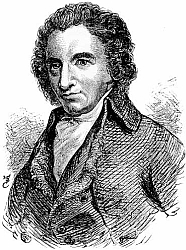 but that not being the case, he finds it necessary to surrender up a part of his property to furnish the means for the protection of the rest; and this he is induced to do by the same prudence which in every other case advises him out of two evils to choose the least. Wherefore, security being the true design and end of government, it unanswerably follows that whatever form thereof appears most likely to ensure it to us, with the least expense and greatest benefit, is preferable to all others." -- Thomas Paine
Health Care Reform: Bill Moyers interviews health insurance industry whistle blower Wendell Potter
As chief propagandist for Cigna, the nation's fourth-largest health insurer, Wendell Potter helped the for-profit insurance industry hijack our health care system and put profits before patients. Now -- the scales having fallen from his eyes -- he  reveals to Bill Moyers how the health care insurance companies are undermining health care reform. Here, for example, is what he has to say about the industry's campaign to discredit Michael Moore's Sicko.
Go. Watch the interview. Listen to the podcast. Read the transcript. Download the vodcast.
reveals to Bill Moyers how the health care insurance companies are undermining health care reform. Here, for example, is what he has to say about the industry's campaign to discredit Michael Moore's Sicko.Go. Watch the interview. Listen to the podcast. Read the transcript. Download the vodcast.
Jefferson and the rise of corporations
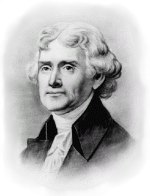
"I hope we shall...
crush in its birth
the aristocracy
of our moneyed corporations,
which dare already
to challenge our government
to a trial of strength and
to bid defiance
to the laws of their country."
-- Thomas Jefferson,
letter to George Logan. November 12, 1816.
crush in its birth
the aristocracy
of our moneyed corporations,
which dare already
to challenge our government
to a trial of strength and
to bid defiance
to the laws of their country."
-- Thomas Jefferson,
letter to George Logan. November 12, 1816.
Subscribe to:
Posts (Atom)


