If they want to get things done for their constituents, Progressives need to act more like the Freedom Caucus. In a closely divided House, their power resides in voting as a block.
Showing posts with label economic justice. Show all posts
Showing posts with label economic justice. Show all posts

From the "Suckers!" desk:
How the taxes on the wealthy have fallen over the past 70 years (USA)The rest of the story: "The Rich Really Do Pay Lower Taxes Than You" by David Leonhardt (New York Times)
That time Bloomberg said a $10 minimum wage proposal was creeping state communism.
This is from 2012:
"On Wednesday night, City Council speaker Christine Quinn announced that negotiations were finally complete on a living wage bill that would require some recipients of large economic development subsidies to pay their employees at least $10 an hour.
"Quinn calls it 'the most impactful living-wage law in the United States,' but experts say it will actually impact about 500 workers a year.
"Even so, today, Bloomberg compared the legislation to communism and said he would veto the bill and if the veto is overridden, his administration will file a lawsuit.
"'It's interesting if you think about it,' said the mayor. 'The last time we really had a big managed economy was the USSR and that didn't work out so well.'"
"'It would be great if all jobs in the city paid a lot of money and had great benefits for the workers. Not good for the employers. But if you force that you will just drive businesses out of the city.'"
The rest of the story: 'Living wage' reminds Bloomberg of Soviet communism; he says he'll stop it in court if he has to by Dana Rubinstein (Politico)
 |
| Mike Bloomberg in a hard hat. (photo: Dana Rubenstein) |
"Quinn calls it 'the most impactful living-wage law in the United States,' but experts say it will actually impact about 500 workers a year.
"Even so, today, Bloomberg compared the legislation to communism and said he would veto the bill and if the veto is overridden, his administration will file a lawsuit.
"'It's interesting if you think about it,' said the mayor. 'The last time we really had a big managed economy was the USSR and that didn't work out so well.'"
"'It would be great if all jobs in the city paid a lot of money and had great benefits for the workers. Not good for the employers. But if you force that you will just drive businesses out of the city.'"
The rest of the story: 'Living wage' reminds Bloomberg of Soviet communism; he says he'll stop it in court if he has to by Dana Rubinstein (Politico)
Bernie Sanders and Elizabeth Warren and the millions of voters that agree with them are freaking out the billionaires.

The illustration is by Victor Juhasz.
Basic Income: An idea whose time has come
"We live in a new world, remade by many forces: the disruptive technological revolution,
brought about by the computer and the internet; the globalisation of trade, migration and communication; a fast-growing worldwide demand running up against the limits imposed by a shrinking pool of natural resources and saturation of our atmosphere; the dislocation of traditional protective institutions, from the family to labour unions, state monopolies and welfare states; and the explosive interactions of these various trends." -- Philippe Van Parijs and Yannick Vanderborght in Basic Income: A Radical Proposal for a Free Society and a Sane Economy


It should go without saying
It is unfair and counter-productive of society to dump the job of providing services to the homeless community on businesses, like coffee shops and gas stations, and public organizations, like libraries, that are ill-equipped and unprepared to handle them.
Why the U.S. Should Provide Universal Basic Income
America is the richest civilization in history. Why, then, are our living standards so low compared to those of other wealthy democracies? A universal basic income would help close the income inequality gap, eliminating poverty and increasing opportunity for all Americans.
Ask not what your country can do for you?
The primary political questions are societal and aspirational; not how high are my taxes going to be or what benefits I can grab. Not, what's in it for me?
But:
What kind of country do I wish to live in?
Certainly not one where millions are imprisoned for petty crimes then denied reentry to society when their penalty has been paid; not one where people are put at a crippling disadvantage for the color of their skin, their beliefs, or the place they came from; not a country where the common wealth of the people is despoiled and pirated so that a fractional minority can prosper.
No, we want to live in a country where no one is forced to live in squalor; where if you work hard you can afford a decent life, where a worker receives a living wage; where no one suffers and dies because there is no affordable health care; where people have a reasonable prospect of advancing their own lives and where the lives of their children can be even better than their own.
The United States has been on the wrong road for forty years. Before our decline is irreversible, we must decide what kind of country we want to be. Freedom is meaningless without opportunity.
But:
What kind of country do I wish to live in?
Certainly not one where millions are imprisoned for petty crimes then denied reentry to society when their penalty has been paid; not one where people are put at a crippling disadvantage for the color of their skin, their beliefs, or the place they came from; not a country where the common wealth of the people is despoiled and pirated so that a fractional minority can prosper.
No, we want to live in a country where no one is forced to live in squalor; where if you work hard you can afford a decent life, where a worker receives a living wage; where no one suffers and dies because there is no affordable health care; where people have a reasonable prospect of advancing their own lives and where the lives of their children can be even better than their own.
The United States has been on the wrong road for forty years. Before our decline is irreversible, we must decide what kind of country we want to be. Freedom is meaningless without opportunity.
From the Windfall Profits Desk:
"The $65 billion gain is...real-rest assured of that. But only $36 billion came from [our] operations. The [other] $29 billion was delivered to us in Dec when Congress rewrote the U.S. Tax Code." -- Warren Buffett, Annual Letter, Berkshire Hathaway
With apologies to dictionary.com
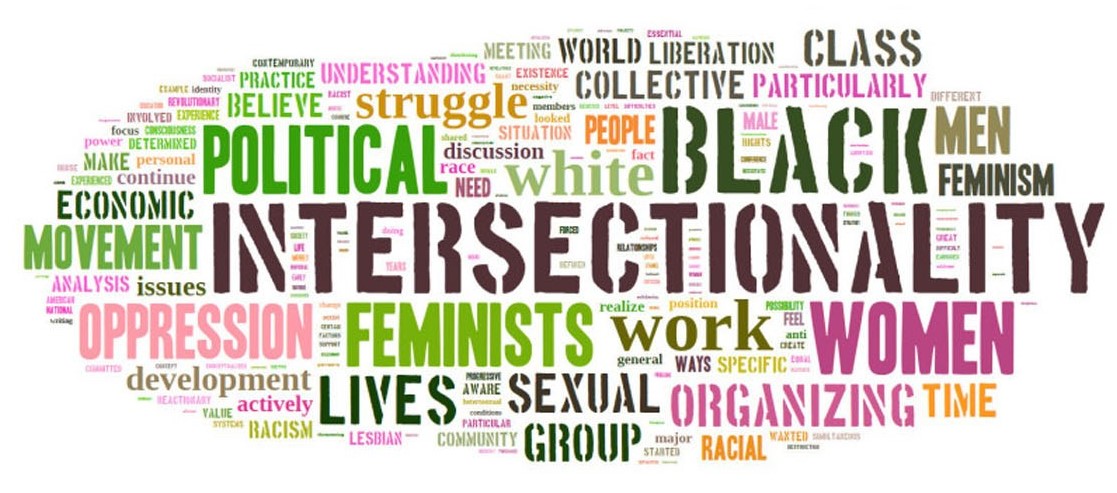
INTERSECTIONALITY
[in-ter-sek-shuh-nal-i-tee] noun
1.
the theory that the overlap of various social identities, as race, gender, sexuality, and class, contributes to the specific type of systemic oppression and discrimination experienced by an individual (often used attributively): Her paper uses a queer intersectionality approach.
2.
the oppression and discrimination resulting from the overlap of an individual’s various social identities: The intersectionality of oppression experienced by black women.
3.
the antidote to identity politics: The intersectionality or “parallel problems” of economic disparity, gender inequality and institutional racism was the idea underpinning the presidential candidacy of Sen. Bernie Sanders.
Antonyms: capitalism, patriarchy, white supremacy, empire.
See, also: class consciousness, class struggle.
Extra credit:
"There will be no economic or political justice for the poor, people of color, women or workers within the framework of global, corporate capitalism. Corporate capitalism, which uses identity politics, multiculturalism and racial justice to masquerade as politics, will never halt the rising social inequality, unchecked militarism, evisceration of civil liberties and omnipotence of the organs of security and surveillance. Corporate capitalism cannot be reformed, despite its continually rebranding itself. The longer the self-identified left and liberal class seek to work within a system that the political philosopher Sheldon Wolin calls 'inverted totalitarianism,' the more the noose will be tightened around our necks. If we do not rise up to bring government and financial systems under public control—which includes nationalizing banks, the fossil fuel industry and the arms industry—we will continue to be victims." The Bankruptcy of the American Left by Chris Hedges (Truthdig)
A cross-racial and class conscious movement is the only foundation for effective freedom: Against National Security Citizenship by Aziz Rana (Boston Review)
"In the worlds of politics and nonprofits intersectionality has become a sneaky substitute for the traditional left notion of solidarity developed in the process of ongoing collective struggle against the class enemy. Intersectionality doesn't deny the existence of class struggle, it just rhetorically demotes it to something co-equal with the fights against ableism and ageism and speciesism, against white supremacy, against gender oppression, and a long elastic list of others. What’s sneaky about the substitution of intersectionality for solidarity is that intersectionality allows the unexamined smuggling in of multiple notions which directly undermine the development and the operation of solidarity. Intersectionality means everybody is obligated to put their own special interest, their own oppression first – although they don’t always say that because the contradiction would be too obvious." Intersectionality is a Hole. Afro-Pessimism is a Shovel. We Need to Stop Digging (part 1) by Bruce A. Dixon (Black Agenda Report)
"In the context of the real left, the community of those aiming to overthrow capital, patriarchy, white supremacy and empire—not two or three out of four but all four, the term intersectionality has become a kind of brood parasite. It mimics just enough of left feminist rhetoric and branding to deceive the unwary and ensnare many bright, serious and sincere leftists into defending and promoting its fundamentally hostile project." Looking Down That Deep Hole: Parasitic Intersectionality and Toxic Afro-Pessimism (part 2) by Bruce A. Dixon (Black Agenda Report)
A new New Deal
In another ridiculous discussion of Bernie Sanders' undermining of the grand old Democratic Party, this: "We are the only party in the last 100 years to successfully push this country toward real progress."
This is absolutely true. It also ended about 45 years ago. The history of the country since the early 1970s is a record of decline. And since the 70s, the Democrats have held the reins of power more often than the Republicans. In that time, we have suffered militarization of foreign policy and, domestically, of the police; incarceration of vast numbers of citizens; severe decline of infrastructure; neglect of public services; huge transfers of public wealth into private hands; decimation of the middle class; a housing crisis; increased poverty...
It is true that more Democrats than Republicans resisted these developments, but not a majority and not the leadership; that is an argument for electing Democrats with those principles and policy goals; it is not an argument favoring continuing control of the party by neoliberals. Most Democrats agree on social issues (abortion excepted), but that's not why we're Democrats; you can be a liberal on social issues and still favor right-wing and libertarian economic policies. The reason to make progressive economic policies primary is that they are the area of broadest agreement among Democrats (neo-liberals excepted), and the guarantee of a decent life -- basic income, a roof over one's head, the ability to be properly educated and trained, protection from impoverishment by medical catastrophe, job loss or old age -- has the broadest appeal to the electorate.
History will look back at the last 40 years as the Reagan-Clinton era. It is time to turn in a different direction, back toward the road to economic and social justice that was the promise of Democrats like Franklin Roosevelt, Harry Truman and Lyndon Johnson. We need a new New Deal. The goal should be a great society, not an okay one.
This is absolutely true. It also ended about 45 years ago. The history of the country since the early 1970s is a record of decline. And since the 70s, the Democrats have held the reins of power more often than the Republicans. In that time, we have suffered militarization of foreign policy and, domestically, of the police; incarceration of vast numbers of citizens; severe decline of infrastructure; neglect of public services; huge transfers of public wealth into private hands; decimation of the middle class; a housing crisis; increased poverty...
It is true that more Democrats than Republicans resisted these developments, but not a majority and not the leadership; that is an argument for electing Democrats with those principles and policy goals; it is not an argument favoring continuing control of the party by neoliberals. Most Democrats agree on social issues (abortion excepted), but that's not why we're Democrats; you can be a liberal on social issues and still favor right-wing and libertarian economic policies. The reason to make progressive economic policies primary is that they are the area of broadest agreement among Democrats (neo-liberals excepted), and the guarantee of a decent life -- basic income, a roof over one's head, the ability to be properly educated and trained, protection from impoverishment by medical catastrophe, job loss or old age -- has the broadest appeal to the electorate.
History will look back at the last 40 years as the Reagan-Clinton era. It is time to turn in a different direction, back toward the road to economic and social justice that was the promise of Democrats like Franklin Roosevelt, Harry Truman and Lyndon Johnson. We need a new New Deal. The goal should be a great society, not an okay one.
It's class, stupid
To understand economic justice, we need to think beyond touching anecdotes about lost jobs, untreated illnesses and hungry kids.
"Classes are large groups of people differing from each other by the place they occupy in a historically determined system of social production, by their relation (in most cases fixed and formulated by law) to the means of production, by their role in the social organization of labor, and, consequently, by the dimensions of the share of social wealth of which they dispose and the mode of acquiring it. Classes are groups of people one of which can appropriate the labor of another owing to the different places they occupy in a definite system of social economy." -- V.I. Lenin, A Great Beginning, in Collected Works, Vol. 29, p. 421.
Money for Nothing
One bulwark against the rise of oligarchy is the estate tax, a progressive tax on property (cash, real estate, stocks and bonds and other assets) left by dead people to their heirs. Only the wealthiest estates are affected because it’s levied only on the property in an estate that exceeds a specified exemption -- right now, $5.43 million per person (effectively $10.86 million per married couple). The estate tax helps to limit, a little, the large tax breaks that the extremely rich get on their wealth as it grows, income which otherwise can go untaxed.
Besides being an important source of revenue, estate taxes are intended to prevent gross economic inequality which, if left unchecked, can
 poison a society. (Conservatives make a big deal about the “death tax,” but it affects very few people -- last year, because of the current high exemption, 99.8% of estates owe no estate tax -- by way of context, the exemption jumped from $650,000 per person in 2001 to $5.43 million per person now; even so, conservatives repeatedly try to get rid of it entirely).
The current exemption is too high, reflecting the influence of money on Congress, but, that aside, estate taxes are also too narrowly defined. If inequality is to be reduced, the tax on the transfer of wealth should be broadened to cover all wealth received in one’s lifetime, and taxed as income. This would reward people who give away their wealth broadly -- a social good -- and act as a brake on it piling up in the hands of the few.
If we as a nation want to counter inequality even more aggressively, we could use wealth transfer revenues to fund a minimal inheritance for every citizen to be paid when they come of age. Providing a more level starting point would result in a society with much greater opportunity.
Reading List:
-> "Let's be clear on this point. The tax burdens those who inherit the wealth, not those who produced it; it is a tax on Paris Hilton, not Conrad Hilton. And it does not conflict with the values of hard work, entrepreneurship and thrift.": It's Fair, and We Need the Revenue by Michael J. Graetz (Wall Street Journal).
-> The Three Fundamental Reasons Why We Need a Robust Estate Tax by Richard Phillips (Citizens for Tax Justice).
-> To Whom Much Is Given: Why We Need to Tax Inheritance by Jeffrey Mikkelson (Truthout).
-> Taxing Privilege More Effectively: Replacing the Estate Tax with an Inheritance Tax by Lily L. Batchelder (Brookings).
-> "Inheritance not only hands people valuable income in return for something we don't really want to further reward -- being born lucky -- but also, in doing so, it entrenches the least attractive feature of our economy: the fact that people who are born to affluent parents are much more likely to themselves be affluent than children born to the less well-heeled. Lack of economic mobility is generally regarded as a bad thing that we should combat.": Why Do We Allow Inheritance at All? by Megan McCardle (The Atlantic).
Extra Credit:
By not dealing promptly with his Cliven Bundys, Founding Father #1 wound up with the Whiskey Rebellion: How Former President Washington Dealt With The First Real Tax Crisis In America by Kelly Phillips Erb (Forbes).
The Whiskey Rebellion: Frontier Epilogue to the American Revolution by Thomas P. Slaughter (Amazon).
Besides being an important source of revenue, estate taxes are intended to prevent gross economic inequality which, if left unchecked, can

The current exemption is too high, reflecting the influence of money on Congress, but, that aside, estate taxes are also too narrowly defined. If inequality is to be reduced, the tax on the transfer of wealth should be broadened to cover all wealth received in one’s lifetime, and taxed as income. This would reward people who give away their wealth broadly -- a social good -- and act as a brake on it piling up in the hands of the few.
If we as a nation want to counter inequality even more aggressively, we could use wealth transfer revenues to fund a minimal inheritance for every citizen to be paid when they come of age. Providing a more level starting point would result in a society with much greater opportunity.
Reading List:
-> "Let's be clear on this point. The tax burdens those who inherit the wealth, not those who produced it; it is a tax on Paris Hilton, not Conrad Hilton. And it does not conflict with the values of hard work, entrepreneurship and thrift.": It's Fair, and We Need the Revenue by Michael J. Graetz (Wall Street Journal).
-> The Three Fundamental Reasons Why We Need a Robust Estate Tax by Richard Phillips (Citizens for Tax Justice).
-> To Whom Much Is Given: Why We Need to Tax Inheritance by Jeffrey Mikkelson (Truthout).
-> Taxing Privilege More Effectively: Replacing the Estate Tax with an Inheritance Tax by Lily L. Batchelder (Brookings).
-> "Inheritance not only hands people valuable income in return for something we don't really want to further reward -- being born lucky -- but also, in doing so, it entrenches the least attractive feature of our economy: the fact that people who are born to affluent parents are much more likely to themselves be affluent than children born to the less well-heeled. Lack of economic mobility is generally regarded as a bad thing that we should combat.": Why Do We Allow Inheritance at All? by Megan McCardle (The Atlantic).
Extra Credit:
By not dealing promptly with his Cliven Bundys, Founding Father #1 wound up with the Whiskey Rebellion: How Former President Washington Dealt With The First Real Tax Crisis In America by Kelly Phillips Erb (Forbes).
The Whiskey Rebellion: Frontier Epilogue to the American Revolution by Thomas P. Slaughter (Amazon).
A Picture Is Worth A Thousand Words Dept.:

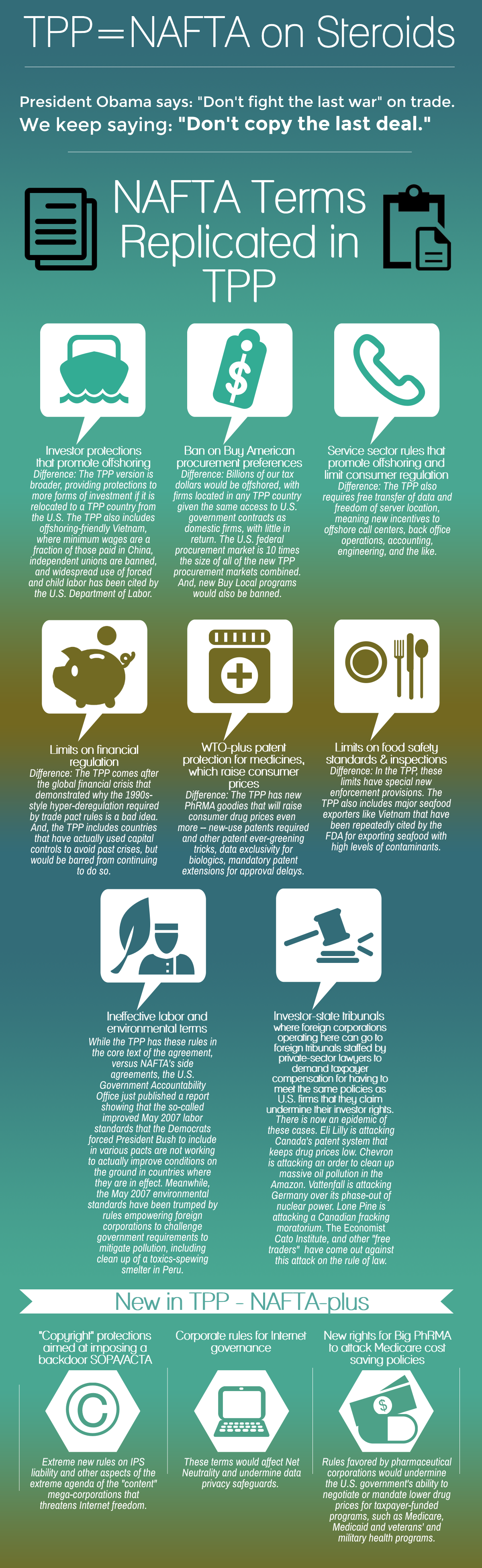
-> make it easier for big corporations to ship our jobs overseas, pushing down our wages and increasing income inequalityReading List:
-> flood our country with unsafe imported food
-> jack up the cost of medicines by giving big pharmaceutical corporations new monopoly rights to keep lower cost generic drugs off the market
-> empower corporations to attack our environmental and health safeguards
-> ban Buy American policies needed to create green jobs
-> roll back Wall Street reforms
-> sneak in SOPA-like threats to Internet freedom and
-> undermine human rights.
The Government of Canada is committed to being transparent, open and consultative with Canadians on the Trans-Pacific Partnership (TPP).
"TPP raises significant concerns about citizens’ freedom of expression, due process, innovation, the future of the Internet’s global infrastructure, and the right of sovereign nations to develop policies and laws that best meet their domestic priorities. In sum, the TPP puts at risk some of the most fundamental rights that enable access to knowledge for the world’s citizens:" What is TPP? (Electronic Frontier Foundation).
Provisions that allow foreign investors to bypass the federal courts could undermine U.S. legal protections: Is the Trans-Pacific Partnership Unconstitutional? by Alan Morrison (The Atlantic).
The “Investor-State Dispute Settlement,” or ISDS, may sound mild, but don’t be fooled. Agreeing to ISDS in this enormous new treaty would tilt the playing field in the United States further in favor of big multinational corporations. Worse, it would undermine U.S. sovereignty: The Trans-Pacific Partnership clause everyone should oppose by Sen. Elizabeth Warren (Washington Post).
Just curious #67,233
If Bernie Sanders' understanding of economics is so inconsiderable, why have the Democrats made him the ranking minority member on the Senate Budget Committee? Just curious.
The nation’s largest private-sector employer is told to obey the law
A federal administrative law judge has ordered
 Wal-Mart to offer 16 former workers their previous jobs and to make them "whole for any loss of earnings and other benefits suffered as a result of the discrimination against them." The company must also hold meetings in more than two dozen stores to inform workers of their rights to organize under U.S. labor law.
The rest of the story:
Wal-Mart strikes lawful, must reinstate workers: NLRB judge by Nathan Layne (Reuters).
Further reading:
How Walmart Keeps an Eye on Its Massive Workforce: The retail giant is always watching by Susan Berfield (Bloomberg Businessweek).
Life as a Wal-Mart worker -- and how its employees are monitored at all times: America’s real-life dystopia: Wal-Mart is straight out of George Orwell and Aldous Huxley by Aaron R. Hanlon (Salon).
“We are not anti-union; we are pro-associate”: A Manager's Toolbox To Remaining Union Free ("CONFIDENTIAL" Wal-Mart document) (source: ReclaimDemocracy.org).
The Wal-Mart Effect: How the World's Most Powerful Company Really Works--and How It's Transforming the American Economy by Charles Fishman (Amazon). "[T]he story of Wal-Mart is really the story of the transformation of the American economy over the past 20 years." Fishman is "careful to present the consumer benefits of Wal-Mart's staggering growth and to place Wal-Mart in the larger context of globalization and the rise of mega-corporations. But he also presents the case against Wal-Mart in arresting detail, and his carefully balanced approach only makes the downside of Wal-Mart's market dominance more vivid." -- Publisher's Weekly
The discount giant is closing 269 stores worldwide—and not even bothering to build stores it promised in poor neighborhoods: Can Cities Afford to Trust Walmart? by Kriston Capps (CityLab)
Extra credit:
This video is shown to all "associates" at on-boarding: it's imperative that everyone working for Wal-Mart understands that s/he is "better off" without a union.
The parody t-shirt at the top of this post and other merchandise is available from Reclaim Democracy!: "Reclaim Democracy! is dedicated to restoring democratic authority over corporations, reviving grassroots democracy, and establishing appropriate limits on corporate influence. We work for systemic change, instead of reacting to corporate agendas."

The rest of the story:
Wal-Mart strikes lawful, must reinstate workers: NLRB judge by Nathan Layne (Reuters).
Further reading:
How Walmart Keeps an Eye on Its Massive Workforce: The retail giant is always watching by Susan Berfield (Bloomberg Businessweek).
Life as a Wal-Mart worker -- and how its employees are monitored at all times: America’s real-life dystopia: Wal-Mart is straight out of George Orwell and Aldous Huxley by Aaron R. Hanlon (Salon).
“We are not anti-union; we are pro-associate”: A Manager's Toolbox To Remaining Union Free ("CONFIDENTIAL" Wal-Mart document) (source: ReclaimDemocracy.org).
The Wal-Mart Effect: How the World's Most Powerful Company Really Works--and How It's Transforming the American Economy by Charles Fishman (Amazon). "[T]he story of Wal-Mart is really the story of the transformation of the American economy over the past 20 years." Fishman is "careful to present the consumer benefits of Wal-Mart's staggering growth and to place Wal-Mart in the larger context of globalization and the rise of mega-corporations. But he also presents the case against Wal-Mart in arresting detail, and his carefully balanced approach only makes the downside of Wal-Mart's market dominance more vivid." -- Publisher's Weekly
The discount giant is closing 269 stores worldwide—and not even bothering to build stores it promised in poor neighborhoods: Can Cities Afford to Trust Walmart? by Kriston Capps (CityLab)
Extra credit:
This video is shown to all "associates" at on-boarding: it's imperative that everyone working for Wal-Mart understands that s/he is "better off" without a union.
The parody t-shirt at the top of this post and other merchandise is available from Reclaim Democracy!: "Reclaim Democracy! is dedicated to restoring democratic authority over corporations, reviving grassroots democracy, and establishing appropriate limits on corporate influence. We work for systemic change, instead of reacting to corporate agendas."
From the Won't-Be-Fooled-Again Desk:
It's outrageous that America is the only developed country that doesn't provide paid family leave. If you agree join Hillary's campaign today! -- Daily KosReally? That's the criterion we're supposed to use to choose the next president?
 How about out-of-control military spending? Is that outrageous? What's she going to do about that?
Banks too big to fail? Pretty outrageous, you'd think. Will Goldman Sachs let her do anything about them?
Economic injustice? Outrageous. She's a big populist now; what's her plan?
Surveillance State abuses: Outrageous. If she has a solution, it's a secret.
Her actions at State that helped to create outrageous messes in Afghanistan, Honduras and Libya. What will she do about them?
The chaos in Syria and Iraq: Outrageous. Does she have a fix?

More outrageous, even, than that America is the only developed country that doesn't provide paid family leave, outrageous as that is.
How does our economic system work?
George Carlin is always worth watching:
"... From the moment when the machine first made its appearance it was clear to all thinking people that the need for human drudgery, and therefore to a great extent for human inequality, had disappeared. If the machine were used deliberately for that end, hunger, overwork, dirt, illiteracy and disease could be eliminated within a few generations. ... But it was also clear that an all-round increase in wealth threatened the destruction - indeed, in some sense was the destruction - of a hierarchical society. ... the most obvious and perhaps the most important form of inequality would... already have disappeared. If it once became general, wealth would confer no distinction. ... But in practice such a society could not long remain stable. For if leisure and security were enjoyed by all alike, the great mass of human beings who are normally stupefied by poverty would become literate and would learn to think for themselves; and when once they had done this, they would sooner or later realise that the privileged minority had no function, and they would sweep it away. In the long run, a hierarchical society was only possible on a basis of poverty and ignorance. ... Ignorance is Strength ..." -- George Orwell, ("1984")
“No longer enslaved or made dependent by force of law, the great majority are so by force of poverty; they are still chained to a place, to an occupation, and to conformity with the will of an employer, and debarred, by the accident of birth both from the enjoyments, and from the mental and moral advantages, which others inherit without exertion and independently of desert. That this is an evil equal to almost any of those against which mankind have hitherto struggled, the poor are not wrong in believing. Is it a necessary evil? They are told so by, those who do not feel it---by those who have gained the prizes in the lottery of life. But it was also said that slavery, that despotism, that all the privileges of oligarchy, were necessary.” ― John Stuart Mill, On Socialism
"... From the moment when the machine first made its appearance it was clear to all thinking people that the need for human drudgery, and therefore to a great extent for human inequality, had disappeared. If the machine were used deliberately for that end, hunger, overwork, dirt, illiteracy and disease could be eliminated within a few generations. ... But it was also clear that an all-round increase in wealth threatened the destruction - indeed, in some sense was the destruction - of a hierarchical society. ... the most obvious and perhaps the most important form of inequality would... already have disappeared. If it once became general, wealth would confer no distinction. ... But in practice such a society could not long remain stable. For if leisure and security were enjoyed by all alike, the great mass of human beings who are normally stupefied by poverty would become literate and would learn to think for themselves; and when once they had done this, they would sooner or later realise that the privileged minority had no function, and they would sweep it away. In the long run, a hierarchical society was only possible on a basis of poverty and ignorance. ... Ignorance is Strength ..." -- George Orwell, ("1984")
“No longer enslaved or made dependent by force of law, the great majority are so by force of poverty; they are still chained to a place, to an occupation, and to conformity with the will of an employer, and debarred, by the accident of birth both from the enjoyments, and from the mental and moral advantages, which others inherit without exertion and independently of desert. That this is an evil equal to almost any of those against which mankind have hitherto struggled, the poor are not wrong in believing. Is it a necessary evil? They are told so by, those who do not feel it---by those who have gained the prizes in the lottery of life. But it was also said that slavery, that despotism, that all the privileges of oligarchy, were necessary.” ― John Stuart Mill, On Socialism
Subscribe to:
Posts (Atom)