


Showing posts with label policy. Show all posts
Showing posts with label policy. Show all posts
"Is Bernie Sanders an effective political leader?"
Sen. Bernie Sanders' supporters are accused of idealizing their candidate and ignoring his flaws and mistakes. But part of Sanders appeal lies in the fact that his campaign is focused on process and on building a movement that will help to turn the nation in a more positive direction than it has been in since the rise of Reaganism and Clintonism. Such a movement will be able to influence the behavior of those in power, including Bernie Sanders, just as the peace, civil rights and labor movements once did. In this context, his flaws and mistakes are less important than they might otherwise be.
As for his record of leadership, Sen. Sanders was largely responsible for the Veterans' Compensation Cost-of-Living Adjustment Act of 2013 that provided "for an increase in the rates of compensation for veterans with service-connected disabilities and the rates of dependency and indemnity compensation for the survivors of certain disabled veterans," not an insignificant piece of legislation.
It's worth noting in this context that, even given the cooperative nature of legislating, just a handful of bills, between four and six percent, submitted by members of Congress come to a vote and even fewer, somewhere between two and four percent, are enacted. It is striking that during his years in the House the Independent Socialist from Vermont had the highest rate of successfully passing amendments, bettering the record of any member from either major party.
Developing and introducing original legislation is a small part of what members of Congress are sent to Washington to do: co-sponsoring legislation (which Sanders has done for more than 200 successful bills) is another; also vitally important is organizing support for or opposition to proposed legislation among both legislative colleagues and the public; that he is good at this is presumably why the Democratic Senate leadership appointed Sen. Sanders to at least seven committees and named him chair of the important committee on the budget; actively participating in hearings, which Sen. Sanders also has been very active at; reviewing and voting on proposed bills; participating in oversight and investigation of the conduct of the legislative branch; and meeting and assisting constituents, which Sen. Sanders also must have a handle on, since he has held elective office for more that three decades and is viewed favorably by about 80% of his constituents in his home state.
One other thing: Sanders is frequently accused of introducing bills that have "no chance of passing." This misses an important part of the legislative process: preparing the ground for the future. In the Thirties and in the Sixties, opportunities opened up to make historic advances in social and economic progress. One important reason for the legislative achievements of the New Deal and the Great Society is that the groundwork had been laid by decades of debate over proposals that, when they were introduced, had "no chance of passing" (in fact, most of them had "no chance of passing" even in the legislative session in which they passed). The reason that the Sanders candidacy is so important is that it lays the groundwork for future advances in social and economic policy. It's not that a new New Deal will result immediately from Sanders' election, but that, for the first time since the early 1970s, we will be arguing over the right things.
About the frequently heard charge that he couldn't pass his "Socialist" (really, New Deal and Great Society) program even when "a totally Democratic Congress and Speaker" held sway: At no time since the Sixties, has the Congress not had a conservative majority. The big corner offices may have changed hands a few times, but the kleptocracy and the corporate agenda have never been seriously challenged. In so far as there has been resistance to business as usual, though, it has come from the Progressive Caucus in the House, made up of Liberal Democrats and founded by -- wait for it -- Bernie Sanders.
Despite the fact that Congress at certain points since the early 1970s has been nominally in the hands of Democrats is irrelevant, because the conservative majority -- made up of both Democrats and Republicans -- controlled both houses during the entire period. That nothing was done during the 25 working days with a Democratic supermajority underscores the the need to change business as usual in Washington by changing the makeup of the legislature. But you use what you have. Advancing the candidacy of Sen. Sanders is a step in the right direction.
Finally, it has to be kept in mind that one of Sanders' great blind spots is militarism. Although not nearly the hawk that Hillary Clinton is, Sanders supported brutal economic sanctions, drone assassinations and the legislation that paved the way for the Iraq War. One of the first jobs of his supporters if he is elected will be to oppose his endorsement of a militarized foreign policy, the same as it will be should Donald Trump or Clinton be commander in chief (the difference being that progressives will have considerably more influence in a Sanders administration).
It won't matter who is elected in 2016 if 2017 doesn't mark the rebirth of an independent, people's movement, accountable to its members, strong and disciplined enough to change the outcome of federal and local elections, and effective enough eventually either to wrest control of the Democratic Party from Wall Street and the corporations or to evolve into a viable progressive party. Sanders supporters are united in their persistent belief that change is possible, that the nation's present level of decline and dysfunction is not the way things need to be.
Follow-up: Has Bernie Sanders been given a pass on his own record on regime change? The Intercept's Jeremy Scahill tells Democracy Now! it can't be ignored that Sanders supported brutal economic sanctions, drone assassinations and the neocon legislation that paved the way for the Iraq. War:

Agenda items
Now that consumer confidence, Hurricane Sandy and Mayor Bloomberg have settled the election, can we have a discussion about what to do about military spending;
 drones; the assassination of American citizens; illegal military incursions into Pakistan; military adventures in Yemen, Bahrain, Somalia and now, it appears, Mali; Africom; the pumped up Drug War; militarization of US drug war interventions in Honduras, Guatemala, Columbia, et al; the brutal program of sanctions against Iran; the military "pivot" toward China; habeas corpus; Bradley Manning; expanded government secrecy and unprecedented actions against whistle-blowers; domestic government spying; continued the transfer of vast amounts of wealth into the hands of the financial giants without significant oversight or accountability; truly universal, truly affordable health care (Medicare for All); neoliberal judicial appointments and the general failure to make appointments at all; austerity as a budgetary priority; the need for a massive New Deal-style jobs program; the ambition to strike a "grand bargain" with McConnell, Cantor and Boehner that will put Social Security and Medicare "on the table;" and the ongoing control of the country by the corporations, the militarists and the industrial-security state?

The White House: Politics vs Policy
When the inevitable moment comes and White House chief of staff Rahm Emanuel is booted up to senior adviser status, Obama should bring on Howard Dean. Dean has  extensive administrative experience, having been both a six-term state governor and the successful manager of a national party. Plus, he's been right about everything and Emanuel's been wrong. Emanuel has reinforced the president's innate conservatism so forcefully that the incumbent Democratic administration is barely distinguishable from its Republican predecessor. Dean pushed for the 50 state strategy at the time Emanuel was touting the "realism" of concentrating on swing districts, in the process knocking progressives out of primaries to make room for Blue Dogs who "could win" (how's that working out, Rahm?).
 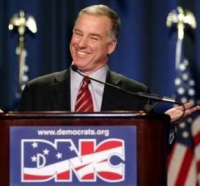 More recently, Emanuel's "realism" has led him to counsel limiting health care insurance reform while Dean has been the primary champion of the public option. Barack Obama needs to shed Rahm Emanuel, whose habit of putting politics over policy is undermining his presidency. And he should recruit someone like Howard Dean to reignite the passion and idealism that got him elected.
extensive administrative experience, having been both a six-term state governor and the successful manager of a national party. Plus, he's been right about everything and Emanuel's been wrong. Emanuel has reinforced the president's innate conservatism so forcefully that the incumbent Democratic administration is barely distinguishable from its Republican predecessor. Dean pushed for the 50 state strategy at the time Emanuel was touting the "realism" of concentrating on swing districts, in the process knocking progressives out of primaries to make room for Blue Dogs who "could win" (how's that working out, Rahm?). More recently, Emanuel's "realism" has led him to counsel limiting health care insurance reform while Dean has been the primary champion of the public option. Barack Obama needs to shed Rahm Emanuel, whose habit of putting politics over policy is undermining his presidency. And he should recruit someone like Howard Dean to reignite the passion and idealism that got him elected.
Information Is Power: RAND congressional reports
As a quasi-public institution, the Rand Corporation makes much of its research public, especially that produced on behalf of the government. Some of this data, packaged as periodic reports to Congress, is available to you via email (see below*). You can subscribe at http://www.rand.org/congress/subscribe.html.
* Monthly Review – monthly on the 18th; Banking & Financial Services – periodically; International Affairs – quarterly; Child Policy – quarterly; National Security – monthly on the 1st; Education – tri-yearly; Safety & Justice – tri-yearly; Energy & Environment – tri-yearly; Small Business – periodically; Gulf States Policy Institute – periodically; Terrorism & Homeland Security – quarterly; Health – monthly on the 15th.
* Monthly Review – monthly on the 18th; Banking & Financial Services – periodically; International Affairs – quarterly; Child Policy – quarterly; National Security – monthly on the 1st; Education – tri-yearly; Safety & Justice – tri-yearly; Energy & Environment – tri-yearly; Small Business – periodically; Gulf States Policy Institute – periodically; Terrorism & Homeland Security – quarterly; Health – monthly on the 15th.
Action: The Earth Charter Initiative
"The Earth Charter is an authoritative synthesis of values, principles, and aspirations that are widely shared by growing numbers of men and women in all regions of the world.
"The principles of the Earth Charter reflect extensive international consultations conducted over a period of many years. These principles are also based upon contemporary science, international law, and the insights of philosophy and religion. Successive drafts of the Earth Charter were circulated around the world for comments and debate by nongovernmental organizations, community groups, professional societies, and international experts in many fields." -- from the website. <http://www.earthcharter.org/>
"The principles of the Earth Charter reflect extensive international consultations conducted over a period of many years. These principles are also based upon contemporary science, international law, and the insights of philosophy and religion. Successive drafts of the Earth Charter were circulated around the world for comments and debate by nongovernmental organizations, community groups, professional societies, and international experts in many fields." -- from the website. <http://www.earthcharter.org/>
Subscribe to:
Posts (Atom)


