


No matter how cruel the day was, the sun will rise tomorrow for a new day.
For Martin Thuku, a 19-year old Kenyan artist who grew up at the Kandara Children's Home after the deaths of his parents, art provides a reminder that, whatever hardships we have endured, we are still the creators of our own destiny.
Showing posts with label heroes. Show all posts
Showing posts with label heroes. Show all posts

Democratic Congressman Fights To Save Cancer Victim’s Home From Foreclosure by Union Bank
Despite the preponderance of evidence to the contrary, not every Democratic member of Congress is a spineless quivering blob.
The rest of the story: Bob Filner Risks Arrest To Save Cancer Victim’s Home From Foreclosure By Zaid Jilani (Think Progress 2010-09-14).
[The] progressive vision was on full display yesterday during a vigil led by Rep. Bob Filner (D-CA) that halted, for now, the foreclosure of a cancer victim’s home. For months, Bonita, California resident Luz Maria Villanueva had been facing impending foreclosure on her home by Union Bank. Villanueva’s situation was especially dire due to the fact that her son has a kidney disease as well as cancer. As medical bills began to pile up, Villanueva had to choose between the life of her son and her home, and she chose her son....Comparing the struggle of families trying to keep their homes to the civil rights struggles of the 1960s which landed him in a Mississippi jail for two months, Filner announced that he’d be holding a community vigil on the steps of Villanueva’s house on the day a local sheriff was scheduled to come foreclose on her. He warned that doing so “may result” in his arrest, but that he was willing to risk it to help her save her home. Thanks to the publicity Filner and the surrounding community brought to the case, Union Bank decided to call off the foreclosure, for now.Note to Bluedogs and other lily-livered Donkeys terrified of angry voters: here's how to get reelected. Fight like a pit bull for your constituents; stop shivering like a fear-maddened cur at every bleat from Fox News and the Chamber of Commerce.
The rest of the story: Bob Filner Risks Arrest To Save Cancer Victim’s Home From Foreclosure By Zaid Jilani (Think Progress 2010-09-14).
Saturday Catchup: 2010-06-19
Saturday Catchup is traveling, but to tide you over til next week here's an uplifting story from the Miami Herald involving a blurry undersea video that looks like crime footage, a feisty sea creature not mired in oil, and a Coast Guard sleuth named Paul Schultz:
Of course, by now the turtle has probably washed up on a beach somewhere, but it's for sure he or she went down fighting.
There were photos of two men preparing to scuba dive and a towheaded family nestled together on a couch. There was a mysterious relic settled deep into the sea floor. And even a puzzling video clip of splashing water that appeared to have been taken as the camera thrashed around under the control of something that wasn’t human.
“There was nothing on the pictures that said this camera belongs to so and so,” Shultz said.
After looking through the pictures, Shultz adopted the screen name of “Aquahound” and took his hunt online.
He uploaded the images on Scubaboard.com, hoping some diving aficionados could help identify where they were taken. Within days, the Internet sleuths had parsed the pictures and found some clues all pointing to Aruba, a Dutch island off Venezuela’s coast that’s 1,100 miles from Key West.
There was a plane’s tail number – and a computer search showed the aircraft was in Aruba the day the photo was taken. There was a blue-roofed building that searchers pinpointed to the island using Google Earth. And there was a school poster written in Dutch.
But could the camera make such a trip? Villy Kourafalou, an associate professor of physical oceanography at the University of Miami, said such an odyssey is possible. The buoyancy of the plastic case combined with various currents could have taken the camera to Key West, she told The Associated Press in an e-mail.
With Shultz’s search narrowed, the resolution came quickly. He posted the pictures on the travel websites Cruisecritic and Aruba.com, and within two days was contacted by an Aruban woman who said she recognized the children in some of the photos as classmates of her son.
She contacted the family, the de Bruins, and all the pieces came together.
“I have a smile on my face … I can’t stop laughing about it,” Dick de Bruin said in a phone interview from Aruba. “It’s really big news (on the island) and in Europe.”
Of course, by now the turtle has probably washed up on a beach somewhere, but it's for sure he or she went down fighting.
Lester "Red" Rodney (1911-2009)
"It didn't make SportsCenter, but one of history's most influential sportswriters died this week at the age of 98. His name was Lester Rodney. 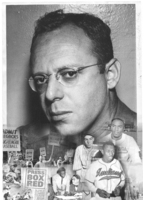 Lester was one of the first people to write about a young Negro League prospect named Jackie Robinson. He was the last living journalist to cover the famous 1938 fight at Yankee Stadium between 'The Brown Bomber' Joe Louis and Hitler favorite, Max Schmeling. He crusaded against baseball's color line when almost every other journalist pretended it didn't exist. He edited a political sports page that engaged his audience in how to fight for a more just sports world. His writing, which could describe the beauty of a well-turned double play in one sentence and blast injustice in the next, is still bracing and ahead of its time. He should be in the Baseball Hall of Fame. Instead he was largely erased from the books."
The rest of the story: More Than a Sportswriter: Lester "Red" Rodney: 1911-2009 by Dave Zirin (Huffington Post 2009-12-23)
Reading list: Interview with Lester Rodney (Political Affairs magazine)
Press Box Red: The Story of Lester Rodney, the Communist Who Helped Break the Color Line in American Sports by Irwin Silber (Temple University Press 2003)
Lester was one of the first people to write about a young Negro League prospect named Jackie Robinson. He was the last living journalist to cover the famous 1938 fight at Yankee Stadium between 'The Brown Bomber' Joe Louis and Hitler favorite, Max Schmeling. He crusaded against baseball's color line when almost every other journalist pretended it didn't exist. He edited a political sports page that engaged his audience in how to fight for a more just sports world. His writing, which could describe the beauty of a well-turned double play in one sentence and blast injustice in the next, is still bracing and ahead of its time. He should be in the Baseball Hall of Fame. Instead he was largely erased from the books."The rest of the story: More Than a Sportswriter: Lester "Red" Rodney: 1911-2009 by Dave Zirin (Huffington Post 2009-12-23)
Reading list: Interview with Lester Rodney (Political Affairs magazine)
Press Box Red: The Story of Lester Rodney, the Communist Who Helped Break the Color Line in American Sports by Irwin Silber (Temple University Press 2003)
Some Journalism Deserves Respect
Writing in the New Yorker, George Packer reminds us that, every year, the Committee to Protect Journalists holds a fund-raising gala at the Waldorf-Astoria in midtown Manhattan to raise the budget it needs to "continue for another year doing its job of defending journalists around the world — calling attention to murders, threats, attacks, and imprisonments, lobbying for journalists’ safety and release, supporting endangered journalists and their families and survivors."
Murders, threats, attacks and imprisonments. This litany of intimidation goes on, in part, because in most places where journalists suffer such mistreatment either no government exists or the government itself is violent, corrupt and autocratic. The CPJ dinner is a reminder that behind many stories it honors are "brave, humorous, quietly defiant men and women, rarities and eccentrics who nonetheless seem to exist in every country, upholding high journalistic standards in the world’s most dangerous places, with no powerful backers, and almost no one paying attention except government thugs or anonymous gunmen."
The rest of the story: Annual Reminder: Some Journalism Deserves Respect! by George Packer (The New Yorker 2009-11-30).
In thinking about the situation of these brave writers, editors, researchers, photographers and videographers, it occurred to me that digital technology might enable a mechanism that would provide more support and protection. Many of these abuses are possible, inevitable even, because they take place in the metaphorical dark. What if there existed an organization pledged to carry on the work of a journalist who is intimidated, imprisoned or killed even after the original reporter has been eliminated? That an act of violence or intimidation intended to silence a reporter would only assure that an even brighter light would shine on his or her investigation?
It might work like this: a secure website is established where journalists can store copies of notes, phone books, appointment calendars, documentary evidence, audio, video and image files, drafts, manuscripts, and so on. These reporters let it be known to their contacts, subjects, bosses, etc., that this cache of information exists, and that it will be followed up on if anything untoward happens. Professional journalists in safer parts of the world, volunteering to pair up with the at-risk reporters, commit either to continuing the work themselves or making sure that the research is handed over to reporters in the field who can finish the job. With communication around the planet now virtually instantaneous, this website will also provide a trail of cookie crumbs behind reporters when their work carries them into dangerous situations. To take an example from within our own shores, isn't it likely that the goons from the Black Muslim Bakery might have had second thoughts about gunning down Chauncey Bailey if they'd known that the Oakland Post editor's notes and other materials would be instantly in the hands of other investigators at the Chronicle, the Bee or the Times dedicated to carrying on with the story? In addition, wouldn't it provide a small measure of security if a reporter going into a dangerous situation -- a meeting with an informant in a remote location, say -- could leave a real-time record of who, when & where so that immediate action could be taken if he or she didn't check in at a designated time?
Such a website would not be terribly difficult or expensive to create and could be operated with a very small staff. An operating budget would have to be found, but in that respect it would be no different than any other non-profit. The greatest difficulty would be in finding journalists with the wherewithal to genuinely provide the back up, although it wouldn't be a surprise if aggressive media operations like the BBC, Reuters, CNN, McClatchy, the Washington Post and the New York Times would find it in their interest to provide institutional support to employees inclined to participate.
Murders, threats, attacks and imprisonments. This litany of intimidation goes on, in part, because in most places where journalists suffer such mistreatment either no government exists or the government itself is violent, corrupt and autocratic. The CPJ dinner is a reminder that behind many stories it honors are "brave, humorous, quietly defiant men and women, rarities and eccentrics who nonetheless seem to exist in every country, upholding high journalistic standards in the world’s most dangerous places, with no powerful backers, and almost no one paying attention except government thugs or anonymous gunmen."
Since 1992, almost eight hundred journalists have been killed for doing their job, and the graph of the annual total rises steadily upward over time. Many thousands more have been imprisoned, including — just to put one name on the statistic — Thet Zin, an editor of the Myanmar Nation weekly in Rangoon, who was arrested shortly before I was to meet him on a trip to Burma last year, and who is serving a seven-year sentence for possessing a report issued by the United Nations special envoy to Burma for human rights. The one organization that can be counted on to keep alive the names and fates of these easily forgotten men and women is the Committee to Protect Journalists.As Packer writes, the CPJ carries on its crucial work on the shoestring budget it manages to scrape together at its annual dinner: here's a link to information on how to help the CPJ to help at-risk journalists.
The rest of the story: Annual Reminder: Some Journalism Deserves Respect! by George Packer (The New Yorker 2009-11-30).
In thinking about the situation of these brave writers, editors, researchers, photographers and videographers, it occurred to me that digital technology might enable a mechanism that would provide more support and protection. Many of these abuses are possible, inevitable even, because they take place in the metaphorical dark. What if there existed an organization pledged to carry on the work of a journalist who is intimidated, imprisoned or killed even after the original reporter has been eliminated? That an act of violence or intimidation intended to silence a reporter would only assure that an even brighter light would shine on his or her investigation?
It might work like this: a secure website is established where journalists can store copies of notes, phone books, appointment calendars, documentary evidence, audio, video and image files, drafts, manuscripts, and so on. These reporters let it be known to their contacts, subjects, bosses, etc., that this cache of information exists, and that it will be followed up on if anything untoward happens. Professional journalists in safer parts of the world, volunteering to pair up with the at-risk reporters, commit either to continuing the work themselves or making sure that the research is handed over to reporters in the field who can finish the job. With communication around the planet now virtually instantaneous, this website will also provide a trail of cookie crumbs behind reporters when their work carries them into dangerous situations. To take an example from within our own shores, isn't it likely that the goons from the Black Muslim Bakery might have had second thoughts about gunning down Chauncey Bailey if they'd known that the Oakland Post editor's notes and other materials would be instantly in the hands of other investigators at the Chronicle, the Bee or the Times dedicated to carrying on with the story? In addition, wouldn't it provide a small measure of security if a reporter going into a dangerous situation -- a meeting with an informant in a remote location, say -- could leave a real-time record of who, when & where so that immediate action could be taken if he or she didn't check in at a designated time?
Such a website would not be terribly difficult or expensive to create and could be operated with a very small staff. An operating budget would have to be found, but in that respect it would be no different than any other non-profit. The greatest difficulty would be in finding journalists with the wherewithal to genuinely provide the back up, although it wouldn't be a surprise if aggressive media operations like the BBC, Reuters, CNN, McClatchy, the Washington Post and the New York Times would find it in their interest to provide institutional support to employees inclined to participate.
The Media: Amy Goodman
by Bill Moyers (truthout 2009-10-27)
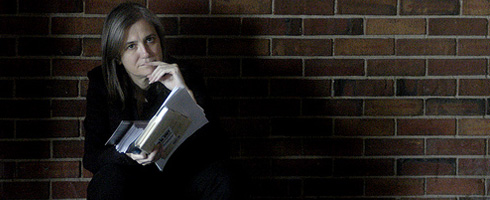
This is Bill Moyers's introduction to Amy Goodman's latest book, "Breaking the Sound Barrier," published by Haymarket Books.
You can learn more of the truth about Washington and the world from one week of Amy Goodman's "Democracy Now!" than from a month of Sunday morning talk shows.
Make that a year of Sunday morning talk shows.
That's because Amy, as you will discover on every page of her new book, "Breaking the Sound Barrier", knows the critical question for journalists is how close they are to the truth, not how close they are to power. Like I. F. Stone, she values the facts on the ground; unlike the Sunday beltway anchors, she refuses to take the official version of reality as the definition of news, or to engage in Washington's "wink-wink" game, by which both parties to an interview tacitly understand that the questions and answers will be framed to appear adversarial when in fact their purpose is to avoid revealing how power really works. Quick: recall the last time you heard a celebrity journalist on any of the Sunday talk shows grill a politician on what campaign contributors get for their generosity. Try again: name any of those elite interrogators who skewered any politician for saying that "single-payer" wasn't on the table in the debate over health care reform because "there's no support for it." OK, one last chance: recall how often you have heard any of the network stars insist that Newt Gingrich reveal just who is funding his base as the omnipresent expert on everything.
See?
Now read "Breaking the Sound Barrier" for a reality check. And tune in to "Democracy Now!" to hear and see the difference an independent journalist can make in providing citizens what they need to know to make democracy work.
It takes the nerves, stamina and willpower of an Olympic triathlete to do what Amy Goodman does. That's just who she is, this quiet-spoken tornado of muckraking journalism: Edward R. Murrow with a twist of Emma Goldman, a Washington Post reporter once noted - willing to take on the powers that be to get at truth and justice, then spreading the word of those two indispensable gospels to the republic and the world beyond. Amy Goodman goes where angels fear to tread. Beaten by Indonesian troops while she and a colleague - also beaten - were covering East Timor's fight for independence. Hiking dangerous African deltas to get to the bottom of Chevron Oil's collusion with the Nigerian military. Or closer to home, in New Orleans or Appalachia or facing down the police when her colleagues were arrested in Minneapolis during the 2008 Republican National Convention (they threw her in the slammer, too).
Through her reporting, we hear from people who scarcely exist in news covered by the corporate-owned press. We learn about issues of war and peace and social wrong. She is impervious to government subterfuge or spin. "Goodman is the journalist as uninvited guest," that Washington Post reporter wrote. "You might think of the impolitic question; she asks it." And once it's been asked, she refuses to take "no comment" for an answer. She returns to a story time and again, continually digging, refusing to let her audience or investigative target forget how important it is to nail down just who's responsible and what needs to be done.
On top of everything else, she finds time to take her message out to a broad public with speeches and books and a weekly newspaper column, from which her collection of essays, "Breaking the Sound Barrier," has been selected. I'd be envious if it didn't appear unseemly. Let's just say I'm in awe. Read this collection and revel in the truth-telling. Be outraged by what you learn from it and renew your oath as a citizen. "We stand with journalists around the world who deeply believe that the mission of a journalist is to go where the silence is," Amy Goodman said in December 2008 when she accepted the Right Livelihood Award for personal courage and transformation. "The responsibility of a journalist is to give a voice to those who have been forgotten, forsaken, beaten down by the powerful." And, at a time when the future of journalism is in question, this ringing rationale for our embattled but essential craft: "It's the best reason I know for us to carry our pens, our microphones, and our cameras, both into our own communities and out to the wider world."
Right on.
"As an organization, truthout works to broaden and diversify the political discussion by introducing independent voices and focusing on undercovered issues and unconventional thinking."
This is Bill Moyers's introduction to Amy Goodman's latest book, "Breaking the Sound Barrier," published by Haymarket Books.
You can learn more of the truth about Washington and the world from one week of Amy Goodman's "Democracy Now!" than from a month of Sunday morning talk shows.
Make that a year of Sunday morning talk shows.
That's because Amy, as you will discover on every page of her new book, "Breaking the Sound Barrier", knows the critical question for journalists is how close they are to the truth, not how close they are to power. Like I. F. Stone, she values the facts on the ground; unlike the Sunday beltway anchors, she refuses to take the official version of reality as the definition of news, or to engage in Washington's "wink-wink" game, by which both parties to an interview tacitly understand that the questions and answers will be framed to appear adversarial when in fact their purpose is to avoid revealing how power really works. Quick: recall the last time you heard a celebrity journalist on any of the Sunday talk shows grill a politician on what campaign contributors get for their generosity. Try again: name any of those elite interrogators who skewered any politician for saying that "single-payer" wasn't on the table in the debate over health care reform because "there's no support for it." OK, one last chance: recall how often you have heard any of the network stars insist that Newt Gingrich reveal just who is funding his base as the omnipresent expert on everything.
See?
Now read "Breaking the Sound Barrier" for a reality check. And tune in to "Democracy Now!" to hear and see the difference an independent journalist can make in providing citizens what they need to know to make democracy work.
It takes the nerves, stamina and willpower of an Olympic triathlete to do what Amy Goodman does. That's just who she is, this quiet-spoken tornado of muckraking journalism: Edward R. Murrow with a twist of Emma Goldman, a Washington Post reporter once noted - willing to take on the powers that be to get at truth and justice, then spreading the word of those two indispensable gospels to the republic and the world beyond. Amy Goodman goes where angels fear to tread. Beaten by Indonesian troops while she and a colleague - also beaten - were covering East Timor's fight for independence. Hiking dangerous African deltas to get to the bottom of Chevron Oil's collusion with the Nigerian military. Or closer to home, in New Orleans or Appalachia or facing down the police when her colleagues were arrested in Minneapolis during the 2008 Republican National Convention (they threw her in the slammer, too).
Through her reporting, we hear from people who scarcely exist in news covered by the corporate-owned press. We learn about issues of war and peace and social wrong. She is impervious to government subterfuge or spin. "Goodman is the journalist as uninvited guest," that Washington Post reporter wrote. "You might think of the impolitic question; she asks it." And once it's been asked, she refuses to take "no comment" for an answer. She returns to a story time and again, continually digging, refusing to let her audience or investigative target forget how important it is to nail down just who's responsible and what needs to be done.
On top of everything else, she finds time to take her message out to a broad public with speeches and books and a weekly newspaper column, from which her collection of essays, "Breaking the Sound Barrier," has been selected. I'd be envious if it didn't appear unseemly. Let's just say I'm in awe. Read this collection and revel in the truth-telling. Be outraged by what you learn from it and renew your oath as a citizen. "We stand with journalists around the world who deeply believe that the mission of a journalist is to go where the silence is," Amy Goodman said in December 2008 when she accepted the Right Livelihood Award for personal courage and transformation. "The responsibility of a journalist is to give a voice to those who have been forgotten, forsaken, beaten down by the powerful." And, at a time when the future of journalism is in question, this ringing rationale for our embattled but essential craft: "It's the best reason I know for us to carry our pens, our microphones, and our cameras, both into our own communities and out to the wider world."
Right on.
"As an organization, truthout works to broaden and diversify the political discussion by introducing independent voices and focusing on undercovered issues and unconventional thinking."
Heroes: Sen. Ted Kennedy
"To Strive, To Seek, To Find, And Not To Yield." R.I.P.
See also, Michael Scherer, Jack Newfield, John Cory.
| The Daily Show With Jon Stewart | Mon - Thurs 11p / 10c | |||
| Moment of Zen - The Kennedy Shrug | ||||
| ||||
Heroes: Legendary Lawyer Doris Brin Walker Dies
Represented Angela Davis, Smith Act Defendants -- Marjorie Cohn's ZSpace Page (ZSpace 2009-08-16)
Subscribe to:
Posts (Atom)


