


Here's how the top scorers in the California Republican delegation on the
question "How often a member votes in line with Trump's position" fared in the
election:
David Valadao (CA-21), with Trump 98.1%: Still counting, currently less
than 2000 votes ahead of Democrat TJ Cox
Stephen Knight (CA-25), 98.1%: Gone - Democrat Katie Hill
Mimi Walters (CA-45) 98.1%: Gone - Democrat Katie Porter
Jeff Denham (CA-10) 98.1%: Gone - Democrat Josh Harder
Ken Calvert (CA-42) 98.1%: Reelected
Paul Cook (CA-8) 98.1%: Reelected against a GOP opponent
Kevin McCarthy (CA-23) 98.1%: Reelected
Doug LaMalfa (CA-1), 98.1%: Reelected
Devin Nunes (CA-22) 98%: Reelected
Ed Royce (CA-39) 96.2%: Quit; replaced by Democrat Gil Cisneros
Darrell Issa (CA-49) 96.2%: Quit; replaced by Democrat Mike Levin
Dana Rohrabacker (CA-48) 92.5%: Gone - Democrat Harley Rouda
Tom McClintock (CA-4) 88.7%: Reelected
Wouldn't be so bad, except most of these GOPers are embarrassments to humanity
let alone the good name of California.
Showing posts with label California. Show all posts
Showing posts with label California. Show all posts

Stalking Horse?
I don't have an opinion yet on the campaign for governor between Gavin Newsom, Antonio Villaraigosa, John Chiang and Delaine Eastin, but the entry into the race of Amanda Renteria, a former Hillary Clinton campaign staffer, is suspicious at the go. Who enters a major race 30 days before the filing deadline with no campaign infrastructure, no staff, no website, no endorsements, and no cash? It's not a stretch to think that Renteria will be on the ballot to suppress support of Newsom's chief rival Villaraigosa among Latinos. Is this another attempt by the party poobahs to rig a primary outcome? Shouldn't the voters get to hear from the candidates before the fix is in?
California Democrats to Dianne Feinstein: "Good work on Trump. Now come home."
Okay. I'm one who applauded: "Dianne Feinstein is mad as hell and not going to take it anymore."
But the thundering hosannas for her releasing of the Fusion GPS testimony have begun to drown out reality.
Sen. Feinstein's action was admirable. If she had not done it, she would have been complicit in the blatant lying of Chuck Grassley and Lindsey Graham. But she is far from being the Second Coming of FDR.
She has been the strongest Democratic proponent in the Senate of the security state, she has dependably supported the Long War, and she has carried water for corporate and financial interests throughout her career, as when she voted for the bill that repealed Glass-Steagall’s banking reforms (California's other U.S. Senator, Barbara Boxer, voted nay). After decades in office, she is out of step. left behind by her increasingly liberal constituency; even with the advantages of incumbency in a blue state, she is only getting about 40% in support of her reelection campaign.
You have to ask yourself why at 84 she is running at all. My guess is that the party poobahs, realizing that if she retires the seat will almost certainly fall into the hands of a progressive, have decided that she remains their best hope to hold the seat for the donors; she will almost certainly be one of the two standing candidates after the primary (out-of-staters may not know that in California the general election is a run-off between the top two primary vote-getters, even if they are from the same party or no party at all), and Democratic leaders are betting she will get enough Democratic and all Republican votes to win (the other candidate will be a Democrat to her left -- there is no other kind; the GOP is not a factor at the state level in California); then, after a year or two, she will step down and the new governor, presumably Gavin Newsom, a Democrat in any case, will appoint a reliable supporter of business-as-usual.
Sen. Feinstein deserves all credit for unilaterally releasing the transcript of Glenn Simpson's testimony before her committee, and I hope she continues to hold Grassley's and Graham's feet to the fire.
When you think about it, though, this would be a perfect moment to retire. The primary will be bitter and divisive, and since experience suggests there is every likelihood that the poobahs have it wrong anyway, possibly pointless:
Instead, for the good of the nation, she could go out as Fighting Dianne Feinstein, spending her final days of service battling the criminalized GOP (as she is doing in taking a lead in rejecting Trump's off-shore drilling scam and supporting the Dreamers). What an honorable way to go.
Extra credit:
> The Republicans Fake Investigation by Glenn R. Simpson and Peter Fritsch (New York Times)
> Sen. Dianne Feinstein Releases Full Testimony From Co-Founder of Firm Behind Russia Dossier by Molly Olmstead (Slate)
> The full text of Glenn Simpson's interview before the Senate Judiciary Committee on 2017/08/22 (PDF)
> Dianne Feinstein survived childhood abuse, assassination attempts, and a brutal fight with the CIA. Now it’s time to take on Trump: The Lioness in Winter by Gail Sheehy (Mother Jones)
> In a rare meeting, the Democratic senator finds little common ground with hometown activists: Dianne Feinstein Town Hall Shows Why She’s a Conservative by San Francisco Standards by Matt Tinoco (Mother Jones)
> California's feverish political moment creates opportunity for a Feinstein challenge — or a few by Seema Mehta and Melanie Mason (Los Angeles Times)
> Kevin de León, president of the California Senate, is challenging the longtime senator next year, creating a dilemma for the party's 2020 hopefuls: The Democrats’ Dianne Feinstein Problem by David Dayen (New Republic)<br />
> Alison Hartson announced she's running for U.S. Senate: New liberal challenger to Sen. Dianne Feinstein launches bid on 'The Young Turks' by Sarah D. Wire (Los Angeles Times)

After five decades, change for California

The rest of the story:
Kevin de León, the California Senate president, is taking on the U.S. senator in next year's Democratic primary. The reward is much greater than the risk.: The Win-or-Lose Case for Challenging Dianne Feinstein by Graham Vyse (New Republic).
Many Calif. Dems silent on backing Feinstein by Mike Lillis (The Hill)
Kevin de León announces run against Dianne Feinstein, setting up Democratic clash in Senate race by Casey Tolan (Bay Area News Group)
Fake Poll #6,580,222
Democracy for America wants you to choose your top three picks to replace Senator Barbara Boxer from this list:
Being located in VT, DFA can perhaps be forgiven for not knowing CA politics, for not knowing, for example, that Tony Villaraigosa was pretty much a failure as LA mayor or that Kamala Harris runs the AG's office like every day is Be Kind to Corporations Day. But they should know something about goings-on in Washington. John Garamendi? Jane Harman? Ellen Tauscher? Do they think party hacks and corporate shills will lift a finger to advance DFA's agenda to rejuvenate the Democrats as an instrument of change? Dave Jones? Tom Steyer? Adam Freaking Schiff? Are they kidding?Karen Bass
Xavier Becerra
John Chiang
John Garamendi
Jane Harman
Kamala Harris
Kevin Johnson
Dave Jones
Loretta Sanchez
Adam Schiff
Jackie Speier
Hilda Solis
Tom Steyer
Ellen Tauscher
Antonio Villaraigosa
Or is this just a convenient cover for a chance to hit us up for spare change one more time before the serious fundraising starts up later this year?
Maybe you can still buy love, though
As we predicted, Richard Bloom is the legatee of Torie Osborn's inane and opportunistic run against Betsy Butler.
Turns out you can't buy an assembly seat after all.
Turns out you can't buy an assembly seat after all.
So...
Yes on Prop 30, temporary taxes to fund education.
And yes on Prop 34: Death Penalty Repeal and Prop 36: Three Strikes Law, because the politicians will never dare to get these done in the legislature where they should get done.
As for the rest, No. Not because they don't have worthy goals (Prop 31: State Budget Process; Prop 33: Auto Insurance Rates; Prop 39: Multistate Business Tax), are badly drawn (Prop 32: Political Contributions; Prop 37: Genetically Modified Foods) or misdirected (Prop 35: Human Trafficking/Sex Offender), but because they're not the business of referendums; all would be better decided in the give-and-take of the legislative process.
The only prop we really need is the Prop to End All Props.
2012: California referendum to capture oil drilling revenues
This is the text of a proposed California ballot initiative:
Oil Extraction Tax to Rescue EducationOrganizations supporting the referendum effort include labor unions, teacher and student associations, and progressive political groups. Anyone interested in participating can download a petition here and flyers here. For more information, visit the sponsoring organization at Rescue Education California.
Maintaining California's competiveness in the new global economy
California's Educational System, Kindergarten through College and University, has been cut to the bone. Overcrowded classrooms, textbook shortages, teacher and professor lay-offs, and reduced or eliminated college class sections have made it impossible for millions of talented students to graduate. For example, Long Beach Unified School District eliminated computer literacy classes as a graduation requirement.
University of California student's' tuition fees are being raised 8% and California State University students' tuition fees are being raised by 15% percent for Fall 2011. California Community College students are facing a proposed tuition fee increase of 38% (to $540) per semester minimum, up to 154% ($990) per semester for fall 2011. Californians must act now to save our once world renowned Educational System.
Education is the foundation of a strong economy. California Governors Pete Wilson and Arnold Schwarzenegger enjoyed tuition free education at UC Berkley and Santa Monica College, respectively. In the 1960s and 1970s, California's Educational System was the envy of the world. During this time, public higher education was essentially tuition free, as mandated by Governor Pat Brown's Master Plan for Higher Education, and California's economy grew to the 5th largest in the world, supporting a large vibrant middle class.
Today, California's middle class is endangered, and California's economy has fallen to 8th position in the world because of a lack of investment in education and technology. China recently invented the world's fastest computer (server) and produces the largest number of solar panels, while South Korea produces the best electric car batteries using cutting edge technology. California's K-12 spending per pupil has dropped to 43rd out of 50 states. College and university graduates are saddled with huge debt. If California is to successfully compete with states and countries such as China, Japan, Germany, South Korea, and India, California's Educational System must again be adequately funded, offering more classes and programs in cutting-edge technology, skilled manufacturing, alternative energy, and the arts. California Community Colleges need adequate funding to continue training Nurses, and preparing Firefighters and Teachers.
Unbelievably, California has failed to employ a widely used revenue source that can address this crisis in our education. This revenue source is employed by every major oil producing state, except California. This untapped source of revenue is an extraction fee on oil pumped in California, onshore and offshore. Since California is the nation's third largest producer of oil, after Texas and Alaska, a 15% oil extraction fee (midway between that of Texas and Alaska) would raise approximately $3.6 billion each year, at 2011 oil prices. This has not been a partisan issue in other states. For example, Governor Sarah Palin, with a Republican legislature, raised Alaska's oil extraction fee to 25%, bringing in billions of dollars. Texas's and Alaska's gasoline prices were not affected by their oil extraction fees, and in March 2011, their price per gallon of gasoline was lower than California's. From 1901 to 2008, oil companies have extracted over 10 billion barrels of oil from California's territory. Based on 2011 per barrel crude oil prices ($100 per barrel), oil companies have extracted over $1 trillion worth of oil. At the current world market price, this oil extraction fee would have raised over $150 billion. This type of fee is the economic standard in every major oil producing state and nation around the world. California can no longer afford to give preferential treatment to oil companies compared to how they are treated elsewhere.
This initiative requires that California apply a 15% oil extraction fee on the value of each barrel of oil, California's common resource, extracted onshore and offshore. Following Texas' example of devoting this oil revenue to its Educational System, the revenue generated by this fee shall be appropriated for non-capital purposes in the following amounts: K-12 shall receive 30% (approximately $1.08 billion). The California Community College System (approximately 3,000,000 students) shall receive 48% (approximately $1.72 bill). The California State University System (approximately 412,000 students) shall receive 11% (approximately $400 million). The University of California System (approximately 200,000 students) shall receive 11$ (approximately $400 million). This will reduce college and university tuition fees, and restore cut class sections. The funding increases will pay to rehire professors, laid-off teachers, and reduce K-12 class sizes.
This proposition, along with existing anti-trust and anti-collusion laws, prohibits oil companies from passing on the oil extraction fee to oil refineries, gasoline stations, and consumers (the U.S. Supreme Court has ruled that States can prohibit oil companies from passing on fees such as this to consumers). This fee will enable California to capture $3.6 billion that would have left California. This additional money will help rejuvenate California's stagnant economy. This fee will have minimal impact on oil company profits which total in the hundreds of billions of dollars. For example, Exxon Mobile reported record profits of $45 billion in 2008, and Shell Oil reported profits of $31 billion in 2007.
If oil companies illegally pass on the oil extraction fee, a fine shall be assessed equal to the amount passed on. The dollar amount recouped shall be equally distributed to each Californian as a rebate check at the end of each year. The State Attorney General is bound by this proposition to examine the books of oil companies operating in the state of California, if they appear to be breaking this law.
The revenues from this proposition exclusively constitute a Competiveness Education Fund and cannot be commingled with, or lent to, the State General Fund. The State shall not be allowed to reduce its regular education funding corresponding to the additional revenue produced by this proposition. The revenues from this Competiveness Education Fund shall be deposited in a Special Account and distributed, on a monthly basis, by the California State Treasurer to each of the California Educational Systems involved. Passage of this proposition will once again ensure a bright future for this generation and succeeding generations of Californians who have to compete in the new global economy.
Reform: Majority Rule for California
In today's mail:
Get a Backbone on the Budget Crisis!
Just getting a majority on the budget alone won't make the pie any bigger, we need to solve the revenue problem.
Join teachers, firefighters, nurses and students who support majority rule for budget and revenue.
Majority rule for both budget and revenue has been endorsed by the California Democratic Party, the California Young Democrats and California College Democrats.
Sign, download and print the petition at CaliforniansForDemocracy.com
---
Democracy Goes Viral by George Lakoff & Californians For Democracy Team
Dear Friends,
The California budget crisis is a democracy crisis.
The 2/3 vote rules have destroyed democracy. A small minority of extreme conservatives - 37 percent - has been controlling the state legislature by saying no to all proposals until it gets what it wants. They want to destroy the ability of the state to serve public needs. They like the budget cuts. They don't care about the pain they have caused.
We - the majority of voters - can change all that. We can pass the California Democracy Act, an initiative on the November 2010 ballot. It is one sentence long - only 14 words. It is simple democracy.
All legislative actions on revenue and budget must be determined by a majority vote.
It would make two minor changes in the Constitution: In two places, "two-thirds" becomes "a majority." That's all. And it can be passed with only a majority vote!
To get this initiative on the ballot and to pass it, we will need your help. Go to http://www.CaliforniansForDemocracy.com
- now. Download a petition, sign it, and send it in. Then donate.
We need donations, large and small. $5000, $1000, $500 if you have it. $100, $50, $20, even $10.
Ask yourself, what are these worth to you? Excellent public education from K thru college, parks and beaches, our environment, roads, public health, child care, care for the elderly and disabled, fire departments, housing for the homeless, shelters for battered women, food safety. That's what's at stake.
This is the only initiative that can end the crisis by permitting sufficient revenue to be raised - without hurting lower and middle income Californians.
It is the only one that can return democracy and give you, the voters, a voice. You, the majority, will finally have the power to tell your legislators what you need and how to get it.
Go toCaliforniansForDemocracy.com, click on Sign the Petition, and click on Donate. Do it now. Our state can't wait.
California Taxes: When You Hear the Word "Reform," Reach for Your Gun
The “blue ribbon” California State Commission of the 21st Century Economy, chaired by Republican heavyweight Gerald Parsky, was created by Gov. Schwarzenegger to provide bipartisan recommendations for changes to California’s tax system. According to Jean Ross, executive director of the California Budget Project, the commission is recommending "a massive shift in the cost of financing public services from the wealthy and corporations to middle-income families."
Writing on Calbuzz, Ross says
Specifically, the commission wants to tax groceries to pay for tax cuts for millionaires, and would tax child care so that oil companies no longer have to pay corporate income tax. Proposed changes would encourage relocation of California jobs to firms outside California, beyond the reach of California’s tax collectors. Interestingly,
Go. Read. What’s Wrong with the Parsky Panel Tax “Reforms” by Jean Ross (Calbuzz 2009-09-14) and The California Budget Project’s analysis of the Commission’s proposals (pdf)
Also, California State Commission of the 21st Century Economy: Staff Presentation: Proposed Tax Structure (pdf 2009-09-14)
California tax panel set to recommend sweeping, controversial changes (Sacramento Bee 2009-09-15)
California tax overhaul plan almost ready (LA Times 2009-09-15)
Our View: Tax fix would do more harm than good (Marysville CA Appeal-Democrat 2009-09-15)
State tax reform panel blew its opportunity by Michael Hiltzik (Los Angeles Times 2009-10-05)
Thanks for the tip on this story from California State Senate candidate Cindy Varela Henderson.
Writing on Calbuzz, Ross says
the biggest winners would be the state’s millionaires, who would receive personal income tax breaks averaging $109,000 per year. The biggest losers would be middle-income families who would receive a tiny, if any, reduction in their personal income taxes and who would pay substantially more for goods and services due to the new “value-added” tax the commission proposes to replace revenues lost due to the tax cuts for the wealthy and repeal of the corporate income tax."Reforms" would "flatten" taxes
The magnitude of the shift proposed by the commission is nothing short of stunning. The changes to the personal income tax structure alone would reduce income taxes paid by the poorest 62 percent of California taxpayers by $4 per year, on average, while providing six-figure breaks to the millionaires. The bottom 81 percent of the income distribution – the vast majority of all Californians – would receive 10 percent of the personal income tax cut, while the top 0.2 percent would receive 27 percent of the benefits.
And that’s the “good news.” The commission would repeal the corporate income tax and the state’s portion of the sales tax and replace it with a new tax on business net receipts – a tax that has never been tried anywhere in the US – that the commission’s own consultant notes would raise prices of goods and services, while exerting downward pressure on wages and benefits.
Specifically, the commission wants to tax groceries to pay for tax cuts for millionaires, and would tax child care so that oil companies no longer have to pay corporate income tax. Proposed changes would encourage relocation of California jobs to firms outside California, beyond the reach of California’s tax collectors. Interestingly,
the commission’s own estimates predict that revenues raised by the new tax system would grow more slowly over time than those raised by the state’s current tax system. Thus, the commission’s recommendations would lead to larger, not smaller, budget shortfalls in the future.Finally, Ross points out that more straightforward reforms that would increase revenues, such as aggressively pursuing collection of sales taxes from out-of-state retailers (out-of-state businesses pay no taxes, giving them an unfair competitive advantage against California companies) or extending the state’s existing sales tax to a broader array of services while lowering the overall sales tax rate, were ignored by the commission. "Similarly, the commission could have used tax policy as a tool to mitigate, rather than exacerbate, the widening gaps between the top and middle- and top and lower-income households." The governor's commission may have been "bipartisan" (the commission has 14 members, seven appointed by the governor, seven by the legislature), but how well the interests of middle-class and working-class citizens were represented is open to question.
Over the five-year period covered by commission estimates, the difference in revenue growth would be substantial – the increased deficit under the proposed tax code would be approximately equal to what the state spends for today for the University of California and California State University systems combined.
Go. Read. What’s Wrong with the Parsky Panel Tax “Reforms” by Jean Ross (Calbuzz 2009-09-14) and The California Budget Project’s analysis of the Commission’s proposals (pdf)
Also, California State Commission of the 21st Century Economy: Staff Presentation: Proposed Tax Structure (pdf 2009-09-14)
California tax panel set to recommend sweeping, controversial changes (Sacramento Bee 2009-09-15)
California tax overhaul plan almost ready (LA Times 2009-09-15)
Our View: Tax fix would do more harm than good (Marysville CA Appeal-Democrat 2009-09-15)
State tax reform panel blew its opportunity by Michael Hiltzik (Los Angeles Times 2009-10-05)
Thanks for the tip on this story from California State Senate candidate Cindy Varela Henderson.
Making Lemonade: California Turns Its Prisons Into Travel Destinations
Gives new meaning to "tourist trap"
"Bristol Zoo Gardens now has a special enclosure for Humans (Homo sapiens), featuring the world’s most widespread species." -- Humans on Display at Bristol Zoo by Scott Beale (Laughing Squid 2009-09-01)
When the governor called, I have to admit I thought he was kidding. At least once I understood him, I thought he was kidding. After all this time that Austrian accent still throws me sometimes.
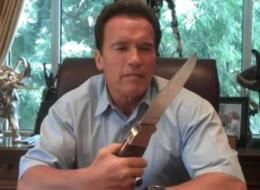 And anybody who's seen him play with that giant knife while talking about the Legislature knows what a great kidder he is. Even after I figured out that he meant zoos instead of Zeus, I still thought that his plan to turn California's prison system into a tourist attraction was a joke.
Not that we shouldn't be ready to try anything to ease the Golden State's financial woes.
 You've probably heard we're in the hole. Depending who you ask, we've got a budget deficit between $26 billion and $41 billion. As Sen. Everett Dirksen once said, "a billion here, a billion there, pretty soon it adds up to real money." Whatever, it's a big hole.
Once somebody thought better of furloughing the prison guards, we had to do something. We tried selling off junk in state warehouses, but you couldn't have picked a worse time, economy-wise. Everybody's looking for a bargain these days. How much could we really be expected to make?
 People give away better stuff on Craigslist than we had to sell. Besides, how many people are looking for a baseball bat in "fair condition"? It didn't help that every blowhard editorial-writer and stand-up comedian made fun of us. "Great California Garage Sale." What were we thinking?
I guess the governor was a little disappointed when the garage sale brought in only $1.6 million ("a million here, a million there," I hear you thinking, "pretty soon it's hardly worth getting up in the morning"). I didn't think it was so bad, really, for staplers and pencils and old office equipment. It's not like we were selling the Los Angeles Coliseum or something.
Anyway, not my department. I run the California Travel & Tourism Commission. Or used to. Now I mostly run the prison system. Or, as it is officially called now, the Department of Travel, Tourism, Corrections & Rehabilitation. You can thank the guards' union for that one.
Even though I was skeptical, I threw myself into realizing the governor's vision. Honestly, I had never paid much attention to jails before, but when I thought a little I realized that he was right, as usual: prisons are a lot like "Zeus."
To save time, we lifted at lot of material and displays from a zoo in England that had a pioneering exhibit on the subject of homo sapiens: "The human is one of the world’s most widespread species, and is present on all continents. In adolescence, the offspring adopt a more nocturnal lifestyle and engage in ritualised activities of drinking liquids and dancing to fermented rhythmical sounds, which scientists believe may help them to find a mate.”
And: “The human diet is very adaptable to regional crop varieties and personal taste, with some groups able to live almost exclusively on chipped potatoes and sugary drinks."
And particularly aptly: “Groups of humans are often fed by unrelated individuals in exchange for tokens made of paper, metal and plastic – behaviour which can frequently be seen inside this enclosure."
In California we're very lucky because we have so many human varietals to put on display, some, like Charles Manson and Phil Spector, that people will pay to see.
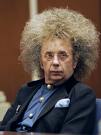 Although two-thirds of our prisoners are of black or hispanic origin, 25% are foreigners from just about everywhere on the planet. With 170,000 inmates to choose from, most of them nonviolent drug offenders, it wasn't hard to find participants for various displays and exhibits. It's already beginning to look like instead of spending $10 billion a year, or about $49,000 for each adult inmate, we can make this thing turn a profit.
At first we thought people would just look from a safe distance, but folks are very interactive these days, so we've been able to help close the budget deficit by adding all kinds of special packages
 that let tourists interact with residents, by hanging around the exercise yard, say, or by dining with mean-looking but carefully selected "criminals" in the cafeteria. We were worried about including the maximum security Pelican Bay State Prison in the program, because not much goes on there, but we've had unexpected success with a premium tour that includes several days in solitary confinement. And all before we've even had the opportunity to complete a deal with Disney to turn San Quentin into an interactive theme park.
I Went to San Quentin and All I Got Was This Lousy T-Shirt
Our biggest problems weren't with finding fun things to do or with arranging thrilling but safe interactions between inhabitants and visitors, but with infrastructure. As you might expect, most lockups were situated originally without giving much thought to tourist amenities. Since the prison facilities themselves are packed with twice as many inhabitants as they were designed for, we had to come up with enough food, water, parking and lodging off campus to accommodate what has turned out to be a flood of visitors. In the end the governor's plan has not only been a boon to the treasury and to the prisoners who have been provided with all kinds of opportunities to polish their social and acting skills, but also to the 36 local communities all around the state that have benefited from new roads, water and sewer systems, motels, and eateries, nearly all of them built by volunteers from the jails.
And the prisoners' gift shops have been doing land-office business with cups, hats, t-shirts, prison model kits, uniforms, clubs, handcuffs and other paraphernalia. Demand for the Taser Toddler, which delivers a dramatic but usually non-lethal jolt of electricity, have been through the roof.
As the governor himself put it, turning the prisons into "Zeus" has been a "win-win-win" for everybody involved.
Clip File: California Governor's Race Well Under Way
The election for California's next governor is more than a year away, but already the race is afoot. Carla Marinucci, senior political writer for the San Francisco Chronicle, offers her insights to NPR.
Reform: California's Budget "Plan"
For months, the Governator has been the Bloviator, blathering ad nauseum about his principled reasons for exacerbating the budget crisis. He would hold out for a permanent solution. There'd be no gimmicks this time; no kicking the can down the road; no leaving the mess for future governors and legislators to clean up. Suffering today would mean a happier tomorrow. Promise.
"Blah blah blah" is the same whether you say it in English, Austrian or Austranglish.
Now Schwarzenegger finally has his deal and, guess what?, it's all gimmicks, nothing but accounting frauds, rip-offs, hidden agendas and hidden taxes that make punishing cuts in services inevitable. Shame on the Governor for perpetrating this brutal sham -- although, in fairness, should you have expected more?; he has been out of his depth throughout his tenure. More to point, shame on the Ledge's leaders -- no, wait, wrong word: there are no leaders anywhere in sight -- shame on the Democrats, most of whom know better, for going along with it.
Is the crisis real? Sure. The budget shortfall is humungous -- the budget deal is based on the guess that the deficit is $26 billion. There is an old saying to the effect that if your outgo exceeds your income, your upkeep will be your downfall. That California has been spending more than it takes in at least since Schwarzenegger rode into office on the back of an irresponsible promise to cut auto licensing fees is the proximate cause of our downfall. Forget for a moment whether all the state's expenditures are necessary. Forget whether there is bloat and waste. Forget whether there are structural defects in our system of governance. Those are separate questions. The simple matter is that the people's representatives -- especially Republicans of every stripe -- have been unwilling to levy taxes and fees sufficient to pay the bills for government services that Californians want and need.
Although he made the phrase inevitable by his promise not to do so, "kicking the can" -- meaning passing the buck, dodging the bullet, punting, weasling, welshing -- is the journalistic cliche of the hour. This time, though, the can has been kicked so far down the road it may never stop rolling.
If you think I'm exaggerating the tricks and gimmicks underpinning this horror show, consider this: the state's payroll obligations for June 2010, the last month of the current budget year, have been moved -- one day! -- to July 1. The payments will still need to be met, but -- shazam! -- they have disappeared from this year's budget. This sleight-of-hand, providing entirely fictitious savings of $1.5 billion, is a perfect example of budgetary shenanigans of the sort these negotiations were supposed to end (the agreement also calls for speeding up collection of 2010 personal income and corporate taxes to make revenue show up sooner on the books, another accounting trick).
The agreement will gut social programs, including slashing more than $9 billion from spending on education and more than $1 billion each from the health and corrections budgets. It will also reduce by 14% the pay of state workers.
The gory details: K-12 schools and community colleges: $6 billion -- slashed; the University of California and California State University systems: $3 billion -- slashed; Medi-Cal, the state's health care program for the poor: $1.3 billion -- slashed; Department of Corrections: $1.2 billion -- slashed; CalWORKS, the state's welfare-to-work program: $528 million -- slashed (if he had his druthers, Schwarzenegger would terminate the program altogether); Healthy Families, a program that provides health insurance for 930,000 low-income children: $124 million -- slashed; the state's in-home supportive services program for the frail and disabled: $226 million -- slashed; state parks: $8 million -- slashed.
This last pittance probably falls into the hidden-agenda category, as it is expected that it will "require" the closing of some park facilities. Other items on the hidden agenda: selling off part of the State Compensation Insurance Fund, a quasi-governmental agency that is the state's largest provider of workers' comp insurance, fitting in with the Right's privatization efforts -- we'll see whether Sacramento gets anything near the $1 billion it is estimating the fund to be worth; ending the 40-year ban on oil drilling off the Santa Barbara coast, supposedly to bring in $100 million this budget year; shuttering the Integrated Waste Management Board and the Board of Geologists and Geophysicists, pet peeves of the gov; adopting Schwarzenegger's plan to fingerprint health care workers and recipients and to require that caregivers undergo background checks, although the budgetary opportunities these actions provide are mystifying; and giving the governor authority to sell some state-owned facilities, including the Orange County Fairgrounds, the Public Utilities Commission Building in San Francisco and the Ronald Reagan State Office Building in Los Angeles (another of this governor's dumber ideas -- thank heavens he's being termed out).
Perhaps the most pernicious aspects of the deal are the devastating attacks on the coffers of county and municipal governments, the units of governance that provide the services most people rely on most. The plan will "borrow" about $2 billion from local property tax revenues, money that the co-conspirators promise to repay with interest in three years. If it is paid back, it will be fair to call it borrowing. Outright theft, however, is the only reasonable description of the more than $1.5 billion in redevelopment money and the nearly $1 billion in transportation funding -- the rare case when "highway robbery' is not metaphor -- that will be taken from local authorities and transferred to Sacramento if the agreement passes.
There are fanciful elements to the plan, as well, like the idea that the state will be able to bill the Feds for some of the cuts in Medi-Cal or that school districts will gain anything useful from the option of cutting the already short school year by five days or that the state is going to be able to cut prison costs by the (perfectly reasonable, but politically unfeasible) expedient of releasing 23,000 inmates or that foundations, non-profits and other non-governmental groups can make up for the lost social services.
It's probably too much to hope that the progressives in the legislature will turn this deal down. That would be irresponsible, and no self-respecting Democrat would ever be that. But with the state's credit rating already in the crapper and millions of Californians sure to be hurt anyway, it's hard not to wonder if the good wouldn't outweigh the harm should the Gov and the Ledge be forced to stop playing games. When the voters rejected the passel of scammy budget measures in the spring, the basic message was clear: go do your jobs. It'd still be the best way out of this mess.
See, also: 55% of California Voters Oppose State Budget Deal (Rasmussen Reports)
Update: California Legislature finally approves budget deal (Los Angeles Times, 2009-07-25). Unexpectedly, the Ledge held the line against oil drilling off Santa Barbara and the grab at local transportation funds. A case of nothing is better than something.
"Blah blah blah" is the same whether you say it in English, Austrian or Austranglish.
Now Schwarzenegger finally has his deal and, guess what?, it's all
gimmicks, nothing but accounting frauds, rip-offs, hidden agendas and hidden taxes that make punishing cuts in services inevitable. Shame on the Governor for perpetrating this brutal sham -- although, in fairness, should you have expected more?; he has been out of his depth throughout his tenure. More to point, shame on the Ledge's leaders -- no, wait, wrong word: there are no leaders anywhere in sight -- shame on the Democrats, most of whom know better, for going along with it.Is the crisis real? Sure. The budget shortfall is humungous -- the budget deal is based on the guess that the deficit is $26 billion. There is an old saying to the effect that if your outgo exceeds your income, your upkeep will be your downfall. That California has been spending more than it takes in at least since Schwarzenegger rode into office on the back of an irresponsible promise to cut auto licensing fees is the proximate cause of our downfall. Forget for a moment whether all the state's expenditures are necessary. Forget whether there is bloat and waste. Forget whether there are structural defects in our system of governance. Those are separate questions. The simple matter is that the people's representatives -- especially Republicans of every stripe -- have been unwilling to levy taxes and fees sufficient to pay the bills for government services that Californians want and need.
Although he made the phrase inevitable by his promise not to do so, "kicking the can" -- meaning passing the buck, dodging the bullet, punting, weasling, welshing -- is the journalistic cliche of the hour. This time, though, the can has been kicked so far down the road it may never stop rolling.
If you think I'm exaggerating the tricks and gimmicks underpinning this horror show, consider this: the state's payroll obligations for June 2010, the last month of the current budget year, have been moved -- one day! -- to July 1. The payments will still need to be met, but -- shazam! -- they have disappeared from this year's budget. This sleight-of-hand, providing entirely fictitious savings of $1.5 billion, is a perfect example of budgetary shenanigans of the sort these negotiations were supposed to end (the agreement also calls for speeding up collection of 2010 personal income and corporate taxes to make revenue show up sooner on the books, another accounting trick).
The agreement will gut social programs, including slashing more than $9 billion from spending on education and more than $1 billion each from the health and corrections budgets. It will also reduce by 14% the pay of state workers.
The gory details: K-12 schools and community colleges: $6 billion -- slashed; the University of California and California State University systems: $3 billion -- slashed; Medi-Cal, the state's health care program for the poor: $1.3 billion -- slashed; Department of Corrections: $1.2 billion -- slashed; CalWORKS, the state's welfare-to-work program: $528 million -- slashed (if he had his druthers, Schwarzenegger would terminate the program altogether); Healthy Families, a program that provides health insurance for 930,000 low-income children: $124 million -- slashed; the state's in-home supportive services program for the frail and disabled: $226 million -- slashed; state parks: $8 million -- slashed.
This last pittance probably falls into the hidden-agenda category, as it is expected that it will "require" the closing of some park facilities. Other items on the hidden agenda: selling off part of the State Compensation Insurance Fund, a quasi-governmental agency that is the state's largest provider of workers' comp insurance, fitting in with the Right's privatization efforts -- we'll see whether Sacramento gets anything near the $1 billion it is estimating the fund to be worth; ending the 40-year ban on oil drilling off the Santa Barbara coast, supposedly to bring in $100 million this budget year; shuttering the Integrated Waste Management Board and the Board of Geologists and Geophysicists, pet peeves of the gov; adopting Schwarzenegger's plan to fingerprint health care workers and recipients and to require that caregivers undergo background checks, although the budgetary opportunities these actions provide are mystifying; and giving the governor authority to sell some state-owned facilities, including the Orange County Fairgrounds, the Public Utilities Commission Building in San Francisco and the Ronald Reagan State Office Building in Los Angeles (another of this governor's dumber ideas -- thank heavens he's being termed out).
Perhaps the most pernicious aspects of the deal are the devastating attacks on the coffers of county and municipal governments, the units of governance that provide the services most people rely on most. The plan will "borrow" about $2 billion from local property tax revenues, money that the co-conspirators promise to repay with interest in three years. If it is paid back, it will be fair to call it borrowing. Outright theft, however, is the only reasonable description of the more than $1.5 billion in redevelopment money and the nearly $1 billion in transportation funding -- the rare case when "highway robbery' is not metaphor -- that will be taken from local authorities and transferred to Sacramento if the agreement passes.
There are fanciful elements to the plan, as well, like the idea that the state will be able to bill the Feds for some of the cuts in Medi-Cal or that school districts will gain anything useful from the option of cutting the already short school year by five days or that the state is going to be able to cut prison costs by the (perfectly reasonable, but politically unfeasible) expedient of releasing 23,000 inmates or that foundations, non-profits and other non-governmental groups can make up for the lost social services.
It's probably too much to hope that the progressives in the legislature will turn this deal down. That would be irresponsible, and no self-respecting Democrat would ever be that. But with the state's credit rating already in the crapper and millions of Californians sure to be hurt anyway, it's hard not to wonder if the good wouldn't outweigh the harm should the Gov and the Ledge be forced to stop playing games. When the voters rejected the passel of scammy budget measures in the spring, the basic message was clear: go do your jobs. It'd still be the best way out of this mess.
See, also: 55% of California Voters Oppose State Budget Deal (Rasmussen Reports)
Update: California Legislature finally approves budget deal (Los Angeles Times, 2009-07-25). Unexpectedly, the Ledge held the line against oil drilling off Santa Barbara and the grab at local transportation funds. A case of nothing is better than something.
Reform: A California Constitutional Convention?
We've talked before about the need for political reform. As Repair California puts it, in California "government suffers from drastic dysfunction – our financing system is bankrupt, our prisons overflow, our water system teeters on collapse, our once proud schools are criminally poor, our democracy produces ideologically‐extreme legislators that can pass neither budget nor reforms, and we have no recourse in the system to right these wrongs."  To take a specific example, a 2/3 majority is required to raise taxes or to pass budgets; this means fiscal policy is in the control of a cadre of minority legislators that the majority of voters is incapable of holding to account. It is tempting to blame the Democrats or the Republicans, the legislature or the governor, or even ourselves, but it isn't anyone's fault. Nothing gets done because nothing can get done. The system is broken.
Californians adopted the current constitutional framework in 1878. The last major reforms took place piecemeal in the 1960s and 70s. Even if the system hadn't ground to a halt, it would be past time for California to examine the way it conducts public business. Running a 21st century state with a patched-up 19th century contraption like the California constitution is like trying to make it through the Cajon Pass in a horse and buggy.
Policy wonks who want to revise the state constitution or write a new one are coming up with ideas beyond getting rid of the 2/3 rule. A unicameral legislature. A parliament. A part-time legislature. Proportional representation. Instant run-offs. Public campaign financing. Some of these suggestions are designed to empower the electorate and increase accountability, some clearly intended to limit democracy (if someone tells you they have a big concern about the risk of a "runaway convention," you are permitted to wonder if they harbor mixed feelings about democracy).
Delegates to a constitutional convention might be appointed, elected, or chosen by lot, or by a formula that involves all three (or Publishers Clearing House could do it: "You may already be a delegate to the California State Constitutional Convention"). Appointment by political leaders and various organized constituencies (the governor, the ledge, good government types like the League of Women Voters, "special interests" like labor, business and minorities, and so on) is pretty obviously a non-starter. At the other end, Stephen Hill, director of the political reform program of the New America Foundation and author of the useful handbook "10 Steps to Repair American Democracy," likes random selection. "This method might sound the strangest," he writes,
Hill believes that competing in elections will "require significant financial resources, giving an advantage to candidates who have access to money, organized special interests and political party support." But if the number of delegates is increased, the size of each district will be reduced and with it the cost of running, thus reducing in proportion the influence of money. If, for example, the population were to be divided into units of 10,000 then people would be more likely to know personally the representative who is chosen locally and the delegate count would still only amount to about 3,676 individuals, but ones far more accountable than if selected by appointment or randomly (base the calculations on the state's roughly 23,000,000 eligible voters, instead of the number of residents, and you get only 2,300 delegates -- you could hold this party in a cozy little venue like the Santa Monica Civic Auditorium and have room to spare).
Admittedly, elections can be unduly influenced by special interests, but I think there is a greater risk of undue influence coming from another quarter: a panel of average citizens, however well vested with pragmatism and common sense, would of necessity be at the mercy of staff. Having witnessed and participated in countless schemes intended to involve citizens in government, I am mightily suspicious of any proceeding that does not give delegates control of their own agenda. Hill says his body of average citizens "would hear from many experts about the problems and potential solutions for California." But who would select these experts? Who would frame the questions? Who would guide deliberations? If experience is any guide, it will be the rope pullers and scene riggers who run the show. If there is a "runaway convention," as likely as not it will be running away from its staff of wranglers.
While it's true that California is in crisis, a rush to create a new constitution -- the organizers of this movement have set a target of 2012 -- could end up being counter-productive. Even should the deadline be met, if the groundwork is insufficiently laid by a full-scale educational campaign and extended debate, and the citizenry invested in the outcome by having participated at every stage, there is no guarantee that the new document will be approved by an electorate that has too often allowed itself to be taken in by anti-government and anti-tax rhetoric. In the meantime, equal energy needs to be expended in pursuit of other remedies, solutions that can be achieved more quickly and more cheaply, and that could make the need for constitutional overhaul less intense (if, for example, by initiative, the property tax rolls are split and the 2/3 rules replaced by the more democratic and more accountable 50%+1).
If you're interested in participating in creating a new California constitution, you better get involved now. Fateful decisions are already being made.
ReformCalifornia.Org (New America Foundation)
RepairCalifornia.Org (Californians for a State Constitutional Convention)
The big constitutional convention question: Who's going to fix California by Steven Hill (Los Angeles Times)
10 Steps to Repair American Democracy by Steven Hill (PoliPointPress).
Californians Want Change After Budget Impasse by Ina Jaffe (All Things Considered - NPR) Listen.
To take a specific example, a 2/3 majority is required to raise taxes or to pass budgets; this means fiscal policy is in the control of a cadre of minority legislators that the majority of voters is incapable of holding to account. It is tempting to blame the Democrats or the Republicans, the legislature or the governor, or even ourselves, but it isn't anyone's fault. Nothing gets done because nothing can get done. The system is broken.Californians adopted the current constitutional framework in 1878. The last major reforms took place piecemeal in the 1960s and 70s. Even if the system hadn't ground to a halt, it would be past time for California to examine the way it conducts public business. Running a 21st century state with a patched-up 19th century contraption like the California constitution is like trying to make it through the Cajon Pass in a horse and buggy.
Policy wonks who want to revise the state constitution or write a new one are coming up with ideas beyond getting rid of the 2/3 rule. A unicameral legislature. A parliament. A part-time legislature. Proportional representation. Instant run-offs. Public campaign financing. Some of these suggestions are designed to empower the electorate and increase accountability, some clearly intended to limit democracy (if someone tells you they have a big concern about the risk of a "runaway convention," you are permitted to wonder if they harbor mixed feelings about democracy).
Delegates to a constitutional convention might be appointed, elected, or chosen by lot, or by a formula that involves all three (or Publishers Clearing House could do it: "You may already be a delegate to the California State Constitutional Convention"). Appointment by political leaders and various organized constituencies (the governor, the ledge, good government types like the League of Women Voters, "special interests" like labor, business and minorities, and so on) is pretty obviously a non-starter. At the other end, Stephen Hill, director of the political reform program of the New America Foundation and author of the useful handbook "10 Steps to Repair American Democracy," likes random selection. "This method might sound the strangest," he writes,
but actually may hold the most promise. It has been used in Canada and elsewhere. A scientific sampling of Californians would be randomly selected from the statewide voter list, like a jury pool.A jury pool. Hmmm. My own preference would be to hold elections. The practice is comfortable and familiar and it gives every citizen a chance to participate. It might seem natural to use existing legislative districts as boundaries, but only if you're trying to hold down the number of delegates. (At one informational meeting I attended, someone mentioned that a process in New Orleans to decide how to spend post-Katrina recovery dollars had involved 4,000 citizens; if the Big Easy can engage 4,000 of its people in complicated decisions about capital expenditures, surely California can do better than to rely on 40 -- the size of the state senate, or the assembly's 80 or even the 400 proposed by the Bay Area Council -- of its citizens to make choices that will decide the future direction of the state over the next several generations).
The Bay Area Council, a group of business leaders, has proposed randomly selecting 400 Californians to create a body of average citizens who could bring their common sense and pragmatism to the problems at hand. Those delegates would be paid to participate for eight months, starting with an intensive two-month education process in which they would hear from many experts about the problems and potential solutions for California.
Random selection likely would be the best method for ensuring a truly representative body and for shielding delegates against special-interest influence. And a group made up of "people just like us" brings a sense of grass-roots legitimacy to the process.
Hill believes that competing in elections will "require significant financial resources, giving an advantage to candidates who have access to money, organized special interests and political party support." But if the number of delegates is increased, the size of each district will be reduced and with it the cost of running, thus reducing in proportion the influence of money. If, for example, the population were to be divided into units of 10,000 then people would be more likely to know personally the representative who is chosen locally and the delegate count would still only amount to about 3,676 individuals, but ones far more accountable than if selected by appointment or randomly (base the calculations on the state's roughly 23,000,000 eligible voters, instead of the number of residents, and you get only 2,300 delegates -- you could hold this party in a cozy little venue like the Santa Monica Civic Auditorium and have room to spare).
Admittedly, elections can be unduly influenced by special interests, but I think there is a greater risk of undue influence coming from another quarter: a panel of average citizens, however well vested with pragmatism and common sense, would of necessity be at the mercy of staff. Having witnessed and participated in countless schemes intended to involve citizens in government, I am mightily suspicious of any proceeding that does not give delegates control of their own agenda. Hill says his body of average citizens "would hear from many experts about the problems and potential solutions for California." But who would select these experts? Who would frame the questions? Who would guide deliberations? If experience is any guide, it will be the rope pullers and scene riggers who run the show. If there is a "runaway convention," as likely as not it will be running away from its staff of wranglers.
While it's true that California is in crisis, a rush to create a new constitution -- the organizers of this movement have set a target of 2012 -- could end up being counter-productive. Even should the deadline be met, if the groundwork is insufficiently laid by a full-scale educational campaign and extended debate, and the citizenry invested in the outcome by having participated at every stage, there is no guarantee that the new document will be approved by an electorate that has too often allowed itself to be taken in by anti-government and anti-tax rhetoric. In the meantime, equal energy needs to be expended in pursuit of other remedies, solutions that can be achieved more quickly and more cheaply, and that could make the need for constitutional overhaul less intense (if, for example, by initiative, the property tax rolls are split and the 2/3 rules replaced by the more democratic and more accountable 50%+1).
If you're interested in participating in creating a new California constitution, you better get involved now. Fateful decisions are already being made.
ReformCalifornia.Org (New America Foundation)
RepairCalifornia.Org (Californians for a State Constitutional Convention)
The big constitutional convention question: Who's going to fix California by Steven Hill (Los Angeles Times)
10 Steps to Repair American Democracy by Steven Hill (PoliPointPress).
Californians Want Change After Budget Impasse by Ina Jaffe (All Things Considered - NPR) Listen.
Block That Metaphor: Jerry Brown Superstar
This is not to knock Jerry Brown. His is a long and honorable public career. But even by the diminished standards of contemporary California political journalism,  the profile of the past and future governor by Scott Sabatini on Examiner.com is silly:
the profile of the past and future governor by Scott Sabatini on Examiner.com is silly:Despite his 71 years, California Attorney General Jerry Brown has never been caught behind the times. Over a political career that has out-survived even Morris the Cat, Brown has become the Rolling Stones of California politics, played on both the classic rock station, the oldies and Top 40 playlists alike.From The Contenders: Brown's classic rock back in fashion in 2010 by Scott Sabatini (Examiner.com).
His is one act -- no matter how many times folks have said it has grown stale -- that continues to pack the house come election day.
Economy: How would you fix California's budget problems?
California is facing a seemingly intractable budget crisis. The unwillingness of the state's leaders, and its voters, to face up to the need for tax increases has left its once enviable infrastructure, including one of the best school systems in the world, in tatters.  The Next 10 California Budget Challenge presents you with the same choices elected officials are struggling with, and forwards your solutions to legislators and the gov. Since apparently no one is willing to address Prop 13, the anti-democratic budget process (a super-majority is required to pass tax increases), out-of-control ballot initiatives, and a chief executive in way over his head, the whole thing is an exercise in futility, but for policy wonks its kind of fun.
Go. Take the challenge: Next 10.
The Next 10 California Budget Challenge presents you with the same choices elected officials are struggling with, and forwards your solutions to legislators and the gov. Since apparently no one is willing to address Prop 13, the anti-democratic budget process (a super-majority is required to pass tax increases), out-of-control ballot initiatives, and a chief executive in way over his head, the whole thing is an exercise in futility, but for policy wonks its kind of fun.Go. Take the challenge: Next 10.
Politics: The best Congress money can buy
"MAPLight.org brings together campaign contributions and how legislators vote, providing an unprecedented window into the connections between money and politics. We currently cover the California Legislature and U.S. Congress." -- from the website. <http://maplight.org/>
Red Cross volunteer information
The American Red Cross of Santa Monica has responded to the brush fires in Malibu and other Southern California communities by making training available for new disaster workers, among other activities. It has already placed staff and volunteers in fire-struck areas, but more help is needed throughout Los Angeles, San Bernardino and San Diego counties. Volunteers who have had no formal American Red Cross disaster training must take two 3-hour classes, in Mass Care and Shelter Operations, before they can take part in a relief operation. Classes will be held Thursday, October 25; Tuesday, Saturday, October 27; Tuesday, October 30 and Thursday, Nov 1st at the Santa Monica chapter at 1450 11th Street in Santa Monica. Call 310-394-6571 for the class schedules, times, registration and other information.
Persons who have taken these classes previously, such as after Hurricane Katrina, are still eligible for "disaster duty." Those wishing to go out to a brush fire location and volunteer should call the Santa Monica chapter at 310-394-3773 and ask to sign up.
The Santa Monica chapter is located at 1450 11th Street, Santa Monica, CA 90401; 310-394-3773.
Persons who have taken these classes previously, such as after Hurricane Katrina, are still eligible for "disaster duty." Those wishing to go out to a brush fire location and volunteer should call the Santa Monica chapter at 310-394-3773 and ask to sign up.
The Santa Monica chapter is located at 1450 11th Street, Santa Monica, CA 90401; 310-394-3773.
Links: Southern California Wildfire Resources
Senator Barbara Boxer has put together links to Southern California Wildfire Resources:
<http://boxer.senate.gov/calfire.cfm>
<http://boxer.senate.gov/calfire.cfm>
Subscribe to:
Posts (Atom)


