The mid-term elections are around the corner. Time to ask whether your congressperson stands with you or the corporations when it comes to federal spending.
In Cleveland, where I come from, unemployment is devastating our community. People are demanding that their government, our government, recognize the suffering of families who have lost jobs and can't find work.
Will Washington tell my constituents and people like them, all over America, 'We have money for war but no money for the unemployed? We have money for military contractors but no money for the unemployed? We have money, billions, for corrupt foreign governments but no money for our unemployed in the United States? We havemoney for tax cuts for the wealthiest of Americans but no money for the unemployed? Hundreds of billions for Wall Street but no money for the unemployed?'
Instead, the out-of-work, poor, and middle class get lectures on balancing the budget, lectures on pay-fors. What are people supposed to do when they don't have budgets because they don't have money? When they can't pay for food, shelter, and clothing? Yes, we need jobs, but people out of work can't find a job and they have to survive. People need unemployment benefits because they have to pay for their mortgage, their rent, their utility bills. So many Americans are hanging on by their fingertips. Some exhort our constituents, 'pull yourselves up by your boot straps.' What if you don't have money to buy boots?
-- Statement on the floor of the House of Representatives by Rep. Dennis Kucinich in support of legislation to extend emergency unemployment benefits.
Last August, the presidential press corps followed Barack Obama and his family to Martha's Vineyard for their brief vacation. The coverage focused on summery fare—a visit to an ice cream parlor, the books the president had brought along. Nearly everyone mentioned his few rounds of golf, including his swing, and the enthusiasm of onlookers. What caught my eye, though, was the makeup of his foursome. The president was joined by an old friend from Chicago; a young aide; and Robert Wolf, Chairman and CEO, UBS Group Americas. In a decidedly incurious piece, a New York Times reporter made light of Wolf's presence:
"The president has told friends that to truly relax he prefers golfing with young aides...But he departed from that pattern Monday when he invited a top campaign contributor, Robert Wolf, president of UBS Investment Bank, to join him for 18 holes. Call it donor maintenance."
Wolf, however, is hardly—as the Times suggested— just another donor. For one thing, he is a leading figure in an industry that almost brought down the entire financial system—and then was the recipient of astonishing government largesse. UBS, along with other banks, benefited directly from the backdoor bailout of the insurance giant AIG.
But UBS stands alone in one rather formidable respect—it was the defendant in the largest offshore tax evasion case in U.S. history, accused of helping wealthy Americans hide their income in secret offshore accounts. To settle a massive investigation, UBS forked over $780 million to the US treasury. This settlement came shortly before Wolf rounded out Obama’s golfing party. Given this rather problematical situation, why then would the President choose UBS’s Wolf of all people for this honor?
Wolf declined a request for an interview about his relationship with the President, so it was not possible to pose that question to him. This hardly matters, though, for the story goes far beyond Wolf and UBS. It involves Republicans as well as Democrats, the Bush Administration as well as Obama’s. More importantly, behind the trivialized golf outing on Martha’s Vineyard, lie the interests that increasingly set the course for every administration. And that now game the system so well that the rest of us—wherever we live in the world—are kept fighting for the scraps.
BOTH SIDES NOW
When most people criticize those aspects of government that seem most impervious to the democratic process, they cite the permanency and perceived self-interest of the mandarins of the Washington bureaucracy. But when it comes to real power, an ability to come out ahead no matter which party is in power, it’s hard to top certain financial institutions.
UBS is very much a part of that permanent government. Though not a household name in the United States, UBS is a major player in the Beltway game. During the 2008 campaign, while Robert Wolf was courting Democratic hopeful Obama, his UBS cohort, former Senator Phil Gramm, was working the other side of the street. As chairman of the Senate Banking Committee in the 1990s, Gramm, a corporate-friendly Texas Republican, played a key role in the deregulation of the banking industry, an act so central to the nation’s financial collapse. Since 2002, Gramm has been UBS Americas’ vice chairman. In 2008, he was the leading economics adviser for Obama’s opponent, John McCain—and even touted as a possible treasury secretary in a McCain administration.
The bottom line: UBS hedged its bets, and so had an inside track no matter which party took the White House. Thus, when Obama won, it was Wolf who ascended. The new president named the banker-donor to his White House Economic Advisory Board.
The important machinations behind this accrual of influence rarely get attention in the frenzied hustle of the news cycle. One reason is that they do not seem like news at all, since they are essentially woven deeply into the fabric of politics and government, thus hidden in plain sight. Another is that they are dauntingly complex.
Some things are simple, though. Like the fact that a UBS executive is a dubious candidate to serve as an economic advisor to the president. For one thing, the company’s track record at the time of the election was distinctly underwhelming. UBS suffered major losses on subprime lending, and had to raise money from the Singapore government and other entities. As Slate’s money columnist Daniel Gross quipped back in 2008, “UBS used to stand for Union Bank of Switzerland. But perhaps it should stand for Untold Billions Squandered. Or Underwater Bi-Lingual Schleppers.” Furthermore, UBS’ stock lost nearly 70 percent of its value even before the recession really kicked in—making it the worst performing foreign bank operating here.
Given this damning set of facts, Wolf made both an odd choice as a presidential adviser and a peculiar pick for that intimate round of golf.
“HIDE FUNDS HERE”
Despite being the world’s biggest manager of private assets, UBS has stayed pretty much below the domestic radar. The Alpine quiet surrounding its activities was, however, quietly shattered in mid-2007, when an IRS audit of a US citizen led to a UBS banker who then revealed certain UBS practices that encouraged wealthy Americans to hide taxable income. UBS bankers had apparently used every trick in the book—including giving customers code names and assisting them with or providing them with untraceable pay phones, encrypted computers, fake trusts, document-shredding and even counter-surveillance training.
Is America ‘Yearning for Fascism’? by Chris Hedges (TruthDig 2010-03-29). "The Democrats and their liberal apologists are so oblivious to the profound personal and economic despair sweeping through this country that they think offering unemployed people the right to keep their unemployed children on their nonexistent health care policies is a step forward. They think that passing a jobs bill that will give tax credits to corporations is a rational response to an unemployment rate that is, in real terms, close to 20 percent. They think that making ordinary Americans, one in eight of whom depends on food stamps to eat, fork over trillions in taxpayer dollars to pay for the crimes of Wall Street and war is acceptable. They think that the refusal to save the estimated 2.4 million people who will be forced out of their homes by foreclosure this year is justified by the bloodless language of fiscal austerity. The message is clear. Laws do not apply to the power elite. Our government does not work. And the longer we stand by and do nothing, the longer we refuse to embrace and recognize the legitimate rage of the working class, the faster we will see our anemic democracy die."
The Inhumanity of War by Doug Bandow, Senior Fellow at the Cato Institute (Huntington Post 2010-04-03). Constant warfare is good for America and boon to the world. Not.
Nearly six months ago, in a must-read piece in The New Yorker, Jane Mayer pondered the risks of the C.I.A.’s covert drone program (The Predator War 2009-10-26), Obama's ramping up of the terror bombing in Afghanistan and Pakistan. The situation has only become more dire in the months since; as with the torture of prisoners, the debate over the indiscriminately murderous drones has devolved into an argument over how far we can go without committing acts that are actually indictable: see, Drone Attacks Are Legit Self-Defense, Says State Dept. Lawyer by Nathan Hodge (Danger Room 2010-03-26) and The Legal And Moral Issues Of Drone Use (NPR 2010-03-30) with Peter Bergen, Amitai Etzioni and Philip Alston.
Will the Pentagon send surveillance drones and other military support to the Somali government for its offensive against al-Qaida-linked insurgents, as the Associated Press reports? Perhaps you should ask your members of Congress.
Newsweek calls Afghanistan’s police force a ”$6 billion fiasco” that could cost us the war. Nation building is a risky business; no wonder presidential candidates promise not to do it.
"A federal judge ruled Wednesday that the National Security Agency’s program of surveillance without warrants was illegal, rejecting the Obama administration’s effort to keep shrouded in secrecy one of the most disputed counterterrorism policies of former President George W. Bush." By Charlie Savage and James Risen (New York Times 2010-03-31).
And speaking of the important role of late night comedians in our national dialog, David Letterman's interview of Tea Party member Pam Stout on the Late Show was a "quietly remarkable piece of television," according to Entertainment Weekly's tv critic Ken Tucker.
Catch Henry Farrell and Daniel Drezner's Fun for the Whole Family episode on BloggingHeads -- will health care reform give Obama a foreign policy boost?; Obama and Netanyahu, less than the best of pals; The Frumble in the Jungle; can conservative intellectuals ride the Tea Party tiger?; the Catholic Church’s systemic failure; is the Greek financial crisis just the tip of the iceberg?:
Speaking of the Frumble in the Jungle, Carl Bloice takes on The Myth of the Sensible Center (Black Commentator 2010-04-01). Left, Right and Center become meaningless anyway when the central ideologies controlling our politics, corporatism and militarism, are forbidden subjects.
US GAO releases 2010 Assessments of Selected Weapons Programs (2010-03-30), one- or two-page assessments of 70 weapon programs, most found wanting against "best practices" criteria.
Music video of the week is from a tribute to Skip Spence's legendary Oar (full disclosure: I wrote the liner notes for the second Moby Grape album), with a wild guitar solo by Wilco's Nels Cline:
Women in Their 90'S Who Make A Difference Today by Joan Wile (AfterDowningStreet 2010-04-03). My 94-year-old mother, having lent a hand in the battle to permit wind farms in New England, now wants take on the war in Afghanistan. "I think you should leave the world a little better than you found it," she says.
It took a while for the corporations to lay their cold dead hands fully on the the switches of mass media access after the terrifying (to them) social, intellectual and artistic cacophony of the 60s. Throughout the 70s and 80s, though, brief flashes of anarchy and creativity could still sneak past the cultural police lines, as in this energetic Black Leather Monster by punk rockers Wendy O. Williams and The Plasmatics on “Solid Gold,“ the pop hits countdown that usually featured lipsyncing bubblegum bands and eroto-aerobic dance routines.
A Critic's Place, Thumb and All is a thoughtful meditation on the future of arts criticism by Times film critic A.O.Scott (New York Times 2010-03-30).
Finally, a song much abused by karaoke singers is given its most disturbing reading ever:
The organizer of industry who thinks he has 'made' himself and his business has found a whole social system ready to his hand in skilled workers, machinery, a market, peace and order -- a vast apparatus and a pervasive atmosphere, the joint creation of millions of men and scores of generations. Take away the whole social factor, and we have not Robinson Crusoe with his salvage from the wreck and his acquired knowledge, but the native savage living on roots, berries and vermin. - L. T. Hobhouse
by Seafan (Democratic Underground) How long did they think this would go unnoticed? The caliber of this corporate robbery of the public purse is astronomical, unprecedented and facilitated by this administration. There is no looking away from this.
Many of us were unwilling witnesses to the giveaway to Big Health Insurance/Big Pharma, courtesy of the US Senate on Christmas Eve.
But on the same day, the White House announced an unlimited credit line at the disposal of troubled Freddie Mac and Fannie Mae.
McClatchy is reporting that in "2006 and 2007, Goldman Sachs Group peddled more than $40 billion in securities backed by at least 200,000 risky home mortgages, but never told the buyers it was secretly betting that a sharp drop in U.S. housing prices would send the value of those securities plummeting."
Goldman's sales and its clandestine wagers, completed at the brink of the housing market meltdown, enabled the nation's premier investment bank to pass most of its potential losses to others before a flood of mortgage defaults staggered the U.S. and global economies.
Only later did investors discover that what Goldman had promoted as triple-A rated investments were closer to junk.
Pension funds, insurance companies, labor unions and foreign financial institutions that bought those dicey mortgage securities are facing large losses. It appears that Goldman's failure to disclose that it made secret, exotic bets on an imminent housing crash may have violated securities laws.
Laurence Kotlikoff, a Boston University economics professor that McClatchy says has proposed a massive overhaul of the nation's banks, argues that the "Securities and Exchange Commission should be very interested in any financial company that secretly decides a financial product is a loser and then goes out and actively markets that product or very similar products to unsuspecting customers without disclosing its true opinion.
Whether it's using the antitrust laws or enacting a new Glass-Steagall Act, the Wall Street giants should be split up -- and soon.
And now there are five - five Wall Street behemoths, bigger than they were before the Great Meltdown, paying fatter salaries and bonuses to retain their so-called 'talent,' and raking in huge profits. The biggest difference between now and last October is these biggies didn't know then that they were too big to fail and the government would bail them out if they got into trouble.
"Nobody wants to admit it, but the next casualty of the Wall Street meltdown will probably be your golden years. For years corporations have been trying to choke the life out of traditional pensions, working hard to get out from under the risk-and the cost-of providing for their retirees. Between last year's credit crunch and changes to federal pension laws, they may get their wish.
"Nearly $4 trillion worth of retirement savings were wiped out in the first weeks of the 2008 financial freefall. Half of the drop was concentrated in traditional pension plans, also known as defined-benefit plans. While most workers in these plans haven't had their monthly benefits cut, unlike the 46 million people riding the stock market with 401(k) defined-contribution plans, the storm clouds are gathering."
Neil Barofsky, the inspector general of TARP, is nearly as outraged about the mishandling of the bailout as you are. MSNBC's Dylan Ratigan interviews:
Compare the haste with which our leaders facilitated the theft of $24 trillion of our money with the reluctance of the same exalted personages to spend a fraction of that amount on our health. A hundred or so years ago, our great-grandfathers would have gotten a few neighbors together, driven the wagon to town, burned down the banks, and tarred and feathered the congressman. What're we going to do instead?
A New Way Forward is a citizens' action group formed last spring that aims to transform the public's relationship to the monetary and economic policies that govern our lives by pushing for structural reform of the financial industry. They
demand an end to taxpayer bailouts without solutions for working-class America; policies that address the problem of too big to fail; reorganization so that the financial elite who managed us into this crisis are not in charge as we try to fix it, and we believe banks should be broken up — decentralized — and sold back to the private market with strong new regulatory and antitrust rules in place.
To keep your irritation with the bailout finely tuned, watch this video of the Federal Reserve's so-called internal watchdog being questioned by Democratic Rep. Alan Grayson of Florida. Like Mafia bookmakers, the nation's bookkeepers are apparently determined not to leave a paper trail, claiming to have no clue where the trillions of dollars in public money they have transferred to private hands have actually gone. $9 trillion in Fed off-balance sheet transactions this year? Don't know. Lost from the Fed's $2 trillion portfolio? Can't say. The Congress not only needs to get back the $ trillions. They should ask these hacks to return whatever they've been overpaid for not doing their jobs.
"I am shocked," Grayson tells the committee chairman, "to find out that nobody at the Federal Reserve is keeping track of anything." He's shocked. How about you?
A New Way Forward has a petition to back up efforts of reformers in Congress to block the plan by Obama's treasury secretary, Timothy Geithner, to expand the Fed's control over the banking system:
Let's get at the root problems of the crisis. The seat of power, the Federal Reserve, is corrupt. With the banks, the Fed co-founded the biggest crash since the Great Depression. The banks have become political giants on the backs of working America, receiving trillions of dollars they don't deserve. Do we want the banks to continue to watch over themselves? To restore our economy for all, we demand the Fed stop operating in secret and Geithner drop his attempts at giving the Fed new powers to be the "supercop."
It's time to break up the big banks. If an industry is too big to fail, it's too big to exist. A trillion here, a trillion there, pretty soon it adds up to real money. Old Ev must be turning in his grave.
As the Wall Street Journal reports this morning, in what are called a "loss-share" agreements, buyers of failed banks are getting billions of dollars in government guarantees to snatch up the bank's bad assets. To entice buyers, the Federal Deposit Insurance Corporation is offering to cover around 80 percent of the losses associated with buying a bank. The result, the WSJ points out, is a massive subsidy to the private equity industry, and a huge risk to the American taxpayer.
"...most savvy people I know have been skeptical of this rally, beyond the initial strong bounce off the bottom. It has not had the characteristics of a bull market. Volumes have been underwhelming, no new leadership group has emerged, and as greybeards like to point out, comparatively short, large amplitude rallies are a bear market speciality....almost insistent media cheerleading, particularly from atypical venues for that sort of thing, like Bloomberg....More bank woes....Consumers tapped out....Foreclosures set to rise....Fed in a box....More AIG losses....Lack of political leadership...." Is This the Start of the Big One by Yves Smith (naked capitalism 2009-08-17)
"'Populist anger' is a condescending label pundits use to suggest an irrational, unruly temperament. But what's really going on is deeper and potentially more forceful. It will not be contained with good rhetoric or symbolic gestures.
"Populism was the highly creative, self-made movement formed by desperate farmers in the late 19th century. It is disparaged in elite circles, but it generated vital ideas that ultimately reshaped government and democracy. We are not there yet, not even close. But the impulse for small-d democracy could be very healthy -- if the political system learns to listen and respond." -- "Obama Told Us To Speak Out, But Is He Listening?" by William Greider
Barack Obama's presidency began in hope and goodwill, but its test will be its success or failure on the economics. Did the president and his team correctly diagnose the problem? Did they act with sufficient imagination and force? And did they prevail against the political obstacles-and not only that, but also against the procedures and the habits of thought to which official Washington is addicted?
The president has an economic program. But there is, so far, no clear statement of the thinking behind that program, and there may not be one, until the first report of the new Council of Economic Advisers appears next year. We therefore resort to what we know about the economists: the chair of the National Economic Council, Lawrence Summers; the CEA chair, Christina Romer; the budget director, Peter Orszag; and their titular head, Treasury Secretary Timothy Geithner. This is plainly a capable, close-knit group, acting with energy and commitment. Deficiencies of their program cannot, therefore, be blamed on incompetence. Rather, if deficiencies exist, they probably result from their shared background and creed-in short, from the limitations of their ideas.
Go. Read: Washington Monthly (March/April 2009).
See, also: "AIG. Was the Bailout From Hell a Mistake?" (Simon Gornick's There Is No Plan) "Financial Policy Despair" (Paul Krugman, The New York Times)
Investment, investment, investment has got to be the central focus: energy, roads, bridges, waterways, housing. Job creation is Job One. -- Sen. Kent Conrad, chairman of the Senate budget committee.
Comes as a relief to see some pushback from Congressional Democrats on Obama's plan to juice the economy (see, Senate Allies Fault Obama on Stimulus, NYTimes 2009-01-09):
President-elect Barack Obama’s economic recovery plan ran into crossfire from his own party in Congress on Thursday, suggesting that quick passage of spending programs and tax cuts could require more time and negotiation than Democrats once hoped.
Senate Democrats complained that major components of his plan were not bold enough and urged more focus on creating jobs and rebuilding the nation’s energy infrastructure rather than cutting taxes.
Sounding like Henry Paulson, the P.-E. is trying to hustle his economic package through the legislature without due deliberation, warning that the recession “could linger for years” if Congress doesn't pass his plan within weeks, as if a problem that grew across three decades of deregulation and neglect will become more intractable if not addressed in a month.
For anyone scratching his head over the need for tax cuts at a time when the country is already suffering its worst deficit in history, it's reassuring that at least some of the Democratic leadership is prepared to spend the time necessary to think things through before taking action. Among other benefits, a more deliberate process will be likelier to thwart conservatives' intentions to use the crisis to help the corporate class with tax cuts and deregulation.
Half the swag originally delivered to Paulson is still unspent, and the first order of business for the new Congress ought to include deciding how it should be allocated. It can't be left to Obama's team of Wall Street refugees to decide whether the second $350 billion goes to helping working families with credit for essentials like mortgages, car payments and loans for education, rescuing those facing foreclosures, keeping small businesses afloat, assisting city and state governments to avoid killing off capital projects and laying off tens of thousands of employees, or other efforts.
At the moment, Obama's recovery outline calls for spending as much as $775 billion over the next two years, on top of what has already been doled out to no apparent effect. While some support will apparently go to investment in clean energy and other new technologies, if the intention is to inject money into the economy by creating jobs, the most obvious place to start is with rebuilding an infrastructure -- roads, bridges, schools, public housing, medical facilities -- that has been in decline since the Nixon years.
It's mildly amusing to witness the belated concern of Republicans and moderate Democrats about high spending and big deficits, but the majority can't expect to placate them and achieve real change. If the conservatives won't support economic reform without being bribed by tax breaks and deregulation, moderates and progressives need to proceed without them. Carter, Reagan, Bush, Clinton, Bush...Enough is enough.


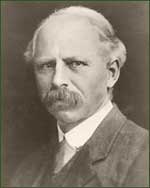 has found a whole social system ready to his hand in skilled workers, machinery, a market, peace and order -- a vast apparatus and a pervasive atmosphere, the joint creation of millions of men and scores of generations. Take away the whole social factor, and we have not Robinson Crusoe with his salvage from the wreck and his acquired knowledge, but the native savage living on roots, berries and vermin. - L. T. Hobhouse
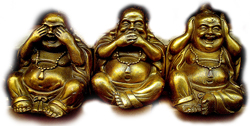 Like Mafia bookmakers, the nation's bookkeepers are apparently determined not to leave a paper trail, claiming to have no clue where the trillions of dollars in public money they have transferred to private hands have actually gone. $9 trillion in Fed off-balance sheet transactions this year? Don't know. Lost from the Fed's $2 trillion portfolio? Can't say. The Congress not only needs to get back the $ trillions. They should ask these hacks to return whatever they've been overpaid for not doing their jobs.


