Cost of Empire: Seven killed in bombing near NATO headquarters in Kabul

Almost 100 more are injured in the blast in one of the most tightly secured areas in the city. The strike on the Afghan capital comes five days before nationwide elections. McCain Administration "undeterred."

(Loosely based on a report from Kabul, Afghanistan, that appeared in today's Los Angeles Times)

Insurgents struck at the main symbol of the Western military presence in Afghanistan today, killing at least seven people and injuring nearly 100 others in a massive car bombing five days before nationwide elections.

The blast, just outside the front gate of the headquarters of the NATO force, was likely aimed at deterring Afghans from voting in Thursday's presidential and provincial assembly balloting, Afghan and Western officials said. The Interior Ministry blamed "enemies of peace and stability in Afghanistan."

At the summer White House in Sedona, Arizona, U.S. President John McCain expressed regret over the loss of Afghan lives. "We knew there'd be setbacks, but this doesn't mean our plan isn't working," he told reporters. "The Afghans are showing enormous courage in the face of threats and intimidations by the Taliban. We expect the elections to be a rousing affirmation of democracy."
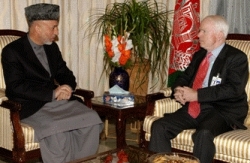
The attack, which took place about 30 yards from the main entrance to the base, also appeared designed to signal that insurgents can strike at will even in the capital's most heavily guarded districts. The attacker or attackers, carrying a payload of about 600 pounds of high explosives, would have had to pass through several rings of security -- checkpoints, rolls of barbed wire, red-and-white-striped safety gates and concrete barriers -- to get this close to the Western military headquarters.

The street is one of the most tightly secured in all Kabul; the U.S. Embassy is next door, and the presidential palace is nearby.

In Washington, organizers of the "Stop McCain's War" march next month also expressed regret about the loss of life in Kabul. "The senseless slaughter will continue," a spokesman said, "until American troops come home." The hrefdemonstration, to take place on Sept. 21, annually designated as the International Day of Peace by the United Nations, is supported by a coalition of labor, peace and human rights groups. A number of Democratic leaders, including U.S. Senator Barack Obama (D-IL), who labeled the war "a dangerous distraction," have promised to participate. Organizers say two million people will gather on the Washington Mall to hear speeches and protest the war.

Meanwhile on Capitol Hill, Rep. Ike Skelton (D-MO), the chair of the House Armed Services committee continues to block consideration of a motion advanced by a majority of the Strategic Forces subcommittee calling for hearings on whether drones being used in Afghanistan and Pakistan, which are alleged to have caused numerous civilian deaths, violate international rules of war. "We won't second guess commanders on the ground," he said. Replied Rep. Jim Langevin (D-RI), the subcommittee chair, "At the very least, the use of drones seems contrary to our effort to win the hearts and minds of people in the region."

In Kabul, NATO's International Security Assistance force said in a statement that several soldiers had been hurt in the bombing, Macedonian fightersbut did not give their nationalities or say where they were stationed at the time. However, the gate is usually guarded by a small contingent of Macedonian soldiers who are relatively exposed to the street.
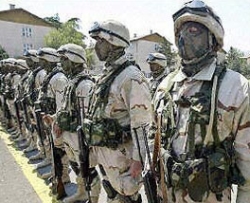
Police initially said the vehicle into which the explosives were packed was a sport-utility vehicle of the type commonly driven by civilian contractors who frequent the base, but determined later the bomb was in a Toyota station wagon, and the SUV had been close by.

The main part of the base, which is headquarters to Gen. Stanley McChrystal, commander of all U.S. and Western forces in Afghanistan, lies a considerable distance from the front gate, beyond more concrete barriers and a maze-like pedestrian entrance. Aides did not immediately confirm whether the general was on base at the time.

As with many such attacks on official installations, the brunt of the explosion was taken by Afghan civilians: employees at the nearby Ministry of Transportation, who were just beginning their workweek, and shopkeepers in a row of nearby small establishments. A small group of Afghan street boys usually congregates at the gate, begging for change from foreigners coming and going on foot.

"I always felt safe here, with so much security -- checkpoints everywhere," said 25-year-old Ahmad, who works at the offices of a charity about 100 yards from the blast site and did not want his last name used. He and other workers were eating breakfast when the blast blew out the heavy plate-glass windows.

The attack was the worst in the capital since February, when insurgents staged near-simultaneous attacks on three government buildings. Those gun-and-bomb strikes left more than two dozen people dead, including passersby and eight assailants.

Afghanistan's Defense Ministry put the toll in today's attack at seven dead and 91 wounded, and said 16 Afghan soldiers and a female member of Parliament, Hawa Alam Nuristani, were among those injured.

Afghan officials for weeks have been urging people to defy Taliban threats and go to the polls on Thursday. President Hamid Karzai told supporters at a rally last week they should vote "even if a hundred bombs explode."

The McCain administration and the Western military are heavily invested in a successful vote, which they hope will enhance the legitimacy of the central government and bolster efforts to increase Afghanistan's self-sufficiency in security matters, allowing for an eventual exit of foreign forces. President McCain has called the balloting the most important event of the year in Afghanistan.

Violence has increased markedly around the country in recent weeks, but most of it has been concentrated in the south, the traditional Taliban heartland and the center of the lucrative drug trade. U.S. Marines and British forces have spent much of the summer fighting bloody battles in Helmand, taking the highest casualties of the nearly 8-year-old conflict.

Military officials have expressed hopes that confronting the Taliban in Helmand would encourage Afghans to come out and vote, but the sometimes-intense fighting has instead prompted many people to flee their homes. Insurgents in some areas have threatened to cut off the fingers of those whose digits are stained with the indelible ink that proves a person has voted.

Today's blast could be heard across much of the capital. It scorched walls, downed tree limbs, gutted several parked cars, shattered windows hundreds of yards away and sent a plume of smoke billowing into the air.

Frightened civilians, some bleeding from their wounds, fled on foot. Passersby stopped cars and even motorcycles to ferry wounded people to hospitals.

International forces swiftly set up a cordon of armored vehicles manned by British, French and other troops, and Afghan police waved traffic away.

A Taliban spokesman made a call to the Associated Press claiming responsibility for the attack, but initially said -- mistakenly -- that the bomber was on foot. Suspicion also fell on the Haqqani network, a Pakistan-based insurgent group that is believed to have carried out some of the most sophisticated and lethal attacks in and around the capital.

More: BBC coverage of suicide bomb near Nato's Kabul headquarters.

[The foregoing, based on an article in today's Los Angeles Times, is not meant to denigrate the Times or its coverage, but to raise questions about the decision by the Obama administration to bog down the U.S in the senseless, unending quagmire in Pakistan and Afghanistan.

The quotes attributed to John McCain, Ike Skelton and Jim Langevin are either made up or mis-attributed; the quote from Sen. Obama is accurate but wildly out of context, the context being his campaign promise that he would be "taking the fight to al Qaeda in Afghanistan and Pakistan." Although there was a quick response from the imaginary McCain White House, 18 hours after the event it does not appear that the real administration wants to draw further attention to the setback by making a comment.

Apparently there were 1,100 pounds of explosives, not the 600 pounds of the earliest reports. So much for security.

“How do you ask a man to be the last man to die in Vietnam? How do you ask a man to be the last man to die for a mistake?” John Kerry famously asked. Will the Democrats, who know better, stop funding these adventures or will they continue to remain quiet about this mistake? How do you ask a man to be the last man to die in the Middle East? How do you ask a man to be the last man to die for oil?]


quote unquote: Howard Zinn on activism

"If democracy were to be given any meaning, if it were to go beyond the limits of capitalism and nationalism, this would not come, if history were any guide, from the top. It would come through citizen's movements, educating, organizing, agitating, striking, boycotting, demonstrating, threatening those in power with disruption of the stability they needed." -- Howard Zinn, A People's History of the United States

Media: Harrison On the Edge

Another alternative media voice, podcaster and radio personality Cary Harrison comes to video:

Heath Care: Glenn Beck changes his mind

Once again, it is left to The Daily Show to reveal the moral hackery, partisan flackery, and intellectual quackery that is Fox News.
The Daily Show With Jon StewartMon - Thurs 11p / 10c
Glenn Beck's Operation
www.thedailyshow.com
Daily Show
Full Episodes
Political HumorSpinal Tap Performance

Clip File: Income Inequality Is at an All-Time High

"Income inequality in the United States is at an all-time high, surpassing even levels seen during the Great Depression, according to a recently updated paper by University of California, Berkeley Professor Emmanuel Saez. The paper, which covers data through 2007, points to a staggering, unprecedented disparity in American incomes. On his blog, Nobel prize-winning economist and New York Times columnist Paul Krugman called the numbers 'truly amazing.'"

The rest of the story: Income Inequality Is at an All-Time High (Huffington Post 2009-08-14)

Clip File: Fiji Water - Threat or Menace?

Barack Obama sips it. Paris Hilton loves it. Mary J. Blige won't sing without it. You probably have some in your yoga bag. How did a plastic water bottle, imported from a military dictatorship thousands of miles away, become the epitome of cool? A must-read case study in marketing mastery from Mother Jones.
If you drink bottled water, you've probably drunk Fiji. Or wanted to. Even though it's shipped from the opposite end of the globe, even though it retails for nearly three times as much as your basic supermarket water, Fiji is now America's leading imported water, beating out Evian. It has spent millions pushing not only the seemingly life-changing properties of the product itself, but also the company's green cred and its charity work. Put all that together in an iconic bottle emblazoned with a cheerful hibiscus, and everybody, from the Obamas to Paris and Nicole to Diddy and Kimora, is seen sipping Fiji.

That's by design. Ever since a Canadian mining and real estate mogul named David Gilmour launched Fiji Water in 1995, the company has positioned itself squarely at the nexus of pop-culture glamour and progressive politics. Fiji Water's chief marketing whiz and co-owner (with her husband, Stewart) is Lynda Resnick, a well-known liberal donor who casually name-drops her friends Arianna Huffington and Laurie David. ("Of course I know everyone in the world," Resnick told the UK's Observer in 2005, "every mogul, every movie star.") Manhattan's trendy Carlyle hotel pours only Fiji Water in its dog bowls, and this year's SXSW music festival featured a Fiji Water Detox Spa. "Each piece of lobster sashimi," celebrity chef Nobu Matsuhisa declared in 2007, "should be dipped into Fiji Water seven to ten times."

And even as bottled water has come under attack as the embodiment of waste, Fiji seems immune. Fiji Water took out a full-page ad in Vanity Fair's 2007 green issue, nestled among stories about the death of the world's water. Two bottles sat on a table between Al Gore and Mos Def during a 2006 MySpace "Artist on Artist" discussion on climate change. Fiji was what panelists sipped at the "Life After Capitalism" conference held in New York City during the 2004 RNC protests; Fiji reps were even credentialed at last year's Democratic convention, where they handed out tens of thousands of bottles.

Nowhere in Fiji Water's glossy marketing materials will you find reference to the typhoid outbreaks that plague Fijians because of the island's faulty water supplies; the corporate entities that Fiji Water has-despite the owners' talk of financial transparency-set up in tax havens like the Cayman Islands and Luxembourg; or the fact that its signature bottle is made from Chinese plastic in a diesel-fueled plant and hauled thousands of miles to its ecoconscious consumers. And, of course, you won't find mention of the military junta for which Fiji Water is a major source of global recognition and legitimacy. (Gilmour has described the square bottles as "little ambassadors" for the poverty-stricken nation.)
The rest of the story: Fiji Water: Spin the Bottle by Anna Lenzer (Mother Jones 2009-08-12)

Community: Future of News and Civic Media

The “Future of News and Civic Media” conference in mid-June, sponsored by Center for Future Civic Media and the John S. and James L. Knight Foundation, showcased some of the work being done as a part of the Knight News Challenge (slogan: "You invent it. We fund it.") on creative ways to provide people with the news and information needed to manage their communities effectively.

Clip File: Pleasant way to go solar - neighborhood cooperatives

Scientific American's George Musser chronicles his experiences installing solar panels on his home in cooperation with his neighbors and taking other steps to save energy in 60-Second Solar.

Reform: Let's get back on track

Single payer is not socialized medicine. People would be free to pick the health care providers -- doctors and medical facilities -- they prefer. Single payer would, however, eliminate private insurance, saving nearly $400 billion annually on useless paperwork by insurance bureaucracies and providers' billing departments, enough to cover the uninsured and plug the gaps in coverage for those with insurance. No other option will provide universal coverage and save money.

How does our health care stack up against other countries' health care systems? It's not a pretty picture.

Clip File: The Case for No Stimulus

There are a large number of politicians in Washington who are pushing a brilliant policy that will have the effect of leaving millions of people unemployed or underemployed for years into the future. Their policy is called "no stimulus."

The idea is that we just let the recession brought on by the housing crash run its course, being careful to do nothing further to boost the economy. According to most projections, after 4 or 5 years the economy will be back on track, with the unemployment rate approaching the pre-recession levels. In the meantime - the rest of 2009, all of 2010, 2011, 2012, and probably much of 2013 and maybe even some of 2014 - millions of people who otherwise would be working, will be unemployed or will only be able to find part-time employment, even though they want full time jobs.
Well, you get the point. The rest of the story:
The Case for No Stimulus by Dean Baker (The Independent 2009-08-11)

Health Care Reform: 32% favor single-payer; 57% oppose (Rasmussen)

It must be discouraging for right wing propagandists that despite decades of whining and puling about the dangers of "socialized medicine" and relentless disinformation about the costly, inefficient, disincentivizing Canadian system, a third of Americans should still favor single-payer health insurance. Seems you can't fool all the people all the time.
Thirty-two percent (32%) of voters nationwide favor a single-payer health care system where the federal government provides coverage for everyone. A Rasmussen Reports national telephone survey finds that 57% are opposed to a single-payer plan.
There's more at Rasmussen Reports.

Reform: 10 Myths About Canadian Health Care, Busted

 "... the better phrase is "Medicare for all."

This piece (10 Myths About Canadian Health Care, Busted by Sara Robinson, TomPaine.com 2008-02-05) circulated widely on the internet a year and half ago. As we enter the endgame of the health insurance reform debate, it's more important than ever that we have all the facts about the fateful choices before us.
2008 is shaping up to be the election year that we finally get to have the Great American Healthcare Debate again. Harry and Louise are back with a vengeance. Conservatives are rumbling around the talk show circuit bellowing about the socialist threat to the (literal) American body politic. And, as usual, Canada is once again getting dragged into the fracas, shoved around by both sides as either an exemplar or a warning -- and, along the way, getting coated with the obfuscating dust of so many willful misconceptions that the actual facts about How Canada Does It are completely lost in the melee. I'm both a health-care-card-carrying Canadian resident and an uninsured American citizen who regularly sees doctors on both sides of the border. As such, I'm in a unique position to address the pros and cons of both systems first-hand. If we're going to have this conversation, it would be great if we could start out (for once) with actual facts, instead of ideological posturing, wishful thinking, hearsay, and random guessing about how things get done up here.
To that end, here's [an essay] aimed at busting the common myths Americans routinely tell each other about Canadian health care. When the right-wing hysterics drag out these hoary old bogeymen, this time, we need to be armed and ready to blast them into straw. Because, mostly, straw is all they're made of.

1. Canada's health care system is "socialized medicine."
False. In socialized medical systems, the doctors work directly for the state. In Canada (and many other countries with universal care), doctors run their own private practices, just like they do in the US. The only difference is that every doctor deals with one insurer, instead of 150. And that insurer is the provincial government, which is accountable to the legislature and the voters if the quality of coverage is allowed to slide.

The proper term for this is "single-payer insurance." In talking to Americans about it, the better phrase is "Medicare for all."

2. Doctors are hurt financially by single-payer health care.
True and False. Doctors in Canada do make less than their US counterparts. But they also have lower overhead, and usually much better working conditions. A few reasons for this:

First, as noted, they don't have to charge higher fees to cover the salary of a full-time staffer to deal with over a hundred different insurers, all of whom are bent on denying care whenever possible. In fact, most Canadian doctors get by quite nicely with just one assistant, who cheerfully handles the phones, mail, scheduling, patient reception, stocking, filing, and billing all by herself in the course of a standard workday.

Second, they don't have to spend several hours every day on the phone cajoling insurance company bean counters into doing the right thing by their patients. My doctor in California worked a 70-hour week: 35 hours seeing patients, and another 35 hours on the phone arguing with insurance companies. My Canadian doctor, on the other hand, works a 35-hour week, period. She files her invoices online, and the vast majority are simply paid -- quietly, quickly, and without hassle. There is no runaround. There are no fights. Appointments aren't interrupted by vexing phone calls. Care is seldom denied (because everybody knows the rules). She gets her checks on time, sees her patients on schedule, takes Thursdays off, and gets home in time for dinner.
One unsurprising side effect of all this is that the doctors I see here are, to a person, more focused, more relaxed, more generous with their time, more up-to-date in their specialties, and overall much less distracted from the real work of doctoring. You don't realize how much stress the American doctor-insurer fights put on the day-to-day quality of care until you see doctors who don't operate under that stress, because they never have to fight those battles at all. Amazingly: they seem to enjoy their jobs.

Third: The average American medical student graduates $140,000 in hock. The average Canadian doctor's debt is roughly half that.

Finally, Canadian doctors pay lower malpractice insurance fees. When paying for health care constitutes a one of a family's major expenses, expectations tend to run very high. A doctor's mistake not only damages the body; it may very well throw a middle-class family permanently into the ranks of the working poor, and render the victim uninsurable for life. With so much at stake, it's no wonder people are quick to rush to court for redress.
Canadians are far less likely to sue in the first place, since they're not having to absorb devastating financial losses in addition to any physical losses when something goes awry. The cost of the damaging treatment will be covered. So will the cost of fixing it. And, no matter what happens, the victim will remain insured for life. When lawsuits do occur, the awards don't have to include coverage for future medical costs, which reduces the insurance company's liability.

3. Wait times in Canada are horrendous.
True and False again -- it depends on which province you live in, and what's wrong with you. Canada's health care system runs on federal guidelines that ensure uniform standards of care, but each territory and province administers its own program. Some provinces don't plan their facilities well enough; in those, you can have waits. Some do better. As a general rule, the farther north you live, the harder it is to get to care, simply because the doctors and hospitals are concentrated in the south. But that's just as true in any rural county in the U.S.

You can hear the bitching about it no matter where you live, though. The percentage of Canadians who'd consider giving up their beloved system consistently languishes in the single digits. A few years ago, a TV show asked Canadians to name the Greatest Canadian in history; and in a broad national consensus, they gave the honor to Tommy Douglas, the Saskatchewan premier who is considered the father of the country's health care system. (And no, it had nothing to do with the fact that he was also Kiefer Sutherland's grandfather.). In spite of that, though, grousing about health care is still unofficially Canada's third national sport after curling and hockey.

And for the country's newspapers, it's a prime watchdogging opportunity. Any little thing goes sideways at the local hospital, and it's on the front pages the next day. Those kinds of stories sell papers, because everyone is invested in that system and has a personal stake in how well it functions. The American system might benefit from this kind of constant scrutiny, because it's certainly one of the things that keeps the quality high. But it also makes people think it's far worse than it is.

Critics should be reminded that the American system is not exactly instant-on, either. When I lived in California, I had excellent insurance, and got my care through one of the best university-based systems in the nation. Yet I routinely had to wait anywhere from six to twelve weeks to get in to see a specialist. Non-emergency surgical waits could be anywhere from four weeks to four months. After two years in the BC system, I'm finding the experience to be pretty much comparable, and often better. The notable exception is MRIs, which were easy in California, but can take many months to get here. (It's the number one thing people go over the border for.) Other than that, urban Canadians get care about as fast as urban Americans do.

4. You have to wait forever to get a family doctor.
False for the vast majority of Canadians, but True for a few. Again, it all depends on where you live. I live in suburban Vancouver, and there are any number of first-rate GPs in my neighborhood who are taking new patients. If you don't have a working relationship with one, but need to see a doctor now, there are 24-hour urgent care clinics in most neighborhoods that will usually get you in and out on the minor stuff in under an hour.

It is, absolutely, harder to get to a doctor if you live out in a small town, or up in the territories. But that's just as true in the U.S. -- and in America, the government won't cover the airfare for rural folk to come down to the city for needed treatment, which all the provincial plans do.

5. You don't get to choose your own doctor.
Scurrilously False. Somebody, somewhere, is getting paid a lot of money to make this kind of stuff up. The cons love to scare the kids with stories about the government picking your doctor for you, and you don't get a choice. Be afraid! Be very afraid!

For the record: Canadians pick their own doctors, just like Americans do. And not only that: since it all pays the same, poor Canadians have exactly the same access to the country's top specialists that rich ones do.

6. Canada's care plan only covers the basics. You're still on your own for any extras, including prescription drugs. And you still have to pay for it.
True -- but not as big an issue as you might think. The province does charge a small monthly premium (ours is $108/month for a family of four) for the basic coverage. However, most people never even have to write that check: almost all employers pick up the tab for their employees' premiums as part of the standard benefits package; and the province covers it for people on public assistance or disability.

"The basics" covered by this plan include 100% of all doctor's fees, ambulance fares, tests, and everything that happens in a hospital -- in other words, the really big-ticket items that routinely drive American families into bankruptcy. In BC, it doesn't include "extras" like medical equipment, prescriptions, physical therapy or chiropractic care, dental, vision, and so on; and if you want a private or semi-private room with TV and phone, that costs extra (about what you'd pay for a room in a middling hotel). That other stuff does add up; but it's far easier to afford if you're not having to cover the big expenses, too. Furthermore: you can deduct any out-of-pocket health expenses you do have to pay off your income taxes. And, as every American knows by now, drugs aren't nearly as expensive here, either.

Filling the gap between the basics and the extras is the job of the country's remaining private health insurers. Since they're off the hook for the ruinously expensive big-ticket items that can put their own profits at risk, the insurance companies make a tidy business out of offering inexpensive policies that cover all those smaller, more predictable expenses. Top-quality add-on policies typically run in the ballpark of $75 per person in a family per month -- about $300 for a family of four -- if you're stuck buying an individual plan. Group plans are cheap enough that even small employers can afford to offer them as a routine benefit. An average working Canadian with employer-paid basic care and supplemental insurance gets free coverage equal to the best policies now only offered at a few of America's largest corporations. And that employer is probably only paying a couple hundred dollars a month to provide that benefit.

7. Canadian drugs are not the same.
More preposterious bogosity. They are exactly the same drugs, made by the same pharmaceutical companies, often in the same factories. The Canadian drug distribution system, however, has much tighter oversight; and pharmacies and pharmacists are more closely regulated. If there is a difference in Canadian drugs at all, they're actually likely to be safer.

Also: pharmacists here dispense what the doctors tell them to dispense, the first time, without moralizing. I know. It's amazing.

8. Publicly-funded programs will inevitably lead to rationed health care, particularly for the elderly.
False. And bogglingly so. The papers would have a field day if there was the barest hint that this might be true.

One of the things that constantly amazes me here is how well-cared-for the elderly and disabled you see on the streets here are. No, these people are not being thrown out on the curb. In fact, they live longer, healthier, and more productive lives because they're getting a constant level of care that ensures small things get treated before they become big problems.

The health care system also makes it easier on their caregiving adult children, who have more time to look in on Mom and take her on outings because they aren't working 60-hour weeks trying to hold onto a job that gives them insurance.

9. People won't be responsible for their own health if they're not being forced to pay for the consequences.
False. The philosophical basis of America's privatized health care system might best be characterized as medical Calvinism. It's fascinating to watch well-educated secularists who recoil at the Protestant obsession with personal virtue, prosperity as a cardinal sign of election by God, and total responsibility for one's own salvation turn into fire-eyed, moralizing True Believers when it comes to the subject of Taking Responsibility For One's Own Health.

They'll insist that health, like salvation, is entirely in our own hands. If you just have the character and self-discipline to stick to an abstemious regime of careful diet, clean living, and frequent sweat offerings to the Great Treadmill God, you'll never get sick. (Like all good theologies, there's even an unspoken promise of immortality: f you do it really really right, they imply, you might even live forever.) The virtuous Elect can be discerned by their svelte figures and low cholesterol numbers. From here, it's a short leap to the conviction that those who suffer from chronic conditions are victims of their own weaknesses, and simply getting what they deserve. Part of their punishment is being forced to pay for the expensive, heavily marketed pharmaceuticals needed to alleviate these avoidable illnesses. They can't complain. It was their own damned fault; and it's not our responsibility to pay for their sins. In fact, it's recently been suggested that they be shunned, lest they lead the virtuous into sin.

Of course, this is bad theology whether you're applying it to the state of one's soul or one's arteries. The fact is that bad genes, bad luck, and the ravages of age eventually take their toll on all of us -- even the most careful of us. The economics of the Canadian system reflect this very different philosophy: it's built on the belief that maintaining health is not an individual responsibility, but a collective one. Since none of us controls fate, the least we can do is be there for each other as our numbers come up.

This difference is expressed in a few different ways. First: Canadians tend to think of tending to one's health as one of your duties as a citizen. You do what's right because you don't want to take up space in the system, or put that burden on your fellow taxpayers.

Second, "taking care of yourself" has a slightly expanded definition here, which includes a greater emphasis on public health. Canadians are serious about not coming to work if you're contagious, and seeing a doctor ASAP if you need to. Staying healthy includes not only diet and exercise; but also taking care to keep your germs to yourself, avoiding stress, and getting things treated while they're still small and cheap to fix.
Third, there's a somewhat larger awareness that stress leads to big-ticket illnesses -- and a somewhat lower cultural tolerance for employers who put people in high-stress situations. Nobody wants to pick up the tab for their greed. And finally, there's a generally greater acceptance on the part of both the elderly and their families that end-of-life heroics may be drawing resources away from people who might put them to better use. You can have them if you want them; but reasonable and compassionate people should be able to take the larger view.

The bottom line: When it comes to getting people to make healthy choices, appealing to their sense of the common good seems to work at least as well as Calvinist moralizing.  

10. This all sounds great -- but the taxes to cover it are just unaffordable. And besides, isn't the system in bad financial shape?
False. On one hand, our annual Canadian tax bite runs about 10% higher than our U.S. taxes did. On the other, we're not paying out the equivalent of two new car payments every month to keep the family insured here. When you balance out the difference, we're actually money ahead. When you factor in the greatly increased social stability that follows when everybody's getting their necessary health care, the impact on our quality of life becomes even more signficant.

And True -- but only because this is a universal truth that we need to make our peace with. Yes, the provincial plans are always struggling. So is every single publicly-funded health care system in the world, including the VA and Medicare. There's always tension between what the users of the system want, and what the taxpayers are willing to pay. The balance of power ebbs and flows between them; but no matter where it lies at any given moment, at least one of the pair is always going to be at least somewhat unhappy.

But, as many of us know all too well, there's also constant tension between what patients want and what private insurers are willing to pay. At least when it's in government hands, we can demand some accountability. And my experience in Canada has convinced me that this accountability is what makes all the difference between the two systems.

It is true that Canada's system is not the same as the U.S. system. It's designed to deliver a somewhat different product, to a population that has somewhat different expectations. But the end result is that the vast majority of Canadians get the vast majority of what they need the vast majority of the time. It'll be a good day when when Americans can hold their heads high and proudly make that same declaration.
Sara Robinson is a twenty-year veteran of Silicon Valley, and is launching a second career as a strategic foresight analyst. When she's not studying change theories and reactionary movements, you can find her singing the alto part over at Orcinus. She lives in Vancouver, BC with her husband and two teenagers.

It appears that this essay was written for TomPaine.Com, the invaluable online public affairs journal of progressive analysis and commentary, but I picked it up from Physicians for a National Health Program, a single-issue organization of medical professionals advocating a universal, comprehensive single-payer national health program. It was distributed also by the independent online newsmagazine, AlterNet. All these sources have rss feeds and/or email newsletters.

Change Watch: White House's secret deal with Big Pharma

Until this week, the most tellingly cynical moment in Washington's two millennium struggle to deny Americans access to adequate health care came in 2003 when the Medicare Prescription Drug, Improvement, and Modernization Act was adopted with a provision that prohibited the government from negotiating on behalf of seniors for lower drug prices (the final bill passed the upper body with 76 votes, so you can stop blaming the Republicans).

That was then. This week came the news that the Obama White House worked out a deal -- in secret -- that accepts at face value the pharmaceutical industry’s celebrated pledge not to charge us for $80 billion worth of drugs over the next 10 years and promises not to bother the drug companies with any further threats to profits.

“Eighty billion is the max — no more or less,” said Billy Tauzin, the chief lobbyist for the drug makers," writes Gail Collins in the Times.
In a past incarnation, he was the congressman who shepherded the Bush plan for Medicare coverage of prescription drugs through the House, in a form that was very, very kind to his future employers. He was also — is this a world of coincidences or what? — a co-founder of the Blue Dog Democrats.

The drug deal, although blessed by the White House, actually emerged from the black hole which is otherwise known as the Senate Finance Committee. The chairman is Max Baucus of Montana, whose powers and responsibilities on health care are so great that they require the political genius and moral fiber of a Rocky Mountain Lincoln. Unfortunately, nobody has ever once described Baucus in anything remotely close to those terms.

Baucus has set up a special bipartisan negotiating committee on health care with his pal Chuck Grassley, the Iowa Republican. He is hoping that if Grassley signs off on a bill, other members of his party will follow. Grassley has said he will not sign off on anything unless a whole lot of other Republicans accept it first.

You will notice that these two plans are not really the same.

The senators on this special committee hail from Montana, North Dakota, New Mexico, Iowa, Maine and Wyoming. This was quite a coup on Baucus’s part, since you have to work really hard to put together six states that represent only 2.77 percent of the population.
Part of our problem, yours and mine, is that we are far too generous in our assessment of our leaders. Senators, representatives, justices, cabinet members, presidents -- after all we've been through since Nixon was driven from office, we still imagine we are led by other than political hacks and petty thieves. And third rate crooks and hacks, at that. If you think I'm overstating, take a look at this performance on the floor of the U.S. Senate by the aforementioned distinguished senator from Iowa, the Honorable Charles Grassley:
The Daily Show With Jon StewartMon - Thurs 11p / 10c
Chuck Grassley's Debt and Deficit Dragon
www.thedailyshow.com
Daily Show
Full Episodes
Political HumorSpinal Tap Performance
The usual reaction to an episode like this is to assume that the offending pol is talking down, that he thinks the people he represents are idiots who need to be treated like third graders. That Grassley is one of the Senate's leaders makes it harder (and scarier) to accept what is more likely the truth: that he's an idiot.

Update: Internal Memo Confirms Big Giveaways In White House Deal With Big Pharma (Ryan Grim; Huffington Post 2009-08-13)are

Clip File: "Good" data visualizations

In a section called Transparency, the online version of activist Good media offers graphical expressions of useful and/or hard-to-understand data about topics as varied as Cash for Clunkers, "The Best and Worst Cities to Look for Work," "The Best States for Alternative Energy," how much money each U.S. senator is taking from HMOs, holidays as celebrated by the United States and by the individual states, the President's garden, sports mascots, Supreme Court nominations, and "The Largest Bankruptcies in History."
2010: Let the people decide

 As they have in last several election cycles, Democratic Party leaders will favor conservative candidates over progressives in next year's primaries

The Times says Carolyn Maloney has decided not to challenge incumbent U.S. Sen. Kirsten Gillibrand in next year's New York Democratic primary (Gillibrand Rival Won’t Run in Primary by Raymond Hernandez - New York Times 2009-08-07). The veteran liberal House member representing parts of Manhattan and Queens earned her shot at the seat. And you'd think the Empire State's registered Democrats might be entitled to decide for themselves whether they prefer to be represented by a traditional Democrat like Maloney or a DLC-style moderate like Gillibrand. But apparently Pres. Obama has signed on to the long-standing Schumer-Emanuel strategy of supporting conservatives over progressives in House and Senate primaries. In May, Steve Israel, the five-term congressman from Long Island, and Manhattan borough president Scott M. Stinger were forced out of the race by the White House. Since being appointed to fill the seat made vacant when Hillary Clinton ascended to the executive branch, Gillibrand has tacked left, suggesting she's another "moderate" with no fixed positions or beliefs. Will it come as a complete surprise if the voters in the general election choose a genuine Republican over an ersatz Democrat?

Press Release: New State-by-State Reports Show How Health Insurance Reform Will Benefit All Americans

U.S. Department of Health and Human Services secretary Kathleen Sebelius today released Stable and Secure Health Care for America, a series of new state-by-state reports outlining how health insurance reform will improve health care for all Americans. Sebelius announced the availability of the new reports as part of a Webcast — “Health Insurance Reform: What’s In It For You?” — where Sebelius and top HHS officials took questions from the American people and discussed the importance of health insurance reform. The new reports are available at http://www.HealthReform.gov.

“These reports show how health insurance reform will help Americans save money, get better care, strengthen their insurance if they already have it, and afford insurance if they don’t,” said Sebelius. “Every American will benefit when we pass health insurance reform.”

The reports released today show reform will:
* Lower health care costs;
* Increase health care choices by protecting what works and fixing what’s broken; and
* Assure quality, affordable care for all Americans.

The Health Care Status Quo at HealthReform.gov.

Clip File: The Health Insurers Have Already Won

In its cover story this week, Business Week reveals how UnitedHealth and rival carriers maneuvered behind the scenes in Washington to shape health-care reform for their own benefit.
As the health reform fight shifts this month from a vacationing Washington to congressional districts and local airwaves around the country, much more of the battle than most people realize is already over. The likely victors are insurance giants such as UnitedHealth Group (UNH), Aetna (AET), and WellPoint (WLP). The carriers have succeeded in redefining the terms of the reform debate to such a degree that no matter what specifics emerge in the voluminous bill Congress may send to President Obama this fall, the insurance industry will emerge more profitable. Health reform could come with a $1 trillion price tag over the next decade, and it may complicate matters for some large employers. But insurance CEOs ought to be smiling....

The industry has already accomplished its main goal of at least curbing, and maybe blocking altogether, any new publicly administered insurance program that could grab market share from the corporations that dominate the business. UnitedHealth has distinguished itself by more deftly and aggressively feeding sophisticated pricing and actuarial data to information-starved congressional staff members. With its rivals, the carrier has also achieved a secondary aim of constraining the new benefits that will become available to tens of millions of people who are currently uninsured. That will make the new customers more lucrative to the industry.
The rest of the story: The Health Insurers Have Already Won by Chad Terhune and Keith Epstein (Business Week Magazine 2009-08-06)

Clip File: Old Banks, New Lending Tricks

Lenders haven't sworn off risky financial products. They've come up with a slew of new ones (Business Week).

Clip File: Once again the Right advances on the strength of a lie

"You do not have health insurance. Let me repeat that. You do not have health insurance."

Go. Read. You do not have health insurance by James Kwak (The Baseline Scenario, 2009-08-05),

Urban Living: City dwellers 'should keep bees'

A new, state-of-the-art be hive developed by a British company named Omlet -- they also make futuristic chicken coops and rabbit hutches -- could put a colony in every garden.
Not only will you wind up with 50 jars of terrific honey, you may help the honey bee population recover from its precipitous decline. Doing well by doing good: you can't beat it.

Reform: Permanent majority? What permanent majority? I got your permanent majority right here.

The following quote from Mark Weisbrot of the Center for Economic and Policy Research is being widely circulated on the Left, for obvious reasons. Me, I have déjà vu:
The Republican party is obviously in disarray as it faces the threat of becoming a permanent minority party. Its hold on power prior to 2008 was based on a fake "populist" appeal to white working class voters - the biggest block of swing voters in most presidential elections during the last four decades. But issues such as gay marriage, guns, abortion, and whether "liberal elites" shared "our values," have lost resonance since the economy collapsed.
Weisbrot's comments were brought on by "the right's rapid and persistent response to Obama's remarks" about the arrest of Henry Louis Gates and the subsequent efforts by Republicans to consolidate their base yet again around an issue involving race. "They don't have much else to run with right now."

You could say as credibly that they haven't had anything to run on for decades. This hasn't kept them from winning policy fights, and it doesn't keep them from controlling the debate. Obama is a tax and spend liberal. Health care reform is too big, too ambitious, too expensive, too rushed; it will take away your current coverage and lead to health care rationing.The budget is the most radical in our history. The budget is the most reckless and irresponsible in our history. This is the most politically obsessed White House in our history. Obama is not a Christian. Obama is not a real American, literally: he's not native born. Health insurance reform is a plot to save money and cull the herd by persuading the elderly to commit suicide.
This is where a reasonable, intelligent, ethical person, say your typical blue-state Democrat, is at a disadvantage. Take health care for the elderly. First the conservatives attack the majority for spending too much keeping old folks alive, then they turn around and bash their opponents for coming up with a plan to kill them.  If you don't care what you say, you can always say something, even if it's nonsense, a tissue of lies, or dead wrong.

Visit msnbc.com for Breaking News, World News, and News about the Economy
[Full disclosure: The forgoing video was not provided by Saturday Night Live]

When Bill Clinton entered the White House, many progressives thought they saw the birthing of a new era. Two years later, in the face of a relentless assault from conservatives, disappointment with government by triangulation, and the health care debacle, the Republicans seized Congress under the flag of the Contract With America. From gays in the military through Monica Lewinsky to stealing the furniture on their way out the White House door, for eight years the Democrats were hammered with non-issues.

By the time George the Younger beat Al Gore, conservatives were confident enough to talk plausibly about a permanent Republican majority. There may be a teachable moment in how that worked out for them.

But if lessons therein reside, there is precious little comfort for progressives in conservative disarray. Fun as they are to watch, Republican pratfalls mask the fact that, in terms of policy, not much has changed: no matter which party nominally is in control, the permanent conservative majority holds sway; cash money, not ideas or morality, remains the chief currency on Capitol Hill; and militarism is strikingly resistant to reform. To make matters worse, as Clinton's presidency demonstrated and Obama's is reaffirming, when the White House is inhabited by a moderate Democrat, the fight goes out of progressive legislators (this is not to say there no differences between the parties: the Republicans under Bush and Gingrich had plenty of opportunity to take care of veterans, for example, but it was Democrats who advanced the new GI Bill that went into effect last weekend). But though the government may be better run under Democrats, the so-called party of the people is only marginally interested in making things more democratic and more accountable.

You can mock the Right's "fake 'populist' appeal," but it doesn't mean it won't be effective against the Democrats' fake populist appeal. It's the Democrats, after all, who run every election on the promise of economic justice, and then after they win say, what, you thought we were serious? The Republicans don't care what comes out of their mouths. Gay marriage not threatening anymore? Forget about it: Health care reform is a socialist plot. Abortion not getting the juices flowing? Time to move on: Obama hates cops. Laugh as you will at Newt Gingrich's American Solutions for Winning the Future, but you're whistling past the graveyard if you think his mantra of "Jobs Here, Jobs Now, Jobs First" has no traction.

It is important to remember that it took the political equivalent of a perfect storm for Barack Obama to win the presidency. He was astonishingly lucky. Lucky in his predecessor. Lucky in his opponents. Lucky in the timing of the economic collapse. Lucky that so many voters  wanted change so passionately they were willing to project their hopes and dreams on the blank screen of his candidacy. And yet, on their way to winning, the Democratic ticket didn't manage to crack 53%.  If the Democrats couldn't crush broke, crazy John McCain and Sarah Palin like bugs, what chance do they have against the plague of lobbyists, reactionaries, lockstep idealogues, corrupt politicos, corporate shills, fear-mongers, race-baiters, charlatans and thieves who have descended on the administration like locusts on a field of new corn?

That the Democrats will emerge weakened from the 2010 election is incontestable; they could even lose the House, just as they did in 1994.  The Democrats will "own" everything: the war in Afghanistan and Pakistan; bad, or no, health care; chronic unemployment; a paralyzing deficit.Why should we care, not about these problems but about the fortunes of the Democratic Party? If the Democrats can't provide universal single payer health care insurance, if they won't bring the troops home and rein in military spending, if they don't support the labor movement and aggressively attack joblessness and poverty, what will they have done to deserve support? A new poll by RasmussenReports finds that Republicans are prefered over Democrats 43% to 38. Since Democrats usually fare better in the polls than at the polls, the situation is likely worse than it appears. The perfect storm has passed.

The Democratic Party shows little interest in systemic change, beyond the occasional nod in the direction of campaign finance reform; but without profound changes in the ways our leaders are chosen and function, the hopes and dreams we fabricated for the Obama campaign will never come true. Particular proposals -- to dump the electoral college; to make the Senate more democratic - or get rid of it; to restrain executive power and return the legislative branch to its place as first among equals; to put an end to the influence of money on electing and on governing; to impose term limits on unelected judges; to introduce mechanisms like instant runoffs and proportional representation that tend toward democracy -- are not immediately at issue: the broader question is, are we ready to commit ourselves full bore to making this country more democratic?

It is past time to take another run at forming a party of the Left. Labor, environmentalists, rights advocates, educators, small business people, cash-strapped parents and home owners, and their ilk have more in common with each other than they do with Wall Street, the insurance parasites, agribusiness, oil and gas exploiters, and the rest of the profiteers and political camp followers grabbing at the public tit, to say nothing of the likes of Joe Lieberman and the Blue Dogs.  Let's stop wasting time servicing either of the corporate parties, except in relation to particular legislation we favor, and build a new one.  Let the Republicans hold up the banner of the Right, and make sure the Blue Dogs can find the sign-up sheet. Cede the center to Nancy Pelosi and Harry Reid. And on the left, create a political home for politicians willing to fight for progressive ideals. If they came from a secure, independent power base, the Lynn Woolseys and Maxine Waterses and Pete Starks and Dennis Kuciniches would be courted by congressional leadership instead of being taken for granted. Parties that stand for nothing are unaccountable (and a party that, say, embraces both Arlen Specter and Russell Feingold can't fairly be said to stand for anything). With clearer choices between ideologically defined parties, voters would be in a better position to get what they want or toss the bums out.

Clip File: California Governor's Race Well Under Way

The election for California's next governor is more than a year away, but already the race is afoot. Carla Marinucci, senior political writer for the San Francisco Chronicle, offers her insights to NPR.

Health Care: Who pays the piper calls the tunes

Last night on Countdown, Keith Olbermann explored some of the ways greed and ideology have distorted the effort to reform health care insurance:

quote unquote: Liberty and the Uses of Government

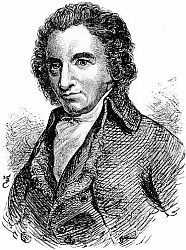
"For were the impulses of conscience clear, uniform and irresistibly obeyed, man would need no other lawgiver; but that not being the case, he finds it necessary to surrender up a part of his property to furnish the means for the protection of the rest; and this he is induced to do by the same prudence which in every other case advises him out of two evils to choose the least. Wherefore, security being the true design and end of government, it unanswerably follows that whatever form thereof appears most likely to ensure it to us, with the least expense and greatest benefit, is preferable to all others." -- Thomas Paine
Clip File: Capitalism, Sarah Palin-style

"We are in a progressive moment, a moment when the ground is shifting beneath our feet, and anything is possible. What we considered unimaginable about what could be said and hoped for a year ago is now possible. At a time like this, it is absolutely critical that we be as clear as we possibly can be about what it is that we want because we might just get it." -- Naomi Klein speaking on May 2, 2009 at The Progressive’s 100th anniversary conference

Blowing in the Wind: The Failed State of California

Here's a Must Read by The Nation's Marc Cooper on California's economic, political, and moral bankruptcy:
You know something is radically wrong when the mere act of the governor and the legislature agreeing on a budget to close a $26 billion deficit after months of haggling is hailed in bold headlines. Or maybe you get the message when you're a state contractor and you get an IOU instead of a paycheck and then find out the banks will no longer honor your scrip. Or you see that state unemployment rates are nudging 12 percent; that in LA County the poverty rate hovers near 20 percent; that some of the thousands of teachers who received pink slips are on hunger strike, while California schools are ranked forty-seventh in the nation; that the state college system has suspended admissions for spring 2010, raised fees 20 percent and forced its faculty to take unpaid leave two days a month; that thousands of state workers are being laid off and those who remain must take three furlough days a month for the rest of the year; that protesters in wheelchairs are blocking the halls of the Capitol; that a number of state parks are being closed; that California's bond rating is just above junk level; that Southern California had its highest peak in personal bankruptcies last year and that so far this year they're up 75 percent over that; and that one in four capsized mortgages in the United States is in California.

To climb out of this abyss may require a constitutional convention, ending the super-majority, restoring accountability by ending term limits, campaign finance reform, reining in the state's out-of-control referendum process, and restoring equity to the tax system by revising Prop 13, or, more likely, all of the above and more.

Go. Read. The Failed State of California: Time to Stop Dreaming by Marc Cooper (The Nation, 2009-07-29)

Health Care Reform: Failure of "public option" might open the door for single-payer

The key battle for single-payer health insurance is in the House Energy & Commerce Committee. There, the chairman, Henry Waxman (D-CA) -- my representative -- showed his true colors by ending a committee meeting early in order to shut down Rep. Anthony Weiner (D-NY) who had the temerity to offer an amendment in support of single-payer (the fear is that it might pass, just as Rep. Dennis Kucinich's amendment to let states adopt single-payer healthcare passed the House Education and Labor Committee last week by 25-19). Waxman justifies keeping single payer "off the table" by citing the need for compromise if anything is to get done in Congress. Trouble is, since he and Barack Obama, NancyPelosi and Chris Dodd "compromised" by closing the door on a single-payer system before negotiations with the conservatives even started -- 86 House Democrats had already signed on to a single payer bill (HR 676) before the current process began, by the way -- all the leaders have left to offer up in a compromise is the so-called public option.

The public option, an insurance provider supported by taxpayers to compete with private insurers, should have been a final offer, if it was presented at all; it should never have been the opening bid. It is beginning to look as if the endgame on health care will come down to a choice between a bad plan and no plan. If there is no plan this year at least the door remains open to real change down the road.

In any case, with the Obama-Pelosi-Waxman public option now likely to fail, there is another, possibly last, chance for single payer. If ever there was an issue worthy of a revolt by the rank and file, this is it. The physical health and financial welfare of tens of millions of Americans are being sacrificed to protect a hive of economic parasites. Obama, Pelosi et al know this, even if they are unwilling to take on the special interests who profit obscenely now. At Democrats.com, a site that services the Democratic wing of the Democratic Party, a chart divides the Democratic members of the Energy & Commerce committee into four categories: supporters of single-payer; those leaning in that direction; the public-option-only crowd (combined with a few profiles in courage who "won't say"); and the Blue Dogs, House members who are so conservative they really shouldn't be allowed to pass as Democrats, but are too smart to make believable Republicans.

No matter what their current position, all these elected officials will get a boost from hearing from you, the supporting and leaning no less than the rest; the public-option-only supporters, some of whom have bet on single payer in the past, may not have a horse in the race much longer and may be salvageable. Rep. Jane Harman is among the leaners, so if you live in California's 35th it might be worth your time to give her a call (other leaners are Diana DeGette-CO, Christopher Murphy-CT, Frank Pallone-NJ, Bobby Rush-IL and Peter Welch-VT). Rep. Waxman's office phone is 202-225-3976: the chairman is probably too invested in the leaders' plan to have his mind changed by calls from mere voters, but at least when the Democrats lose the House in 2010 and the Oval Office in 2012 he won't be able to say he couldn't see it coming.

A new webpage makes finding members' office numbers easy and, as a bonus, offers a "lobbying phone log," a simple way to create a public record of your exchanges with congressional aides. If you want also to submit a written advocacy message, click on the "AFTER recording" link on the page. But don't fail to take advantage of the form for documenting what the people's representatives say to you and how you are otherwise treated.

Change Watch: Obama's military policy is different how?

The cute little counter at the top left of this page is limited to toting up the bill for Iraq in U.S. tax dollars. Every once in a while, we are reminded of the cost in young American lives. What we almost never think of is what it's doing to Iraq. Journalist Jeremy Scahill estimates that the American occupation of Iraq, now the adopted policy of the Obama-Biden administration, has resulted in the deaths of 1,000,000 Iraqis from bloodshed, starvation, and disease.

[If you'd dropped by a few days ago, you'd have been able to see, via a link to YouTube, Scahill's comments about Iraq -- on Bill Maher's show -- edited together into a short coherent piece. However, HBO appears to have decided to remove Maher from the national discussion. Too bad because his voice is needed.]

For this, Obama, Biden et al can share the blame with Bush and company. But when the death toll in Afghanistan and Pakistan starts to climb to similarly obscene levels, the Obama team will own the policy exclusively.

Health Insurance Reform: Obama Finally Admits That Only Single Payer Health Care Will Work

[Based on a communication from PeaceTeam.net, part of a coalition supporting single-payer that includes Democrats.com, AfterDowningStreet.Org and WeThePeopleNow.]

Last night at his prime time health care news conference, President Barack Obama finally admitted to what we have known all along.
"I want to cover everybody. Now, the truth is that unless you have a -- what's called a single-payer system, in which everybody's automatically covered, then you're probably not going to reach every single individual."
There it is, folks. As far as coverage goes, only single payer can fix our shoddy, expensive and unjust health care system.

Next he will be forced to confess that his plan won't save money, either. Even last night, FDR on economic justicethe president talked about the critical importance of "eliminating waste". Only single payer effectively does that, by eliminating the massive overhead (31%) generated by paper-churning insurance industry bureaucrats lining their pockets while conspiring to deny coverage even to those they nominally cover, let alone the uninsured.

This is the single payer moment. Enough Democrats are in favor for it to pass without a single Republican vote. Is saving the insurance companies more important that providing everyone with affordable health care coverage? Is an abstract concept like "bipartisanship" more important than affordable, universal health insurance?

Click on "Pass Single Payer Health Care Now" to reach a form that will send your personal message to all your government representatives. At the same time, if you wish, you can send your personal comments as a letter to the editor of your nearest local daily newspaper.

Take action.

Reading list: Why markets can’t cure healthcare:
Judging both from comments on this blog and from some of my mail, a significant number of Americans believe that the answer to our health care problems — indeed, the only answer — is to rely on the free market. Quite a few seem to believe that this view reflects the lessons of economic theory.

Not so. One of the most influential economic papers of the postwar era was Kenneth Arrow’s Uncertainty and the welfare economics of health care, which demonstrated — decisively, I and many others believe — that health care can’t be marketed like bread or TVs.
-- Paul Krugman's blog (New York Times, 2009-07-25)

Working: Should Thursday Be the New Friday? The Environmental and Economic Pluses of the 4-Day Workweek

Evidence builds that working 40 hours in four days makes good sense for employee health and well-being, too

Writing in Scientific American, Lynne Peeples reports that "working four 10-hour days a week could offer many benefits, including an extra day of rest for employees and the environment."
As government agencies and corporations scramble to cut expenses, one idea gaining widespread attention involves cutting something most employees wouldn't mind losing: work on Fridays. Regular three-day weekends, without a decrease in the actual hours worked per week, could not only save money, but also ease pressures on the environment and public health, advocates say. In fact, several states, cities and companies across the country are considering, or have already implemented on a trial basis, the condensed schedule for their employees.

Local governments in particular have had their eyes on Utah over the last year; the state redefined the workday for more than 17,000 of its employees last August. For those workplaces, there's no longer a need to turn on the lights, elevators or computers on Fridays—nor do janitors need to clean vacant buildings. Electric bills have dropped even further during the summer, thanks to less air-conditioning: Friday's midday hours have been replaced by cooler mornings and evenings on Monday through Thursday. As of May, the state had saved $1.8 million.
Where it has been tried, the shift to a 4-day week has been extremely popular with workers. "People just love it," Lori Wadsworth, a professor of public management at Brigham Young University in Provo, is quoted as saying. She helped survey workers in Utah who follow the schedule and found 82 percent want to stick with it.
The environment seems to like it, too. "If employees are on the road 20 percent less, and office buildings are only powered four days a week," Langmaid says, "the energy savings and congestion savings would be enormous." Plus, the hour shift for the Monday through Thursday workers means fewer commuters during the traditional rush hours, speeding travel for all. It also means less time spent idling in traffic and therefore less spewing of greenhouse gases and other pollutants. The 9-to-5 crowd also gets the benefit of extended hours at the DMV and other state agencies that adopt the four-day schedule.

An interim report released by the Utah state government in February projected a drop of at least 6,000 metric tons of carbon dioxide emissions annually from Friday building shutdowns. If reductions in greenhouse gases from commuting are included, the state would check the generation of at least 12,000 metric tons of CO2—the equivalent of taking about 2,300 cars off the road for one year.
This is an idea that might have some legs. It's good for employers. It's good for employees. It's good for the planet. It may work as well for k-12 schools as it does for businesses and governments. Even taking in to account bureaucratic reluctance to change, this is one reform that may be hard to resist.

The Connecticut Law Review’s fall symposium will be “Redefining Work: Exploring the Legal Implications of the Four-Day Work Week.” It will be held at the University of Connecticut School of Law in October.
GM Lordstown to run 10-hour shifts, 4 days
Struggling Australian companies cutting back to a 4-day week
New York Assemblyman Michael Gianaris Proposes 4-Day Work Week for State Workers
Utah Governor Huntsman Announces Extended Government Service Hours
Four-day workweek creates new volunteers in Utah
El Paso City Council approves 4-day summer work week at City Hall
Melbourne Beach FL goes to 4-day workweek
Idaho: Another local government switching to 4-day week
Oregon: Schools study four-day week

Reform: California's Budget "Plan"

For months, the Governator has been the Bloviator, blathering ad nauseum about his principled reasons for exacerbating the budget crisis. He would hold out for a permanent solution. There'd be no gimmicks this time; no kicking the can down the road; no leaving the mess for future governors and legislators to clean up. Suffering today would mean a happier tomorrow. Promise.

"Blah blah blah" is the same whether you say it in English, Austrian or Austranglish.

Now Schwarzenegger finally has his deal and, guess what?, it's all California's Terminator eyes budget cutsgimmicks, nothing but accounting frauds, rip-offs, hidden agendas and hidden taxes that make punishing cuts in services inevitable. Shame on the Governor for perpetrating this brutal sham -- although, in fairness, should you have expected more?; he has been out of his depth throughout his tenure. More to point, shame on the Ledge's leaders -- no, wait, wrong word: there are no leaders anywhere in sight -- shame on the Democrats, most of whom know better, for going along with it.

Is the crisis real? Sure. The budget shortfall is humungous -- the budget deal is based on the guess that the deficit is $26 billion. There is an old saying to the effect that if your outgo exceeds your income, your upkeep will be your downfall. That California has been spending more than it takes in at least since Schwarzenegger rode into office on the back of an irresponsible promise to cut auto licensing fees is the proximate cause of our downfall. Forget for a moment whether all the state's expenditures are necessary. Forget whether there is bloat and waste. Forget whether there are structural defects in our system of governance. Those are separate questions. The simple matter is that the people's representatives -- especially Republicans of every stripe -- have been unwilling to levy taxes and fees sufficient to pay the bills for government services that Californians want and need.

Although he made the phrase inevitable by his promise not to do so, "kicking the can" -- meaning passing the buck, dodging the bullet, punting, weasling, welshing -- is the journalistic cliche of the hour. This time, though, the can has been kicked so far down the road it may never stop rolling.

If you think I'm exaggerating the tricks and gimmicks underpinning this horror show, consider this: the state's payroll obligations for June 2010, the last month of the current budget year, have been moved -- one day! -- to July 1. The payments will still need to be met, but -- shazam! -- they have disappeared from this year's budget. This sleight-of-hand, providing entirely fictitious savings of $1.5 billion, is a perfect example of budgetary shenanigans of the sort these negotiations were supposed to end (the agreement also calls for speeding up collection of 2010 personal income and corporate taxes to make revenue show up sooner on the books, another accounting trick).

The agreement will gut social programs, including slashing more than $9 billion from spending on education and more than $1 billion each from the health and corrections budgets. It will also reduce by 14% the pay of state workers.

The gory details: K-12 schools and community colleges: $6 billion -- slashed; the University of California and California State University systems: $3 billion -- slashed; Medi-Cal, the state's health care program for the poor: $1.3 billion -- slashed; Department of Corrections: $1.2 billion -- slashed; CalWORKS, the state's welfare-to-work program: $528 million -- slashed (if he had his druthers, Schwarzenegger would terminate the program altogether); Healthy Families, a program that provides health insurance for 930,000 low-income children: $124 million -- slashed; the state's in-home supportive services program for the frail and disabled: $226 million -- slashed; state parks: $8 million -- slashed.

This last pittance probably falls into the hidden-agenda category, as it is expected that it will "require" the closing of some park facilities. Other items on the hidden agenda: selling off part of the State Compensation Insurance Fund, a quasi-governmental agency that is the state's largest provider of workers' comp insurance, fitting in with the Right's privatization efforts -- we'll see whether Sacramento gets anything near the $1 billion it is estimating the fund to be worth; ending the 40-year ban on oil drilling off the Santa Barbara coast, supposedly to bring in $100 million this budget year; shuttering the Integrated Waste Management Board and the Board of Geologists and Geophysicists, pet peeves of the gov; adopting Schwarzenegger's plan to fingerprint health care workers and recipients and to require that caregivers undergo background checks, although the budgetary opportunities these actions provide are mystifying; and giving the governor authority to sell some state-owned facilities, including the Orange County Fairgrounds, the Public Utilities Commission Building in San Francisco and the Ronald Reagan State Office Building in Los Angeles (another of this governor's dumber ideas -- thank heavens he's being termed out).

Perhaps the most pernicious aspects of the deal are the devastating attacks on the coffers of county and municipal governments, the units of governance that provide the services most people  rely on most. The plan will "borrow" about $2 billion from local property tax revenues, money that the co-conspirators promise to repay with interest in three years. If it is paid back, it will be fair to call it borrowing. Outright theft, however, is the only reasonable description of the more than $1.5 billion in redevelopment money and the nearly $1 billion in transportation funding -- the rare case when "highway robbery' is not metaphor -- that will be taken from local authorities and transferred to Sacramento if the agreement passes.

There are fanciful elements to the plan, as well, like the idea that the state will be able to bill the Feds for some of the cuts in Medi-Cal or that school districts will gain anything useful from the option of cutting the already short school year by five days or that the state is going to be able to cut prison costs by the (perfectly reasonable, but politically unfeasible) expedient of releasing 23,000 inmates or that foundations, non-profits and other non-governmental groups can make up for the lost social services.

It's probably too much to hope that the progressives in the legislature will turn this deal down. That would be irresponsible, and no self-respecting Democrat would ever be that. But with the state's credit rating already in the crapper and millions of Californians sure to be hurt anyway, it's hard not to wonder if the good wouldn't outweigh the harm should the Gov and the Ledge be forced to stop playing games. When the voters rejected the passel of scammy budget measures in the spring, the basic message was clear: go do your jobs. It'd still be the best way out of this mess.

See, also: 55% of California Voters Oppose State Budget Deal (Rasmussen Reports)

Update: California Legislature finally approves budget deal (Los Angeles Times, 2009-07-25). Unexpectedly, the Ledge held the line against oil drilling off Santa Barbara and the grab at local transportation funds. A case of nothing is better than something.
 
Related Posts with Thumbnails