Reform: A California Constitutional Convention?

We've talked before about the need for political reform.  As Repair California puts it, in California "government suffers from drastic dysfunction – our financing system is bankrupt, our prisons overflow, our water system teeters on collapse, our once proud schools are criminally poor, our democracy produces ideologically‐extreme legislators that can pass neither budget nor reforms, and we have no recourse in the system to right these wrongs." Don't tread on me?To take a specific example, a 2/3 majority is required to raise taxes or to pass budgets; this means fiscal policy is in the control of a cadre of minority legislators that the majority of voters is incapable of holding to account. It is tempting to blame the Democrats or the Republicans, the legislature or the governor, or even ourselves, but it isn't anyone's fault. Nothing gets done because nothing can get done. The system is broken.

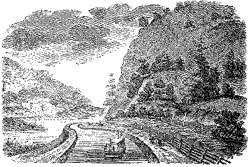
Californians adopted the current constitutional framework in 1878. The last major reforms took place piecemeal in the 1960s and 70s. Even if the system hadn't ground to a halt, it would be past time for California to examine the way it conducts public business. Running a 21st century state with a patched-up 19th century contraption like the California constitution is like trying to make it through the Cajon Pass in a horse and buggy.

Policy wonks who want to revise the state constitution or write a new one are coming up with ideas beyond getting rid of the 2/3 rule. A unicameral legislature. A parliament. A part-time legislature. Proportional representation. Instant run-offs. Public campaign financing. Some of these suggestions are designed to empower the electorate and increase accountability, some clearly intended to limit democracy (if someone tells you they have a big concern about the risk of a "runaway convention," you are permitted to wonder if they harbor mixed feelings about democracy).

Delegates to a constitutional convention might be appointed, elected, or chosen by lot, or by a formula that involves all three (or Publishers Clearing House could do it: "You may already be a delegate to the California State Constitutional Convention"). Appointment by political leaders and various organized constituencies (the governor, the ledge, good government types like the League of Women Voters, "special interests" like labor, business and minorities, and so on) is pretty obviously a non-starter. At the other end, Stephen Hill, director of the political reform program of the New America Foundation and author of the useful handbook "10 Steps to Repair American Democracy," likes random selection. "This method might sound the strangest," he writes,
but actually may hold the most promise. It has been used in Canada and elsewhere. A scientific sampling of Californians would be randomly selected from the statewide voter list, like a jury pool.

The Bay Area Council, a group of business leaders, has proposed randomly selecting 400 Californians to create a body of average citizens who could bring their common sense and pragmatism to the problems at hand. Those delegates would be paid to participate for eight months, starting with an intensive two-month education process in which they would hear from many experts about the problems and potential solutions for California.

Random selection likely would be the best method for ensuring a truly representative body and for shielding delegates against special-interest influence. And a group made up of "people just like us" brings a sense of grass-roots legitimacy to the process.
A jury pool. Hmmm. My own preference would be to hold elections. The practice is comfortable and familiar and it gives every citizen a chance to participate. It might seem natural to use existing legislative districts as boundaries, but only if you're trying to hold down the number of delegates. (At one informational meeting I attended, someone mentioned that a process in New Orleans to decide how to spend post-Katrina recovery dollars had involved 4,000 citizens; if the Big Easy can engage 4,000 of its people in complicated decisions about capital expenditures, surely California can do better than to rely on 40 -- the size of the state senate, or the assembly's 80 or even the 400 proposed by the Bay Area Council -- of its citizens to make choices that will decide the future direction of the state over the next several generations).

Hill believes that competing in elections will "require significant financial resources, giving an advantage to candidates who have access to money, organized special interests and political party support." But if the number of delegates is increased, the size of each district will be reduced and with it the cost of running, thus reducing in proportion the influence of money. If, for example, the population were to be divided into units of 10,000 then people would be more likely to know personally the representative who is chosen locally and the delegate count would still only amount to about 3,676 individuals, but ones far more accountable than if selected by appointment or randomly (base the calculations on the state's roughly 23,000,000 eligible voters, instead of the number of residents, and you get only 2,300 delegates -- you could hold this party in a cozy little venue like the Santa Monica Civic Auditorium and have room to spare).

Admittedly, elections can be unduly influenced by special interests, but I think there is a greater risk of undue influence coming from another quarter: a panel of average citizens, however well vested with pragmatism and common sense, would of necessity be at the mercy of staff. Having witnessed and participated in countless schemes intended to involve citizens in government, I am mightily suspicious of any proceeding that does not give delegates control of their own agenda. Hill says his body of average citizens "would hear from many experts about the problems and potential solutions for California." But who would select these experts? Who would frame the questions? Who would guide deliberations? If experience is any guide, it will be the rope pullers and scene riggers who run the show. If there is a "runaway convention," as likely as not it will be running away from its staff of wranglers.

While it's true that California is in crisis, a rush to create a new constitution -- the organizers of this movement have set a target of 2012 -- could end up being counter-productive. Even should the deadline be met, if the groundwork is insufficiently laid by a full-scale educational campaign and extended debate, and the citizenry invested in the outcome by having participated at every stage, there is no guarantee that the new document will be approved by an electorate that has too often allowed itself to be taken in by anti-government and anti-tax rhetoric. In the meantime, equal energy needs to be expended in pursuit of other remedies, solutions that can be achieved more quickly and more cheaply, and that could make the need for constitutional overhaul less intense (if, for example, by initiative, the property tax rolls are split and the 2/3 rules replaced by the more democratic and more accountable 50%+1).

If you're interested in participating in creating a new California constitution, you better get involved now. Fateful decisions are already being made.
ReformCalifornia.Org (New America Foundation)
RepairCalifornia.Org (Californians for a State Constitutional Convention)
The big constitutional convention question: Who's going to fix California by Steven Hill (Los Angeles Times)
10 Steps to Repair American Democracy by Steven Hill (PoliPointPress).
Californians Want Change After Budget Impasse by Ina Jaffe (All Things Considered - NPR) Listen.


Change Watch: First timber sale in roadless area under Obama

Environmental activists hoped that Dept. of Agriculture secretary Tom Vilsack would impose a temporary moratorium on timber road-building in roadless areas. Instead, Tongass National Forest: prognosis?as Kate Golden reports in the Juneau Empire, the former Iowa governor is hawking timber in the Orion North roadless area of the Tongass, not surprising for a longtime promoter of industrial agriculture.  Barack Obama supported the roadless rule in his campaign, but Vilsack appears to have decided that "protected" wildernesses don't actually need protection and "roadless" doesn't mean without roads.

The U.S. Forest Service agreed Monday to sell timber to a Ketchikan mill in a roadless area of the Tongass National Forest after the Obama administration's approved the sale.

Orion North timber sale is the first such awarded since Secretary of Agriculture Tom Vilsack announced in May he would personally review all timber sales in roadless areas of national forests in the next year.

He's doing that while the Obama administration takes some time to review the Clinton-era Roadless Area Conservation Rule, which banned road-building on about 58 million acres of national forest land nationwide but has been challenged since it was issued.

The rest of the story: Juneau Empire.

Take Action.

UPDATE: Obama asks court to block forest road building
WASHINGTON — The Obama administration says it will defend a 2001 rule imposed by President Bill Clinton that blocked road construction and other development on tens of millions of acres of remote national forests.
The rest of the story: Obama asks court to block forest road building (The Spokesman-Review/AP 2009-08-13)

Change Watch: Do we support democracy or not?

As I said during the campaign, on the foreign policy side, it would make no difference who won. Obama, Clinton, McCain...we would remain in Iraq, expand the An image of our designs on Africa?war in Afghanistan and Pakistan, continue to pursue a program of aggressive militarism (vide, Africom, our scheme to bring peace to Africa by militarizing it), and so on. What was the choice of Biden as veep but a wink and a nod to the military, the intelligence community and the foreign policy establishment that Obama was reliable? The Democrats could be counted on to put a more palatable spin on our activities overseas, but in no way to alter the fundamentals. So it was no surprise that we didn't act aggressively last month to restore the democratically elected president of Honduras, Manuel Zelaya, after he was driven into exile by a military coup.
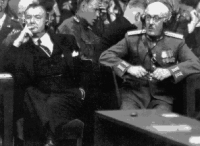
...is the Obama administration simply trying to change the appearance of the USA internationally or are they attempting to shift US policy? The response to the Honduran coup seems to indicate the former. They do not want the appearance of the demonic Bush administration, but they are not prepared to support a Honduran administration which is allied with the likes of Venezuelan President Chavez and Bolivian President Evo Morales. Instead this starts to appear to be a Clintonian solution, i.e., a repetition of President Bill Clinton's approach to the coup people in Haiti in 1994. He-Clinton-was prepared to restore democratically elected President Jean Bertrand Aristide, however he would do so only under certain conditions (one being giving up on his populist economic program and the second being that he was only to serve out the remainder of his term despite the fact that years had been robbed from him). In the Honduran case, a "compromise" might be offered that simply restores President Zelaya but essentially neuters him.

So much for Honduran sovereignty; so much for a different US approach to foreign affairs....
-- The Honduran Coup, the Media and Obama by Bill Fletcher, Jr on Black Commentator

See also, No Justification for Coup by Bertha Oliva (Miami Herald 2009-07-15)

Technology: How CBS Evening News can become #1

And now, the news:
Everything sounds better with Auto-Tune.
Auto-Tune the News on YouTube.

Change Watch: Obama continues Bush policies on faith-based social services

The White House's Office of Faith-Based and Neighborhood Partnerships (OFBNP), which oversees a network of faith-based and neighborhood partnership centers at eleven federal agencies, writes Sarah Posner in The Nation,
while still a work in progress, is plagued by a lack of transparency and accountability and has seemingly already been exploited as a tool for rewarding religious constituencies with government jobs--exactly the problems that marked Bush's faith-based initiative.

Indeed, the structure of Obama's OFBNP looks quite similar to Bush's: a White House office (now under the direction of 26-year-old Joshua DuBois, the former religious outreach director of the Obama campaign) guides the project overall. Mara Vanderslice, founder of the Matthew 25 PAC, which supported Obama, works with DuBois. In addition, the centers at federal agencies oversee the disbursements of grants to faith-based and community nonprofits, some of which will, in turn, train faith-based organizations.

The Obama administration has said the project will not just dole out money; it also intends to form nonfinancial partnerships with faith-based and community groups to deliver social services. But the financial relationships remain. For example, although Obama's 2010 budget eliminated the Compassion Capital Fund, the pot of money administered to faith-based groups through HHS in the Bush era, $50 million has been authorized in the stimulus bill for a new Strengthening Communities Fund, which will be disbursed to nonprofits and state, city, county and tribal governments to train faith-based and other nonprofits to help "low-income individuals secure and retain employment, earn higher wages, obtain better-quality jobs and gain greater access to state and Federal benefits and tax credits."

Watchdogs are concerned that, as with Bush's fund, controls are insufficient to ensure constitutional protections, transparency or accountability. "These problems will persist until this administration stops operating under the Bush-era executive orders and regulations that still govern the faith-based programs," says Marge Baker, executive vice president of People for the American Way.
The rest of the story: The Nation (2009-07-15).

Reform: Proportional Representation

For a discussion of a version of proportional representation especially tailored to fit California, see Remapping a Nation without States Personalized Full Representation for California's 21st Century by Mark Paul and Micah Weinberg (New America Foundation).

Torture: Democracy cannot survive without accountablity

Attorney General Eric Holder is considering appointing a special prosecutor to investigate whether crimes were committed by Americans who tortured prisoners in the wake of 9/11. It goes without saying that torture is contrary to American values. It is also against the law. In the aftermath of World War Two, at the war crimes trials at Nuremberg, we held the Nuremberg precedent requires action by the Justice Deptarchitects and engineers of Nazism responsible for Germany's actions in violation of international law and civilized behavior. Today, justice will not be served equally if only low-level soldiers and security personnel are held accountable for crimes that were planned and executed at the highest levels of government. Holder is getting resistance from within the Obama White House and will need public support if he is to proceed. But it is important that, if he does go ahead, no compromise be struck that allows the appointment of a prosecutor who is prohibited from following the evidence up the chain of command.

Working Assets' CREDO Action has ginned up a petition to help the A.G. stick to his guns:
"Attorney General Holder, it is your duty to uphold the constitution and protect the rule of law. The evidence before you demands that you launch an investigation into possible crimes committed under the Bush administration and to prosecute if warranted. This investigation must not be limited to low-level foot soldiers, but should seek justice at the highest levels. Assign a prosecutor to investigate torture and do not rule out as targets architects of the Bush administration's torture program including former Vice President Dick Cheney and his legal adviser David Addington."
You can sign the petition here.

See, also: Clamor grows over CIA secrets.
Follow up: International Justice Group Takes Aim at Bush Officials (Washington Independent 2009-11-17)

Health Care: What will you not do for your country

Now that the nation's hospitals have offered to give up $155 billion in future Medicare and Medicaid payments and America’s largest private health care insurers say they'll give back as much as $2 trillion by reducing the growth rate of health care spending by 1.5% per year during the next decade, all to help defray the cost of President Barack Obama's health care plan, I've decided the least I can do as an average citizen is not to opt for expensive elective surgery during the same period.

Between now and 2020, therefore, I pledge not to get hair transplants ($10,000), Invisalign braces ($5,000), a neck and profile lift ($5,300), calf implants ($4,500) or buttock augmentations ($18,000 -- I know that sounds expensive, but I'm giving up a trip to Brazil), rhinoplasty ($5,500), otoplasty (as you age, your ears just get bigger and bigger -- $2,800 each or $5,600), and liposuction (hips -- $2,400; outer thighs -- $3,000; buttocks -- $1,800); plus non-surgical fees (figure $128,000 spread out over all these procedures), for a grand total of $189,100.

Doesn't sound like much compared to the billions and trillions being donated by the hospitals and insurance companies, but if even 1% of 300 million Americans make the same contribution I am, we will save $567,300,000,000, and be happy to do it.

Actually, I'm even willing not to have these procedures every year, increasing the savings ten fold!

So, my fellow Americans, the challenge is this: ask not what your country cannot do for you, ask what you can not do for your country.

Health Care Reform: Bill Moyers interviews health insurance industry whistle blower Wendell Potter

As chief propagandist for Cigna, the nation's fourth-largest health insurer, Wendell Potter helped the for-profit insurance industry hijack our health care system and put profits before patients. Now -- the scales having fallen from his eyes -- he Health insurance whistle blower Wendell Potterreveals to Bill Moyers how the health care insurance companies are undermining health care reform. Here, for example, is what he has to say about the industry's campaign to discredit Michael Moore's Sicko.

Go. Watch the interview. Listen to the podcast. Read the transcript. Download the vodcast.

2012: Heeeeeeere's Sarah

I don't often agree with Tony Blankley, but he's right that Sarah Palin is far from "washed up" despite her resignation as Alaska's governor (she actually got a boost among Republicans by quitting). While it's doubtful she will be the Republican standard bearer in 2012, with the inevitable talk show on Fox or CNN, a huge campaign chest, and hundreds of grateful GOP candidates from U.S. Senators to dog-catchers, she may be in position by then to determine who is.

From here, it's difficult to see how Palin has hurt herself, except with people who already disdain her. No longer "part of the problem" as an incumbent politico, she'll be free to scurry from fund-raiser to fund-raiser piling up truck-loads of dough as she rails against big government. Conservative candidates at every level will be indebted for the cash and attention she'll win them in 2010. In 2012, well-funded and with a hard-core following, she will be key to the success of the eventual nominee -- whether it's Mitt Romney, Mike Huckabee or, as I fear, despite his high negatives, Newt Gingrich -- who will have to court her if he wants to hold on to the base. None of the other GOP presidential wannabes connects with the paranoid Right with the intensity of Sarah Palin. They adore her. As a result, she may more than influence the final outcome of the GOP competition; she may be the kingmaker.

For the nonce, a Rasmussen poll finds Palin in a virtual tie for Republican affections with Romney and Huckabee  (although her negatives are much higher than theirs). Romney is fully up to the job of sacrificial lamb, the next Walter Mondale or Bob Dole, but even though, currently, he seems to offend the fewest members of his party, it's difficult to picture him as the GOP standard bearer, if, as seems likely, the party appears to have a real shot at winning. Barring some unforeseen scandal, I think it will come down to Huckabee vs Gingrich; the former Arkansas governor wouldn't gain much from adding Palin to his ticket, but the slick ex-speaker sure would. And Palin's most likely path to the Oval Office is still through Number One Observatory Circle.

Gingrich-Palin 2012.* You read it here first.

Haven't had enough?: Part 2 of Sarah Palin's resignation press conference.

Update: another non-obituary of Sarah Palin -- She Broke the G.O.P. and Now She Owns It by Frank Rich (NYTimes).

Update: fortunately for us, we have Conan O'Brian and William Shatner to decipher Palin's speech:

* As a prophylactic, I thought I might register some urls. Guess what. Gingrich-Palin.com, GingrichPalin.com, GingrichPalin2012.com, and a host of other combinations are being husbanded by entrepreneurial types (or, possibly, political cranks)  in places like Tampa and Scottsdale. You've been warned.

Lies, Damned Lies & Statistics: The truth is out there (or the facts, anyway)

Ask FactCheck is a page on the Annenberg Public Policy Center's Political Fact Check site where a team of journalistic watchdogs responds to frequently asked and general interest questions from the public. Here are some recent queries:
Is it true that persons older than 59 can't get heart surgery in England? There's no such prohibition on heart operations in England, as a chain e-mail claims.

Is the ACLU suing to have cross-shaped headstones removed from military cemeteries? The ACLU has filed no such suit, and it hasn't sued to "end prayer from the military" either.

Was Obama rude to wounded veterans during a visit to the National Naval Medical Center? A chain e-mail that makes such a claim gets several facts wrong and is disputed by an official who was present at the meeting.

Is ACORN providing workers for the 2010 census? No. ACORN employees will not be taking the census. The group is one of more than 30,000 "partners" that will help publicize the event.

Go. Ask FactCheck.

Clip File: Long War Needs Long Peace Movement

"The simultaneous conflicts in Iraq, Afghanistan, Pakistan and beyond are all connected to the Pentagon strategy of 'the Long War' projected to last fifty years in 'the arc of crisis' that just happens to stretch across Muslim lands where there are oil reserves and plans for Western-dominated pipelines. The term 'Long War' was introduced by Gen. John Abizaid in the 1990s and is the perspective of counterinsurgency experts around the Pentagon and think tanks led by the Center for New American Security.

"The Long War will require a long peace movement, and a different one."

-- Long War Needs Long Peace Movement by Tom Hayden (Huffington Post, 2009-07-01)

Insurance Reform: Save The Insurance Companies!

In the fight over health care insurance reform, the underlying conservatism of many so-called liberal Democrats is being exposed. Sen. John Kerry is the latest, demonstrated by his proposal to delay the creation of a public option for 10 years by including in the legislation a "trigger" that would activate competition only if the insurance companies fail to control costs by 2020. The insurance industry had more than half a century to show that it can operate equitably and efficiently. It didn't. It hasn't. It can't. It won't.

Insurance companies like the public option because it will give them a government-supported refuse heap on which to dump people with expensive health problems while the companies haul off premiums paid by healthy folks. John Kerry looking out for the insurance businessIt's good business practice to cherry pick government contracts for goods and services that are cheap to provide while burdening the public with tough, costly problems. It's done all the time, in areas as diverse as security, transportation, education, utilities and prisons -- wherever public officials are too corrupt, stupid or craven to protect the public interest.
The plan providing for a publicly funded insurance option being advanced by the administration and supported by most senate leaders (even Arlen Specter wants a public option provision) already represents a retreat from progressive policy. Universal public insurance -- the so-called single-payer system most familiar to us because it is the way that Canada provides for its citizens -- that removes insurance overhead and bureaucracy from the health care system is the method used in most countries, for good reason. It would be understandable that Kerry would support his president's proposal. But his effort to undermine even the public option can only be understood if you accept that the debate in the senate is not over the health of the people but the health -- the continued profits -- of the insurance industry.

Insurance companies have failed to control costs and rein in greed in the more than 60 years since FDR, in his call for an "Economic Bill of Rights," cited "the right to adequate medical care and the opportunity to achieve and enjoy good health." Senator Kerry has to know the insurance companies aren't going to change now and or in ten years or in another half century, as he agreed when he supported the immediate adoption of the public option when it was first proposed by the president. Yet now he is willing to undermine the best chance this country has had to catch up with the rest of the world in providing its citizens with universal access to health care by neutering the White House's already timid proposal.

As the wealthiest solon, John Kerry is probably beyond the reach of corruption. And, although it's possible that a privileged lifestyle has rendered him clueless about the lives of the ordinary citizens he claims to represent, there is no evidence he is stupid. Maybe he's just too craven, too pitifully afraid of being called bad names -- radical! anti-capitalist!! oh, horrors, socialist!!! -- by Rush Limbaugh and Glenn Beck to stand up for the people against the powerful, greedy and unscrupulous insurance industry. Nice suit, Senator!
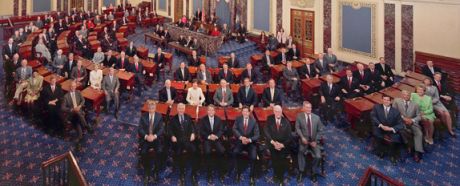
Or maybe he's just another of the corporatist shills who sit like obedient school children in the semicircle of desks on the senate floor waiting for industry lobbyists to teach them what to do.

Clip File: The Obama Adminstration Helping to Upgrade Pakistan's Nuclear Weapons

"If the worst, the unthinkable, were to happen,” Hillary Clinton recently told Fox News, “and this advancing Taliban encouraged and supported by Al Qaeda and other extremists were to essentially topple the government … then they would have keys to the nuclear arsenal of Pakistan.” Many will note that the extremists posing this unthinkable prospect were set up in business by the U.S. in the first place. Very well buried is the fact that the nuclear arsenal that must not be allowed to fall into the hands of our former allies has been itself the object of U.S. encouragement over the years and is to this very day in receipt of crucial U.S. financial assistance and technical support. -- from How the U.S. Has Secretly Backed Pakistan's Nuclear Program From Day One by Andrew Cockburn (CounterPunch)

Block That Metaphor: Jerry Brown Superstar

This is not to knock Jerry Brown. His is a long and honorable public career. But even by the diminished standards of contemporary California political journalism, ...not that journalistic standards were high to begin withthe profile of the past and future governor by Scott Sabatini on Examiner.com is silly:

Despite his 71 years, California Attorney General Jerry Brown has never been caught behind the times. Over a political career that has out-survived even Morris the Cat, Brown has become the Rolling Stones of California politics, played on both the classic rock station, the oldies and Top 40 playlists alike.

His is one act -- no matter how many times folks have said it has grown stale -- that continues to pack the house come election day.
From The Contenders: Brown's classic rock back in fashion in 2010 by Scott Sabatini (Examiner.com).

Environment: Accentuating the Positive

Having followed with interest over the last few years the efforts of the Breakthrough Institute to reorient our thinking about environmental issues, it was electrifying to hear the progressive think tank profiled at length this ayem on NPR's Morning Edition. You can listen to the segment online here, but in a nutshell Breakthrough founders Michael Shellenberger and Ted Nordhaus address economic and environmental issues with an agenda that stresses positive action over negative reaction. Lots to read on the site.

Accountability: Was the Bush administration seditious?

If you are wondering if there is legally damning evidence of a conspiracy by the Bush-Cheney crowd to overthrow the Constitution, consider this from an interview by Naomi Wolf with Michael Ratner, president of the Center for Constitutional Rights. The recently released memos by Bush justice department attorney John Yoo, Ratner says, deliver a call for "law by fiat.
I call it 'Fuhrer's law.' What those memos lay out means the end of the system of checks and balances in this country. It means the end of the system in which the courts, legislature and executive each had a function and they could check each other.

What the memos set out is a system in which the president's word is law, and Yoo is very clear about that: the president's word is not only law according to these memos, but no law or constitutional right or treaty can restrict the president's authority.

What Yoo says is that the president's authority as commander in chief in the so-called war on terror is not bound by any law passed by Congress, any treaty, or the protections of free speech, due process and the right to be free from unreasonable searches and seizures. The First, Fourth and Fifth amendments -- gone.

What this actually means is that the president can order the military to operate in the U.S. and to operate without constitutional restrictions. They -- the military -- can pick you or me up in the U.S. for any reason and without any legal process. They would not have any restrictions on entering your house to search it, or to seize you. They can put you into a brig without any due process or going to court. (That's the Fourth and Fifth amendments.)

The military can disregard the Posse Comitatus law, which restricts the military from acting as police in the the United States. And the president can, in the name of wartime restrictions, limit free speech. There it is in black and white: we are looking at one-person rule without any checks and balances -- a lawless state. Law by fiat.

Who has suspended the law this way in the past? It is like a Caesar's law in Rome; a Mussolini's law in Italy; a Fuhrer's law in Germany; a Stalin's law in the Soviet Union. It is right down the line. It is enforcing the will of the dictator through the military.
Go. Read: Do the Secret Bush Memos Amount to Treason? Top Constitutional Scholar Says Yes by Naomi Wolf (AlterNet)

Single Payer: Fight Fake Health Care Reform

While public policy should not be made on the basis of polls, polling can help elected officials to get a sense of what voters want overall. In a democracy, policy makers are expected to do their utmost to reflect the will of the people, collectively arriving at the greatest good for the greatest number. And understanding the public's wants and needs makes it easier to explain in terms that people can understand why one solution to a problem may be preferable to another.


As rough as sledding in Congress is for universal health care, in poll after poll Americans overwhelmingly support the creation of a health care option that is publicly funded. What's more, despite the endless drumbeat against single-payer (Canadian-style) health care insurance, citizens are ready in large numbers to scrap the private insurance industry altogether. This is why insurance industry lapdogs like Joe Lieberman, Susan Collins, Ben Nelson and Max Baucus are so busy trying to come up with alternatives that will appear to provide universal health care without really challenging the current system.

With single-payer being kept "off-the-table" by the Obama administration and the Democratic legislative leadership, supporters of universal health care are reduced to fighting off frauds, such as the health care "cooperatives" advanced by insurance industry apologist North Dakota Democrat Kent Conrad. For example, the political action group MoveOn.Org will send a fax to senators in your name demanding that a "strong public health insurance option must be part of health care reform this year." The fax argues that any plan that is adopted has to be:
Available to all of us: A strong public health insurance option should be available to anyone who chooses to participate. If you like your current plan, you can keep it; if you want to participate in the public health insurance plan, you can choose that.

A national plan with real bargaining clout: In order to truly control costs and compete with private health insurance plans, a strong public health insurance option must be available nationwide.

Ready on day one: Every day we wait on real reform, health care costs continue to rise. A strong public health insurance option with a broad network of providers right out of the gate is key to building a competitive program that will help control costs.

A truly public plan: To ensure it's held to the highest standards of accountability, a public health insurance option must be truly publicly run—accountable and transparent to Congress and to voters.
Don't give up the fight for single-payer, but in the meantime access MoveOn's petition here to express your feelings about the alternatives.

Go. Read. New Poll Shows Tremendous Support for Public Health Care Option.

Update: The Sickening Addiction That May Kill Reform by Joe Conason (Rasmussen Reports):
If Congress fails to enact health care reform this year -- or if it enacts a sham reform designed to bail out corporate medicine while excluding the "public option" -- then the public will rightly blame Democrats, who have no excuse for failure except their own cowardice and corruption. The punishment inflicted by angry voters is likely to be reduced majorities in both the Senate and the House of Representatives -- or even the restoration of Republican rule on Capitol Hill.

Economy: How would you fix California's budget problems?

California is facing a seemingly intractable budget crisis. The unwillingness of the state's leaders, and its voters, to face up to the need for tax increases has left its once enviable infrastructure, including one of the best school systems in the world, in tatters. The Next 10 California Budget Challenge presents you with the same choices elected officials are struggling with, and forwards your solutions to legislators and the gov. Since apparently no one is willing to address Prop 13, the anti-democratic budget process (a super-majority is required to pass tax increases), out-of-control ballot initiatives, and a chief executive in way over his head, the whole thing is an exercise in futility, but for policy wonks its kind of fun.

Go. Take the challenge: Next 10.

Clip File: What a Texas town can teach us about health care

"Activists and policymakers spend an inordinate amount of time arguing about whether the solution to high medical costs is to have government or private insurance companies write the checks. Here’s how this whole debate goes. Advocates of a public option say government financing would save the most money by having leaner administrative costs and forcing doctors and hospitals to take lower payments than they get from private insurance. Opponents say doctors would skimp, quit, or game the system, and make us wait in line for our care; they maintain that private insurers are better at policing doctors. No, the skeptics say: all insurance companies do is reject applicants who need health care and stall on paying their bills. Then we have the economists who say that the people who should pay the doctors are the ones who use them. Have consumers pay with their own dollars, make sure that they have some “skin in the game,” and then they’ll get the care they deserve. These arguments miss the main issue. When it comes to making care better and cheaper, changing who pays the doctor will make no more difference than changing who pays the electrician. The lesson of the high-quality, low-cost communities is that someone has to be accountable for the totality of care. Otherwise, you get a system that has no brakes." -- The Cost Conundrum by Atul Gawande (The New Yorker 2009-0601).

Torture: So it goes

Jeff Norman notes that treaty obligations, the Geneva Conventions, accepted international law, the U.S. Constitution and Eric Holder's testimony under oath combine to require that persons guilty of "acts of torture" be held accountable for their crimes. Glad that's settled.

Go. Read. Myths by Citizen Jeff.

Change Watch: United States prevents Cuban musician from attending Pete Seeger's 90th birthday

The great American patriot, activist and folk artist Pete Seeger is 90 years old. In a nod to tradition, the Obama state department has failedPete Seeger (source:http://www.hrcr.org/) to process the visa of Cuban singer/songwriter Silvio Rodríguez, a leader of the progressive nueva trova movement and an invitee to the birthday celebration in Madison Square Garden last Sunday. According to an account published on Granma, the Cuban news agency, the CubaDebate website received a message from the singer/songwriter saying that he had failed to receive a visa by Friday, thus thwarting his plans to travel to New York in time for the party.

Blockade, it turns out, is still the official policy of the Land of the Free.

"It is 8:40 p.m. on Friday, May 1 in Paris" Silvio wrote,
"and I have just connected to the website where the U.S. embassy in France publishes news on visa applications. Mine appears as still being processed, as it has been since I applied for it. Since today is the day that I was supposed to fly to New York and the visa hasn’t appeared, I leave for Havana tomorrow. I think that the State Department’s attitude is very much in contradiction with President Obama’s express desire for a rapprochement with Cuba. As a worker in (sic: Granma translated this, not me -jg), I still feel as blocked and discriminated against as by other governments. I hope that this will really change some day."
Seeger, who made the song Guantanamera – by Joseíto Fernández, with verses by José Martí – a worldwide hit, has been a tireless critic of the pointless U.S. blockade of Cuba.

Looks like Pete Seeger has his work cut out for him as he works toward a century of activism.

Pete Seeger: Guantanamera

The artist at work:

Fundraiser: Make A Difference

Here's a chance for those who support a broader menu of choices at the polls to get behind a worthy and viable alternative to the sorry offerings of the establishment parties -- and have fun doing it! Labor activist Cindy Varela Henderson is the only candidate in the 26th with a program for change. It's just a bonus that the benefit's comedy and music line-up includes some of the finest performers in L.A. Not to miss.*

Comedy Night Fundraiser
a night of political
comedy to benefit the
CINDY VARELA HENDERSON
for State Senate
campaign

Featuring:
-> Rick Overton
-> John Fugelsang
-> Jann Karam
-> Ann Randolph
-> Bill Bronner
-> Judith Scott
-> Gary Gordon

-> with Jeff Norman, MC

-> and Special Music Guest Suzy Williams
Fanatic Salon, 3815 Sawtelle Blvd.,
just south of Venice Blvd.

Sunday - May 3 - 7:30 p.m. - $15
Proceeds go to the Cindy Varela Henderson for State Senate Campaign

* And, if you have to miss, send them some money anyway
info: 310-568-9622 or http://www.votecindy4senate

Slacker: Holly's Buddies

I've been listening this morning to one of my Slacker concoctions, the rockabilly-centric Holly's Buddies -- with the likes of Gene Vincent, Dale Hawkins, Boyd Bennett, Eddie Cochran, Wanda Jackson, Carl Perkins, Johnny Horton, Bobby Helms, Billy Lee Riley, Ersel Hickey, Bob Luman, Bobby Fuller, Jack Scott, Roy Loney, Lee Rocker, and the genuinely from-another-planet Hasil Adkins -- now playing Sleepy LaBeef's take on the great Gene Thomas tune, Sometimes. Go: Holly's Buddies. Enjoy.

Is A Change Gonna Come?: Obama is taking a big risk with 'business as usual' politics

"'Populist anger' is a condescending label pundits use to suggest an irrational, unruly temperament. But what's really going on is deeper and potentially more forceful. It will not be contained with good rhetoric or symbolic gestures.

"Populism was the highly creative, self-made movement formed by desperate farmers in the late 19th century. It is disparaged in elite circles, but it generated vital ideas that ultimately reshaped government and democracy. We are not there yet, not even close. But the impulse for small-d democracy could be very healthy -- if the political system learns to listen and respond." -- "Obama Told Us To Speak Out, But Is He Listening?" by William Greider

Go. Read: The Washington Post, 2009-03-22).

The Depression: They Still Don't Get It

Here is James K. Galbraith, writing in Washington Monthly, on the need to face up to the magnitude of the economic mess we're in (No Return To Normal: Why the economic crisis, and its solution, are bigger than you think):
Barack Obama's presidency began in hope and goodwill, but its test will be its success or failure on the economics. Did the president and his team correctly diagnose the problem? Did they act with sufficient imagination and force? And did they prevail against the political obstacles-and not only that, but also against the procedures and the habits of thought to which official Washington is addicted?

The president has an economic program. But there is, so far, no clear statement of the thinking behind that program, and there may not be one, until the first report of the new Council of Economic Advisers appears next year. We therefore resort to what we know about the economists: the chair of the National Economic Council, Lawrence Summers; the CEA chair, Christina Romer; the budget director, Peter Orszag; and their titular head, Treasury Secretary Timothy Geithner. This is plainly a capable, close-knit group, acting with energy and commitment. Deficiencies of their program cannot, therefore, be blamed on incompetence. Rather, if deficiencies exist, they probably result from their shared background and creed-in short, from the limitations of their ideas.
Go. Read: Washington Monthly (March/April 2009).

See, also: "AIG. Was the Bailout From Hell a Mistake?" (Simon Gornick's There Is No Plan)
"Financial Policy Despair" (Paul Krugman, The New York Times)

Information Is Power: RAND congressional reports

As a quasi-public institution, the Rand Corporation makes much of its research public, especially that produced on behalf of the government. Some of this data, packaged as periodic reports to Congress, is available to you via email (see below*). You can subscribe at http://www.rand.org/congress/subscribe.html.

* Monthly Review – monthly on the 18th; Banking & Financial Services – periodically; International Affairs – quarterly; Child Policy – quarterly; National Security – monthly on the 1st; Education – tri-yearly; Safety & Justice – tri-yearly; Energy & Environment – tri-yearly; Small Business – periodically; Gulf States Policy Institute – periodically; Terrorism & Homeland Security – quarterly; Health – monthly on the 15th.

quote unquote: Lord Northcliffe


"News
is what someone, somewhere
is trying to suppress;
the rest is just advertising."

-- British press magnate
Alfred Harmsworth, Lord Northcliffe

Accountability: Change you can track

The latest project of ProPublica (see, Impractical Proposals: Media Watch: Non-Profit Investigative News Effort) is ChangeTracker, a tool that "watches pages on whitehouse.gov, recovery.gov and financialstability.gov so you don’t have to." When the White House adds or deletes anything -- say a blog post or an executive order -- ChangeTracker keeps a log. Changes can be followed by visiting the site, or you can receive updates via rss feed, email, or twitter @changetracker.

Interestingly, the technology that makes this exercise in accountability possible -- Versionista -- is available for free to anyone who wants to keep track of changes on particular websites. ChangeTracker offers a guide on how to create a tracker for any website.

Accountability: Stimulus Watch

StimulusWatch.org was created "to help the new administration keep its pledge to invest stimulus money smartly, and to hold public officials to account for the taxpayer money they spend." At the site, citizens with first-hand knowledge of local "shovel-ready" projects considered eligible for federal grants can rate their efficiency as generators of jobs and economic activity. You can vote on the efficacy of a proposed project, edit its description and the arguments in favor or against, and enter a conversation about it.

quote unquote: It's not about Wall Street, stupid.

It's the infrastructure, stupid
"From the Louisiana Purchase and the Erie Canal, through the creation of the Land Grant colleges, to the interstate highways and the G.I. Bill, government investment was pivotal." - Felix Rohatyn, on infrastructure spending as the engine of economic recovery and long-term growth.

Internet TV: Best Documentaries

One site to visit regularly for links to must-see web content is Best Free Documentaries. The site's proprietor, Dmitry Davydov (check out some of his other great blogs), scours the internet for worthwhile docs, with remarkable success. For example, today's offering is a video biography of the great anarchist writer and organizer Emma Goldman.

Essential reading: Living My Life by Emma Goldman (Penguin Classics)

I'm just sayin': Change we can believe in

"[I]f we are all complicit in the damage, then we all share responsibility in the solutions; that is, we are united, or can be united, in taking a stand, in revolt." -- John Gibler in Mexico Unconquered: Chronicles of Power and Revolt, his thorough and readable history of our troubled southern neighbor.

quote unquote: You're outta here!

“I never felt that anxious any other time during my presidency, curiously enough.” -- George W. Bush, remembering the pitch he threw out at the 2001 World Series (in response to a question from People magazine about the moments of the last eight years he has revisited most).

The Economic Stimulus: Devil's in the details

Investment, investment, investment has got to be the central focus: energy, roads, bridges, waterways, housing. Job creation is Job One. -- Sen. Kent Conrad, chairman of the Senate budget committee.

Comes as a relief to see some pushback from Congressional Democrats on Obama's plan to juice the economy (see, Senate Allies Fault Obama on Stimulus, NYTimes 2009-01-09):
President-elect Barack Obama’s economic recovery plan ran into crossfire from his own party in Congress on Thursday, suggesting that quick passage of spending programs and tax cuts could require more time and negotiation than Democrats once hoped.

Senate Democrats complained that major components of his plan were not bold enough and urged more focus on creating jobs and rebuilding the nation’s energy infrastructure rather than cutting taxes.
Sounding like Henry Paulson, the P.-E. is trying to hustle his economic package through the legislature without due deliberation, warning that the recession “could linger for years” if Congress doesn't pass his plan within weeks, as if a problem that grew across three decades of deregulation and neglect will become more intractable if not addressed in a month.

For anyone scratching his head over the need for tax cuts at a time when the country is already suffering its worst deficit in history, it's reassuring that at least some of the Democratic leadership is prepared to spend the time necessary to think things through before taking action. Among other benefits, a more deliberate process will be likelier to thwart conservatives' intentions to use the crisis to help the corporate class with tax cuts and deregulation.

Half the swag originally delivered to Paulson is still unspent, and the first order of business for the new Congress ought to include deciding how it should be allocated. It can't be left to Obama's team of Wall Street refugees to decide whether the second $350 billion goes to helping working families with credit for essentials like mortgages, car payments and loans for education, rescuing those facing foreclosures, keeping small businesses afloat, assisting city and state governments to avoid killing off capital projects and laying off tens of thousands of employees, or other efforts.

At the moment, Obama's recovery outline calls for spending as much as $775 billion over the next two years, on top of what has already been doled out to no apparent effect. While some support will apparently go to investment in clean energy and other new technologies, if the intention is to inject money into the economy by creating jobs, the most obvious place to start is with rebuilding an infrastructure -- roads, bridges, schools, public housing, medical facilities -- that has been in decline since the Nixon years.

It's mildly amusing to witness the belated concern of Republicans and moderate Democrats about high spending and big deficits, but the majority can't expect to placate them and achieve real change. If the conservatives won't support economic reform without being bribed by tax breaks and deregulation, moderates and progressives need to proceed without them. Carter, Reagan, Bush, Clinton, Bush...Enough is enough.

quote unquote: The New WPA

"Economists from across the political spectrum agree that if we don't act swiftly and boldly, we could see a much deeper economic downturn that could lead to double-digit unemployment and the American dream slipping further and further out of reach." -- Barack Obama (2009-01-03)

Essential Reading: Fixing a Broken System

In a two-part essay in the Times on The End of the Financial World As We Know It and How to Repair a Broken Financial World, business writer Michael Lewis and hedge fund manager David Einhorn recount the following:
Weeks after receiving its first $25 billion taxpayer investment, Citigroup returned to the Treasury to confess that — lo! — the markets still didn’t trust Citigroup to survive. In response, on Nov. 24, the Treasury handed Citigroup another $20 billion from the Troubled Assets Relief Program, and then simply guaranteed $306 billion of Citigroup’s assets. The Treasury didn’t ask for its fair share of the action, or management changes, or for that matter anything much at all beyond a teaspoon of warrants and a sliver of preferred stock. The $306 billion guarantee was an undisguised gift. The Treasury didn’t even bother to explain what the crisis was, just that the action was taken in response to Citigroup’s “declining stock price.”

Three hundred billion dollars is still a lot of money. It’s almost 2 percent of gross domestic product, and about what we spend annually on the departments of Agriculture, Education, Energy, Homeland Security, Housing and Urban Development and Transportation combined. Had Mr. Paulson executed his initial plan, and bought Citigroup’s pile of troubled assets at market prices, there would have been a limit to our exposure, as the money would have counted against the $700 billion Mr. Paulson had been given to dispense. Instead, he in effect granted himself the power to dispense unlimited sums of money without Congressional oversight. Now we don’t even know the nature of the assets that the Treasury is standing behind. Under TARP, these would have been disclosed.
This is another example, at once striking and symptomatic, not only of government waste and corruption, but of the breakdown of our democratic institutions themselves. No one knows anything, William Goldman famously observed. As it turns out, no one is accountable for anything, either.

The Economy: No more mega-corporations

With regard to "too big fail," one of the deficiencies of our economic system has been in allowing some corporations to metastasize. As we enter a new era of regulation, a goal must be to break up the mega-corporations so that we can never again be faced with a situation in which the fate of the entire economy is jeopardized by the fortunes of one company.

The Auto Bailout: Save Jobs and Benefits and Restructure the Auto Industry

The Committees of Correspondence for Democracy and Socialism makes the following sensible proposals about the proposed bailout of the auto giants:
The unfolding crisis of capitalism is fraught with pain and suffering for working people. Job losses, declining wages, plant closings, shuttered small businesses, plummeting government resources for public services and physical infrastructure, all remind us of the Great Depression of the 1930s.

The first eight years of the 21st century have been marked with the "normal" economic crisis of capitalism: over-production and declining rates of profit. The crisis has been deepened by eight years of war and the largest military spending since World War II. Government polices of craven tax cuts and shrinkage of government services have led to a dramatic redistribution of wealth from the many to the few.

Key sectors of the US economy are in financial crisis. First, banking and investment houses, stock and bond markets, and various new financial networks designed to increase the riches of the wealthy began to collapse.

Now, CEOs from General Motors, Ford, and Chrysler claim that their companies are near financial collapse. Congress voted a blanket $700 billion bailout to the financial sector in October. Auto executives have just completed the first round of their appeal to Congress for an additional $25 billion to save the auto industry from collapse.

The American people are faced with a contradiction. Capitalism which is based on the exploitation of the working class, demands that the working class bail it out. Yet, if the working class says "no bailout" to key sectors of the capitalist system, they will suffer the most.

Arguments from right wing circles are that UAW wages, claimed to be $75 an hour, are the problem. There is no truth in this assertion, as the UAW itself explains that huge concessions on wages and benefits have reduced the autoworkers" share of the value they create to the same level (or less) in comparison with the U.S. non-union auto worker sector (Toyota, Honda, Nissan, etc.). This can only lead to further erosion of wages and benefits as workers in the non-union sector are forced to accept a new round of the downward wage spiral.

Anti-union company campaigns have defeated several UAW attempts to organize the non-union auto assembly plants. Outsourcing of jobs to non-union plants, increased productivity and moving production to other countries has reduced active UAW membership from 1.5 million in 1979 to 460,000 in 2007. The "jobs bank" that provided a measure of job security for laid off autoworkers was negotiated in the mid-1980s in lieu of wage increases and other benefits. Now the UAW is faced with mounting pressure to give it up.

It cannot be denied that if Congress refuses to act in support of some kind of bridge loan and allows the auto companies go bankrupt, there will be catastrophic pain and suffering far beyond the UAW membership. United Auto Worker (UAW) president, Ron Gettelfinger, estimates a loss of 3 million jobs, substantial cuts in pension and health benefits for 1 million UAW retirees and their dependents, and increased drains on public services at the same time as the tax base declines.

In testimony Nov. 19th before the House Committee on Financial Services, UAW President Gettelfinger called for a $25 billion loan "conditioned on stringent limits relating to executive compensation, as well as provisions granting the federal government an equity stake in the auto companies in order to protect the investment by taxpayers."

The Committees of Correspondence for Democracy and Socialism (CCDS) agrees with the UAW, and adds the following for consideration:

The loan guarantees must be coupled with requirements that the industry immediately
a. Pursue the production of new energy efficient, environmentally friendly low-cost automobiles;
b. Promote the development of a single payer health care system (HR 676) to guarantee health care for all, regardless of employment;
c. End the outsourcing of production of new vehicles to non-union plants;
d. End the drive to cut UAW negotiated wages and benefits and support the drive for unionization and livable wages for all workers in the industry;
e. Guarantee current and retirement benefits;
f. Radically reconfigure CEO salaries to the levels of CEOs in other auto companies;
g. End the threat of bankruptcy proceedings, particularly as they might relate to breaking union contracts.
Additionally, we call on Congress and the White House to move aggressively to take over idle auto production facilities and utilize them for an expanded public transportation authority for building high speed rail and other mass transit systems.

Lastly, but importantly, the workers who make the cars have poured their skills, their knowledge, their sweat and their hopes for the future into the auto industry. Their experiences make them best able to counter the greed and incompetence of the industry's owners and CEOs who have brought the auto business to its current disastrous condition. The auto industry should be restructured to give its workers controlling equity and a strong democratic voice in meeting the enormous challenges that it faces.
Should it transpire that bankruptcy is to be the fate of the big three, it's worth keeping in mind that bankruptcy needn't be equal to shutting down the industry. The typical corporate bankruptcy is a structural reorganization that, in this instance, could include the imposition of government approved management and the suspension of certain financial obligations, such as dividends. If it is decided that the industry must receive public assistance, how about this?: the government takes over management of the companies' pension plans and guarantees the benefits -- if we're going bailout anyone, let's make it working people -- and offers former and current auto workers complete health care coverage until the time, supposedly near at hand, when health care is provided as a right to all Americans.

Visit the Committees of Correspondence for Democracy and Socialism at http://www.cc-ds.org.

quote unquote: Huxley on Capitalism


“Armaments, universal debt,
and planned obsolescence–
those are the three pillars
of Western prosperity.”
—Aldous Huxley

quote unquote: The Federalist No. 51 on the necessity for government

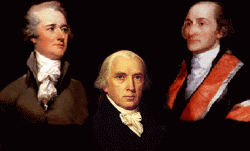
"If men were angels, no government would be necessary." - The Structure of the Government Must Furnish the Proper Checks and Balances Between the Different Departments -- Alexander Hamilton or James Madison (The New York Packet 1788-02-08)

The most important politician in America?: It's not Barack Obama

It is the junior United States Senator from New York, Hillary Rodham Clinton.

The Obama presidency will be measured by the success or failure of the next congress in delivering universal health care. Not only will national health incalculably improve the lives of most Americans and rescue literally millions of retiring baby boomers from spending their declining years in poverty, but also it will change forever the nature of the debate over the proper role of government.

Republican balderdash about the dangers of "socialism" has traction only because Americans think they have no experience with it. If you want an idea of what it will be like when our medical system is "socialized," ask any die-hard Republicans over 65 two questions: First, what is their opinion of the proposal to establish national health coverage? In most cases, mention of national health will lead to railing about the predations of big government and the imminent arrival of Fidel Castro. Then, after the spittle stops flying, ask them what they think about Medicare? Socialist medicine, you will discover, is not so bad after all.

If the Obama administration indeed inaugurates a new progressive era, it will because real health care reform was delivered during its term. In the House of Representatives, health care is a done deal; all that needs to be worked out is whether it is single-payer or if some portion of overhead will be reserved to guarantee the profits of insurance companies. But the Senate is another matter. I am second to none in my admiration for Ted Kennedy; but in a lifetime in Congress, he has failed to deliver national health -- not without good cause, but there is little reason to think that the addition of a few moderate senators to the majority will be enough to make a difference.

As Kennedy is fully aware, the Senate needs someone of Hillary Clinton's stature, clout, expertise and ambition to make the passage of universal health care a certainty (see, Ted Kennedy asks Hillary Clinton to head Senate healthcare team). Once she wins the health care fight, who thinks she won't run for majority leader, and win.

It's hard to see that Clinton has any particular qualifications to be secretary of state, other than her travels. Please don't think I'm advocating this, but if Obama wants to appoint a strong woman with lots of foreign policy expertise, why not choose California senator Dianne Feinstein who has displayed keen interest in foreign affairs, trade, defense and security matters throughout her congressional career. There are thousands of others in government, politics, business and academia who also have more executive experience and far more knowledge about international affairs than Clinton.

On the other hand, there is no one in political life who has thought longer and harder about health care.

It isn't hard to figure out what Obama is up to. By choosing Clinton, he neutralizes a possible rival power center; offers a gesture of conciliation to those Hillary supporters still unreconciled to his victory; sidelines Bill Clinton; and makes an appointment that will be greeted with general approval (except, maybe, in New Mexico).

But what can Hillary be thinking? Politically, she will be much weakened -- cabinet members are not called secretaries for nothing. In the Senate, still hidebound by seniority, she is known to be frustrated by that junior business. But if she doesn't like standing a few steps behind Chuck Schumer, wait'll she has to take instructions from some junior aid in the west wing.

Getting something done in the Senate will require hard work. But she made a promise to the people of New York to work for them. Nobody said it was going to be easy.

Some wags are saying she wants to complete the collection of visited countries she started as first lady, but come on. Was she so busy running for president that no one had time to fill her in on junkets? She could legitimately visit every country in the world that delivers national health, which, come to think of it, is pretty much all of them.

The rap against the Clintons is that they have always put their own interests ahead of People and Party. During her run for senator, she was charged with being motivated by no more than ego and ambition. Were those of us who favored her election as senator naive in believing that she truly wanted to serve? If she still does, she should stay in the Senate and fight for single-payer universal health care. She will make a difference in our lives in a way no one else can; she will give support to an administration every patriotic American hopes will bring real change; and she will alter the future forever.

Today she is Hillary Rodham Clinton, U.S. Senator from New York. Tomorrow, does she really want to be Madeleine Albright instead?

Politics: They're still the Democrats after all

"Lieberman keeps Senate chairmanship" - Reuters headline


Bet he learned his lesson.

See, Canards: Joe Lieberman is a "good Democrat" (Impractical Proposals)

The Franchise: Making every vote count

The long lines at the polls become even more puzzling when you consider this:

According to Curtis Gans,
Despite lofty predictions by some academics, pundits, and practitioners that voter turnout would reach levels not seen since the turn of the last century, the percentage of eligible citizens casting ballots in the 2008 presidential election stayed at virtually the same relatively high level as it reached in the polarized election of 2004....The percentage of eligible citizens voting Republican declined to 28.7 percent down 1.3 percentage points from 2004. Democratic turnout increased by 2.6 percentage points from 28.7 percent of eligibles to 31.3 percent. It was the seventh straight increase in the Democratic share of the eligible vote since the party's share dropped to 22.7 percent of eligibles in 1980.
Increased absentee voting. Increased early voting. The Democrats up a little. The Republicans down a little. But overall, only a marginal increase in the number of voters. So why the long lines?

Although a greater interest among voters concentrated in particular precincts -- areas with large populations of black voters or students, for example -- might have created enough congestion at those polls to satisfy the media's expectation of a big turnout, isn't it more likely that the impact of the electoral college, leading as it does to the disenfranchisement of minority party voters in non-competitive states and the focus of campaigns on a handful of constituencies, led to longer lines in those few locales where voters knew their vote would count. I know people in California and New York, for example, who stayed home because they felt their choice for president was moot.

Some of the advance voting problems can be attributed to the limited number of polling places in most jurisdictions. Nevada, an exception, allowed voting in some grocery stores -- it would be helpful to know how that worked out, but most states required early voters to travel to some remote county office or isolated post office to drop off ballots. If unprecedented numbers of people voted in advance, it must have eased the pressure on election day; and repeated warnings over many months of an impending deluge of ballots gave election officials plenty of opportunity to get ready; so it still seems odd that there were the number of problems there were on voting day.

Not being much of a conspiracy theorist, I'm reluctant to sign on to the theory that there was a plot to depress the tally. But it would be useful to the proper management of future efforts of this sort if we knew what did happen this time. Even if it was only a matter of increased turnout in districts where voting mattered, there might be ways to prepare for such eventualities in coming elections.

In any event, if it is not going to continue to distort campaigns and alter outcomes of elections, we have to get rid of the electoral college. It's past time for every citizen's vote to count equally.

Dept. of No Comment: Factoid

Number of House members who voted against invading Iraq: 133
Number of senators who voted against invading Iraq: 23
Number of senators and representatives who voted against invading Iraq who are being considered for the Obama cabinet: 0

God must love the Clintonites...

...he made so many of them.

From the apparent intention to drag every Clinton administration veteran back to Washington from the lobbying company, law firm, brokerage house, or outpost of the academic gulag where eight years of exile were endured, to the perplexing consideration of Hillary Clinton and John Kerry as secretary of state, President Change has become President StatusQuo more swiftly than you can say, Yes we can.

The absence of a strong set of political beliefs was part of candidate Obama's appeal. It allowed every supporter to project his own ambitions for the country on the blank face of "change." But now, that same absence of political agenda is enabling the center-right coalition that has run this country for its own benefit since Reagan to seize control of the next administration. Call it Clintonism with a new face.

The incoming White House chief of staff is Rahm Emmanuel, who was a staff assistant to President Clinton (and, not incidentally, as head of the last several Democratic House election efforts, the hatchet man who systematically undermined the candidacies of progressives in the Democratic primaries). Former Clinton chief of staff John Podesta is in overall charge of the transition team. Overseeing the selection of the foreign policy corps is former Clinton secretary of state Warren Christopher. And staffing defense is up to former senator Sam Nunn, not a Clinton intimate, exactly, but as head of the Senate armed services committee in the Clinton years intimately involved in crafting the militarized foreign policy of that era. The first important picks after Biden and Emmanuel: Clinton's impeachment attorney Gregory Craig as White House counsel and Ronald Klain, a former lobbyist who was a lawyer on Al Gore's vice presidential staff, as the new veep's legal adviser.

Bowles, Ian; Mathews Burwell, Sylvia; Campbell, Kurt; Cunningham, Nelson; Danzig, Richard; Downey, Mortimer; Garvey, Jane; Gensler, Gary; Hochberg, Fred; Johnson, James; Lake, Anthony; McGinty, Kathleen; Ness, Susan; Rice, Susan; Sperling, Gene; Steinberg, James; Talbot, Strobe; Thompson, Mozelle; Witt, James Lee; Zoellick, Robert...the nice thing about this return of the politically undead is that lobbyists won't be compelled to waste a lot of energy updating their speed dialers. If he didn't throw out his old business cards, Lawrence Summers is really set; treasury under secretary Clinton, and partly responsible for our current economic mess, he is likely to get the same job from Obama.
Then there are short-list names one prays are no more than the latest examples of the Obama crew's mastery of political symbolism. John Kerry or Hillary Clinton at the state department (and what happened to Bill Richardson, anyway?). Al Gore as secretary of interior. Bill freaking Clinton at the UN. Excuse me, but wasn't getting rid of the Clintons the whole point of the rush to endorse Obama on SuperTuesday?

It's not that many of these people are not admirable in their own right, it's just that in their massed numbers, and in conjunction with other appointment rumors -- retaining defense secretary Robert "The Surge Is Working" Gates; bringing back former Federal Reserve chairman Paul Volcker as treasury secretary; putting GOP stalwarts Chuck Hagel and Richard Lugar in charge, respectively, of defense and state (no, really, what did happen to Bill Richardson?); sending Jane Harman, the scary Democratic representative from Venice CA, to homeland security; giving education to Colin "Mea Culpa" Powell, as if he doesn't have enough to apologize for already -- they make it seem increasingly likely that the only change we're going to see is the kind that is confusingly difficult to distinguish from la même chose.

We thought we were throwing the bums out. Silly us.

Democracy: It's still not one person, one vote

I'm taken to task for holding the electoral college in insufficient regard. I don't deny it. The mechanism of this political relic acts as a brake on democracy and, for that reason, has to to go.

Because of the distortions caused by the electoral college, campaigns focus attention on whichever states have electoral votes up for grabs, effectively disenfranchising almost the entire rest of the country. This time, the voters in New York, California, Texas and Illinois, along with those in a large majority of the 50 states, were unable to affect the outcome of the election because polls indicated that unbeatable majorities in those states favored one candidate over another. In reaction, voters who preferred the minority candidates in those locales could be forgiven if they chose to stay home on election day.

With the impediment of the electoral college removed, no one's vote will be irrelevant or diluted any longer. The ballot of the Republican in Massachusetts or California will have the same impact on the choice for president as the ballot of the Democrat in South Dakota or Texas. Everyone's vote will be equal. No one will be disenfranchised.

It is argued that the small states will be disadvantaged by direct election of the president; but at least since Appomattox, if not since Philadelphia, we have been Americans first and only incidentally Vermonters or Virginians. The president is the leader of all the people, and there is no reason the small states should have a thumb on the scale. It is unfair that any American who happens not to be a supporter of the local party in power -- again, the Rhode Island Republican and the Idaho Democrat, alike, should -- like the voters in all the states that under the present accounting are indelibly red or blue -- be unable to cast an impactful vote for president.

It is said, also, that retiring the electoral college will merely skew the contests in a different way: campaigns will be motivated to focus exclusively on the big cities, because, as robber Willie Sutton said about banks and money, that's where the votes are. Leaving aside the antidemocratic assumption underlying that argument, as a practical matter it ignores the fact that all the states, including those that house large cities, are purple. Any campaign with a chance of winning will have to compete everywhere. Such a campaign of necessity will be more centrist than is true now, because it will focus on national issues, no longer be able to get by with satisfying parochial concerns in a handful of battleground states. Energy policy, say, will become a matter of what does the most good for the most people instead of being unduly influenced by a glut of corn in Iowa.

Will the electoral college be tough to get rid of? Sure. The power elites and special interests in the lightly populated states will be loathe to support a constitutional amendment that may cost them privileges. Some never will. But this is a fair country, and once the unfairness of the current system is widely understood, it will be difficult to argue that it isn't time to put this wretched antique out by the curb.

The Founding Fathers were talented politicians, advanced for their day. But their canonization makes it very hard to correct their mistakes. Wouldn't we honor their achievements more by moving closer to realizing the democracy they dreamed of than by setting in concrete the compromises they were forced to make along the way. Until our votes are equal, we don't have the democracy they fought to establish 250 years ago.

As another step along the road they set us on, the electoral college has to go.

2008: Voting delayed is voting denied

Small thing, but the long lines at the polls, problem enough when we thought there had been substantial leaps in the numbers of citizens registering and voting, become even more puzzling when you consider this from Curtis Gans, director of the non-partisan Committee for the Study of the American Electorate:
Despite lofty predictions by some academics, pundits, and practitioners that voter turnout would reach levels not seen since the turn of the last century, the percentage of eligible citizens casting ballots in the 2008 presidential election stayed at virtually the same relatively high level as it reached in the polarized election of 2004.
Increased absentee voting. Increased early voting. And, finally, only a marginal increase in the actual number of voters. So why the long lines? Could such a small overall bump be enough to jam the system on election day?

Possibly. It may be that, like the rest of our infrastructure, the mechanisms of voting are so creaky that the slightest stress overcomes them. But I doubt it. I think the problems are endemic. I blame the electoral college.

Our method of choosing presidents assures that the franchise is meaningful only for voters who reside in states where the outcome is in doubt right up to election day. In this year's contest, as in 2004, especially long lines were generated in those places where voters were told their votes would count. Some people in California, for example, have said that they skipped voting because they felt their choice for president was moot. Leaving aside districts with large African-American populations (who were doubly motivated to vote), because of the barrier of the electoral college it mattered whether you voted or not in only the few purple states.

Still, given the high numbers of people who cast ballots in advance -- which must have eased the pressure on election day -- and the repeated warnings over many months of an impending ballot deluge, it seems odd that election workers weren't better prepared. Not being much of a conspiracy theorist, I'm reluctant to conclude that the inconveniences were intended to depress the tally. Besides, most of the documented efforts at voter suppression were aimed at keeping voters away from polls with threats or frauds or purging them from voter rolls altogether. By comparison, exasperating them with long waits hardly seems worth the trouble.

Nonetheless, it would be useful to the proper management of future efforts of this sort if we knew what happened. Even if the delays were nothing more than the result of increased turnout in particular districts, there might be ways to prepare for such eventualities in coming contests.

And, whatever is discovered about the causes of long lines this time, we have to get rid of the electoral college. In election after election, the continued use of this relic of two-hundred-year-old political compromises disenfranchises minority voters in electorally non-competitive states and focuses campaigns on a handful of constituencies. It's past time for every citizen's vote to count equally: Big thing.

Recovery: The New New Deal

Senator Bernie Sanders of Vermont proposes investing in infrastructure:
When the Senate reconvenes of November 17th, I intend to fight for an economic recovery program that is significant enough in size and scope to respond to the major economic crisis this country now faces. If we can commit more than $1 trillion to rescue bankers and insurance companies from their reckless and irresponsible behavior, we certainly should be investing in millions of good-paying jobs that rebuild our nation and improve its economy....

This economic recovery package should first improve our crumbling infrastructure by improving our roads, bridges and public transportation. We need to bring our water and sewer systems into the 21st century. We need to make certain that high-quality Internet service is available in every community in America. Not only are these investments desperately needed, every billion dollars that we put into these initiatives will create up to 47,000 new jobs.
The rest of the story: The Road to Economic Recovery by Sen. Bernie Sanders (Huffington Post, 2008-11-7)
 
Related Posts with Thumbnails