


Democratic activists have a right to feel optimistic about Howard Dean's election as party boss (I know, he's not supposed to influence policy, but we can wish).
Typically, the Democratic National Committee's chair is supposed to be seen fund raising and not heard. Business-as-usual would demand that the head of the DNC be a technocrat in service to the conservative Democratic Leadership Council. At least half the pleasure of the governor's victory came from watching the corporatist Dems squirm.
With the out-of-power party being led by back-benchers like the inestimably wily Harry Reid and the stolid Nancy Pelosi, and with the Night of the Living Dead-visage of John Kerry lurking in the political shadows, it is left to Governor Dean to try to make elected Democrats live up to expectations.
Unlike his accommodationist partymates in D.C., Dean agrees with the rank and file that, to beat the Republicans, the Democratic Party must be both tough and right. The uncompromising Liberalism of Roosevelt and Truman won the Democrats four decades of dominance in Washington. Compare that with GOP-lite Clintonism which surrendered the keys to the kingdom in 24 months. Bill Clinton may have been the greatest Republican president since Lincoln, but his political charisma wasn't used to advance a liberal agenda and it never rubbed off on his nominal party.
As Dean put it during the campaign, we need to be proud again to be Democrats. That will happen only if we are prepared to fight for economic justice and to protect our basic political rights. It won't happen by meeting Bush halfway down the road to hell.
Here is Howard Dean's DNC Plan, as posted on the party's website:
1. Show up! Democrats should never concede a single state, a single district, or a single voter to the Republicans. We must be active and compete in all 50 states and work with the state parties to build a true national party.
This is a big change, of course, from the leadership's emphasis on winning a few closely contested seats and battleground states in the hopes of eking out a narrow majority. Electing a Southern moderate or two begs the question of why the Democrats should be given control of Congress. When the conservative radicals seized the federal government, first with Gingrich and then with Bush-Cheney, they already knew what they wanted to do to it.
2. The success of the national party depends directly on the success of the state parties — we must better integrate our operations by:
* Having the DNC pay the salary of each state party executive director to help ensure that the state parties have adequate funds.
* Collectively building and sharing supporter lists between the national and state parties.
* Recruiting, training, and encouraging candidates to run for office at every level — building tomorrow's farm team from the ground up.
* Actively grow local Democratic committees and communities by working with neighborhood activists who can reach out in their communities and enable the grassroots to support state and local candidates.
* Maintaining a permanent campaign in every state. We need to establish an ongoing, active presence, which does not have to be recreated every four years for four months.
You won't find anyone arguing against the idea of a people's democracy; it is an article of faith among Americans, often honored in the breach, it's true, but a core belief nonetheless, that the democratic process provides the best mechanism by which a society's members can decide how to conduct themselves. If Dean is sincere, this emphasis on the grass roots will shake the Democratic Party to its foundations and by its nature end the domination of the party by corporate interests. Already, grass roots organizing is happening in California, among other places. Again, the enemy must be the inspiration: conservatives have done a bang-up job of energizing their base at the school board/city council level. Now progressives need to get back in the game, and the Democratic Party, barring some serious and unlikely electoral reform, is the best potential vehicle for doing so.
3. Set core principles that define the Democratic Party and what we stand for and take a bottom-up approach to the development of the Party's message;
I remain convinced that the party's -- and the country's -- interests would be served best by making economic justice the heart of Democratic Party program. By concentrating on three issues -- national health insurance, social security and the minimum wage -- the Democrats could remake the political debate. Putting people first would remind the party's office holders that corporations are not people, but legal entities chartered to perform certain needed economic functions and serve the public good, and entitled only to those rights and privileges we-the-people give them. By adopting a bottom-up approach to development of its message, the party would serve notice on the corporations that they will no longer be able to tell us how to live our lives or run our communities.
A party committed to restoring democracy would be incapable of doing the bidding of big business or the moneyed elite. A party democratically reflecting the values of its members will be driven to fight to improve the lives of all citizens, to enhance the interests of the community, to resist not exalt unfettered exploitation and greed. Good for Senator Clinton for attempting to neutralize the thorny and divisive abortion issue. The same should be done to minimize other lifestyle concerns that distract from the core issue of economic justice.
4. Use cutting-edge Internet and other technologies to fundraise, organize, and communicate with our supporters;
Sure, why not, always remembering than an unending plebiscite may be great for raising money, but may not be the most elegant instrument for forging policy.
5. Strengthen our political institutions and leadership institutes to promote our leaders and our ideas — these organizations must work together in a coordinated and integrated fashion to elect Democrats at every level, so that we can take this country back.
The right wing success this week in all but destroying class actions as devices of redressal, punishment and reform can be traced directly back to work that went on in the netherworld of incestuous corporate-funded think-tanks, foundations and lobbying organizations fabricated to advance and rationalize the neo-conservative agenda. Our own institutes and foundations need to be expanded and deployed just as aggressively.
But we need to keep in mind that the Right did not merely organize to elect Republicans at every level; it is crucial to neocon dominance that they closely monitored whom they elected to office and whom they elevated to leadership. The arrival of Governor Dean, partisan by instinct, is a move the neocons would applaud if he was of their ilk. It is heartening evidence that the Democratic Party is beginning to think and act more idealogically.

NewMedia: "Vectors" launch party at MoCAJournal of Culture and Technology in a Dynamic Vernacular
On March 3, the Museum of Contemporary Art, Los Angeles is hosting the launch event for Vectors: Journal of Culture and Technology in a Dynamic Vernacular, a new online multimedia journal that works with leading scholars to realize their work using interactive media in ways that go beyond simple illustration. Using dynamic display, animation, and an inventive approach to interface, the site seeks to open up academic publishing to make use of the broad potential of new media to shape ideas and experience.
Where: Los Angeles Museum of Contemporary Art (MoCA)
When: 7 - 10 p.m., Thursday, March 3, 2005
Admission: Free and open to all.
RSVP: <http://www.annenberg.edu/calendar/invite/vectors.php>
More info: <http://www.annenberg.edu/vectors>
Where: Los Angeles Museum of Contemporary Art (MoCA)
When: 7 - 10 p.m., Thursday, March 3, 2005
Admission: Free and open to all.
RSVP: <http://www.annenberg.edu/calendar/invite/vectors.php>
More info: <http://www.annenberg.edu/vectors>

Republican Congressman Proposes Bill that Would Permit Suspension of All Laws
[Note 2005/02/11: REAL ID passed the House, largely on party lines. <http://www.truthout.org/docs_2005/021105X.shtml>]
Section 102 of the REAL ID Act of 2005 (H.R. 418), submitted by Rep. Jim Sensenbrenner on January 26, 2005, ostensibly to deal with immigration regulations, driver's licenses, and other matters having to do with using identity to control people, would empower the Secretary of Homeland Security, as part of the effort to keep illegal aliens out of the country, to suspend any laws that prevent or delay the "expeditious" construction of a set of barriers and roads south of San Diego.
The bill also would prohibit judicial review of the secretary's decisions to suspend laws. While the legislation refers to barriers and roads "near" San Diego," (is L.A. "near" San Diego?), it does not appear to be limited, technically speaking, to that area -- but to any barriers or roads "in the vicinity of the United States border" (33 states, plus Guam and Puerto Rico, are on the border of the United States).
It could be called to the floor as early as next week. -- reported on Daily Kos <http://dailykos.com/story/2005/2/5/15448/41910>
Section 102 of the REAL ID Act of 2005 (H.R. 418), submitted by Rep. Jim Sensenbrenner on January 26, 2005, ostensibly to deal with immigration regulations, driver's licenses, and other matters having to do with using identity to control people, would empower the Secretary of Homeland Security, as part of the effort to keep illegal aliens out of the country, to suspend any laws that prevent or delay the "expeditious" construction of a set of barriers and roads south of San Diego.
The bill also would prohibit judicial review of the secretary's decisions to suspend laws. While the legislation refers to barriers and roads "near" San Diego," (is L.A. "near" San Diego?), it does not appear to be limited, technically speaking, to that area -- but to any barriers or roads "in the vicinity of the United States border" (33 states, plus Guam and Puerto Rico, are on the border of the United States).
It could be called to the floor as early as next week. -- reported on Daily Kos <http://dailykos.com/story/2005/2/5/15448/41910>
Politics: All-Celeb Dem Dream Team
The following GoogleAd for the magazine Maison Neuve was delivered to Impractical Proposals this morning:
"Jon Stewart for President
Forget Schwarzenegger.
Jon Stewart is the real celebrity candidate.
www.maisonneuve.org"
Makes sense to me. Let's get away from politicians altogether.
John Stewart for President. John Cusack for Vice President.
That's the ticket.
"Jon Stewart for President
Forget Schwarzenegger.
Jon Stewart is the real celebrity candidate.
www.maisonneuve.org"
Makes sense to me. Let's get away from politicians altogether.
John Stewart for President. John Cusack for Vice President.
That's the ticket.
Resource: Iraq Coalition Casualties
Iraq Coalition Casualties website <http://www.icasualties.org/oif/> tallies daily and monthly the numbers of killed and wounded American soldiers. According to the site, "Whenever a death occurs, CENTCOM (the United States Central Command in Tampa, FL) issues a brief news release that gives the bare facts about the incident: when it happened, how it happened, and the soldier’s regiment, if known. The only information not provided at this point is the soldier’s name. These releases are published regularly on the Internet at: <http://www.centcom.mil/>. After the soldier’s relatives are notified of the death, the U.S. Department of Defense then issues its own news release that gives the soldier’s name, age, unit and hometown. Again, these can be found on the Internet here: <http://www.defenselink.mil/releases/>. The trouble with this system of notification, however, is that the government provides no tally of those releases," so this page has shouldered the responsibility.
As of this morning, the number of American fatalities is 1,449 (86 Brits have died and 86 "others," for a grand total of 1621). The number of wounded in action, according to the DoD, stands at 10,740. The numbers are broken down in various ways, some heartbreaking (US Fatalities State Map -- deaths are heavily concentrated in the blue states, by the way), some infuriating (1242: US deaths since July 2, 2003 [when] Pres. Bush announces, "Bring Them On"). The site also has an up-to-date list of news stories, many from foreign media, related to the war. <http://www.icasualties.org/oif/>
As of this morning, the number of American fatalities is 1,449 (86 Brits have died and 86 "others," for a grand total of 1621). The number of wounded in action, according to the DoD, stands at 10,740. The numbers are broken down in various ways, some heartbreaking (US Fatalities State Map -- deaths are heavily concentrated in the blue states, by the way), some infuriating (1242: US deaths since July 2, 2003 [when] Pres. Bush announces, "Bring Them On"). The site also has an up-to-date list of news stories, many from foreign media, related to the war. <http://www.icasualties.org/oif/>
Custom Issue Action Center for your site
"Do you want our representatives in Washington to stand up for you more often? We must back them up with our vocal support if we expect them to fight for us on this or any issue. The People's Email Network encourages you to speak out and keep speaking out, regardless of your political position, until our representatives truly hear you.
"And now you can have your own custom Issue Action Center featuring any issue of interest to you for you for no charge. It's an amazingly small block of HTML code you can drop into any web page anywhere for an instant dynamic action menu effect. And we will set up a corresponding issue
action page on The People's Email Network for you too. Pursue your own policy initiative! See the code in action at <http://www.usalone.com/action_center.html>"
"And now you can have your own custom Issue Action Center featuring any issue of interest to you for you for no charge. It's an amazingly small block of HTML code you can drop into any web page anywhere for an instant dynamic action menu effect. And we will set up a corresponding issue
action page on The People's Email Network for you too. Pursue your own policy initiative! See the code in action at <http://www.usalone.com/action_center.html>"
Press Release: Southern California Tsunami Blues Series Coming To Multiple Venues
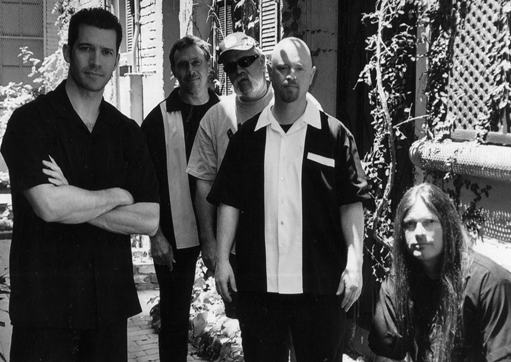
Joe McGaha (lead singer of The Barnburners) is spear-heading this effort with veteran musician & promoter Greg Serrato as Primary Advisor. "This is a great opportunity for fans to see more bands in one day than they could normally see in a month," says McGaha. Although there are currently four events booked, the series may be adding further events at a later date. "There are still a few venues in Southern California considering hosting these benefits," says McGaha. "So depending on their level of interest, and the success of these three upcoming events, the series may continue through the Spring, and possibly into the Summer."
The proceeds from the donations will go to Project Concern:
http://www.projectconcern.org. 100% of the donation will support tsunami disaster relief efforts in India and Indonesia.
The series, dubbed the Southern California Blues Tsunami Series, currently consists of four dates:
Sunday, February 13, 2005
2:00 p.m. - 9:00 p.m.
Main Street Blues Club & Restaurant
4902 Main Street
Yorba Linda, CA
(714) 777-9427
All Ages Admitted
Minimum Donation: $5
Any Donation Accepted
Sunday, February 27, 2005
2:00 p.m. - 9:00 p.m.
All About Coffee
2276 Griffin Way
Corona, CA 91719
(951) 549-6710
All Ages Admitted
Minimum Donation: $5
Any Donation Accepted
Sunday, March 6, 2005
2:00 p.m. - 9:00 p.m.
Martini Blues Supper Club
5874 Edinger Avenue
Huntington Beach, CA
(714) 840-2129
All Ages Admitted
Minimum Donation: $5
Any Donation Accepted
Sunday, March 13, 2005
4:30 p.m. - 9:00 p.m.
Holly Street Bar & Grill
175 E. Holly St.,
Pasadena, CA 91103
(626) 440-1421
About Main Street Blues Club & Restaurant:
The restaurant offers casual and patio dining on Main Street in Old Towne and specializes in Italian and Mexican cuisine. Home of the 6-foot burrito,Main Street Restaurant has been owned by a local resident, Lynn Ruocco, for 11 years. Open 9 a.m. to 10 p.m. daily.
About Martini Blues Supperclub:
Martini Blues Supperclub is a dining and entertainment establishment, located in Huntington Beach California for just over three years. With three venues under one roof, the Supperclub has an old 1930’s to 50’s vibe that oozes a feeling of upscale elegance. Each customer is treated as honored and loved guest, invited to a party, within an elegant – not arrogant – environment every night! In the evenings, MBS becomes the center of the Orange County music scene as the premiere mid-sized dining and entertainment venue in town.
About Holly Street Bar & Grill:
A historic landmark that marries old world charm with contemporary undertones. Our Courtyard is reminiscent of a small European town. The interior is uncluttered, with contemporary art and luxurious seating. Our lounge is often filled with the sounds of live jazz. For business luncheons, breakfast meetings or any special celebration, this is the place you've been looking for.
Master chef, Abel Cardenas, prepares our food with the utmost style and care, using the freshest ingredients available. Our Courtyard is one-of-a-kind, reminiscent of a small European town, complete with a crooked church steeple, old brick walls, and a tranquil setting with a melange of indigenous plants and aromatic flowers.
The interior is uncluttered with various contemporary art and ample luxurious seating. Our lounge is filled with the sound live jazz, which is performed nightly and during Sunday Brunch. For that special celebration, this is the place you've been looking for.
About The Barnburners:
Formed in 1997 in Yorba Linda, California, The Barnburners have performed in major venues across Southern California including The Coach House (San Juan Capistrano,) The Galaxy Theater (Costa Mesa,) B.B. King's (Universal City,) and many more. They have performed on the same bill with many Blues artists including Greg Serrato, Teresa Russell & Cocobilli, BB Chung King & The Buddha Heads, etc. The band has performed in music festivals throughout Southern California, everywhere from Leona Valley to Yorba Linda. You can find Barnburners recordings on radio stations throughout the United States, as well as in Europe and Latin America. The band's first c.d., Workin' Overtime, is available for purchase at www.dwmmusic.com. Most recently, the Barnburners participated in the International Blues Challenge, 2004. For more information regarding The Barnburners, write to:
Joe McGaha
10 Marino,
Rancho Santa Margarita, CA 92688
Phone: (909)938-6533 Fax: (303)845-5984
bookings@barnburnersblues.com
http://www.barnburnersblues.com
http://12.217.250.54/AudioClips/Barnburners_Travelin.ram
About Project Concern:
Saving Lives and Building Healthy Communities: With over 40 years of experience, Project Concern is a leading international health organization based in San Diego, California. We save the lives of people in need around the world by preventing disease and providing access to clean water and nutritious food. Project Concern reaches over three million people a year with programs in eleven countries. http://www.projectconcern.org
Social Security Reform
Memo to Congress: Social Security is a form of insurance, a guarantee that, no matter what direction a citizen's fortunes take, after a lifetime of labor he or she will not suffer an impovershed old age. If someone is already lucky enough to enjoy a particularly high salary, there is no rationale for gifting them the additional benefit of exemption from Social Security taxes. Social Security obligations currently max out at $90,000. Raise the cap to $1,000,000. End of problem.
The Center for Budget and Policy Priorities analysis of the Bush plan shows that private accounts won't make Social Security solvent and is economically unwise: <http://www.cbpp.org/2-2-05socsec4.htm>
New York Times columnist Paul Krugman describes the Social Security scheme as the latest ploy in the conservatives' "Starve the Beast" gambit. "The attempt to 'jab a spear' through Social Security complements the strategy of 'starve the beast,' long advocated by right-wing intellectuals: cut taxes, then use the resulting deficits as an excuse for cuts in social spending. The spearing doesn't seem to be going too well at the moment, but the starving was on full display in the budget released yesterday." <http://www.commondreams.org/>
The Center for American Progress has crafted a detailed alternative plan to really protect Social Security in a way that's safe and sustainable: <http://www.americanprogress.org/>
The Center for Budget and Policy Priorities analysis of the Bush plan shows that private accounts won't make Social Security solvent and is economically unwise: <http://www.cbpp.org/2-2-05socsec4.htm>
New York Times columnist Paul Krugman describes the Social Security scheme as the latest ploy in the conservatives' "Starve the Beast" gambit. "The attempt to 'jab a spear' through Social Security complements the strategy of 'starve the beast,' long advocated by right-wing intellectuals: cut taxes, then use the resulting deficits as an excuse for cuts in social spending. The spearing doesn't seem to be going too well at the moment, but the starving was on full display in the budget released yesterday." <http://www.commondreams.org/>
The Center for American Progress has crafted a detailed alternative plan to really protect Social Security in a way that's safe and sustainable: <http://www.americanprogress.org/>
Letter to DNC from OC Democratic Club
Terry McAuliffe, Chairman Democratic National Committee
430 S. Capitol St. SE Washington, DC 20003
Dear Mr. McAuliffe:
The Democratic Club of Central Orange County,
representing the cities of Orange, Tustin, Santa Ana,
Villa Park and Anaheim Hills, was founded in May, 2002
and is chartered by the Democratic Central Committee of
Orange County. The Club operated a campaign
headquarters in Santa Ana from August 1, 2004 through
the November, 2004 election. All resources to open and
operate the headquarters were raised by the club's
officers and through outreach by club members. At the
close of the campaign, over 300 volunteers were
headquartered out of the Club's office. Campaign
activities included voter registration, precinct
organization, an aggressive vote-by-mail campaign, and
letter writing to the swing states Ohio, Pennsylvania,
Michigan and Wisconsin. Volunteers telephoned
thousands of voters in Missouri, Florida and Arizona.
Because we had no local candidate in a competitive race
for partisan office, our primary focus was the election
of Senators John Kerry and John Edwards. Our
organization was a model of political grass roots at
its best.
Given the time, effort, energy and passion our group
put into the 2004 election, we were sorely disappointed
at the November 2nd results. On December 15 we invited
all volunteers and members to discuss what went wrong
and where we and the Democratic party might go from
here. This letter is a distillation and summary of our
thoughts and recommendations.
On the national level, our members felt that the
Democratic Party was out-organized, out-issued, out-
spun and out-communicated. We allowed the Karl Rove
machine to highjack God, and the Democrats were too
reluctant to claim the moral high ground with
traditional Democratic values. The national media was
much too passive and deferential to George Bush. Fox
News, Rush Limbaugh and his ilk were lying to the
public, demeaning our candidates and mischaracterizing
our programs and positions and the Democratic Party was
too slow and too timid in their response. It is of the
utmost importance that a Democratic news channel be
developed to counter Fox, etc, a kind of rapid response
team to counter the distortions and outright lies that
seem to pervade the market place of political
discourse.
Clearly, we were out-issued by the Republican machine.
The Democratic Party never clearly identified our
issues and what we stand for. For the first time in
our history, a whole generation of American children,
saddled with the huge budget deficit, is looking at a
future less bright than their parents' generation.
Traditionally, the Democrats have been the opportunity
party; opportunity for jobs, social security in our old
age, health care for young and old, a living wage, safe
air and water, and excellence in public education. But
the Democrats allowed themselves to be out-issued by
the Republicans. We are now six weeks past the
presidential election. Already we know the issues for
the Republicans: the ownership society: privatization
of Social Security, a permanent tax cut, a value added
tax, health care savings accounts and tort reform. This
plan was spelled out in the national media more than
two weeks ago. Even today as this letter is being
written, Bush is holding his economic summit that
continues to lie to, defraud and deceive the American
people. The DNC sent a letter last week that explains
that sometime in the future the grassroots will hear
from the Democrats about these issues. We need to hear
from the Democratic Party NOW if not yesterday. These
are real bread and butter issues that we Democrats have
the moral authority to challenge.
The Republicans knew their message and stayed on it.
As a Party, the Democrats did not communicate a clear
and simple message. Of all the e-mails our club
received, not one ever said this is our message and
this is what we as Democrats stand for. While the
Party registered tens of thousands of new voters, spent
countless hours making sure folks got to the polls, the
Party did not persuade voters to vote for Democratic
candidates. When asked why they voted for Senator John
Kerry for President, even lifelong Democrats responded,
"He is not George Bush." We should have had a better
message than that!
From our perspective, there was a lack of coordination
among the various Democratic entities: the
Presidential Campaign, the DNC, the California
Democratic Party and the Orange County Democratic
Central Committee. There was a complete lack of focus
and the Party, in our opinion, never identified the
customer. There was a complete lack of leadership at
all levels. The DNC used the internet extensively and
effectively as a fund-raising tool as evidenced by the
seven fold increase in small donor base from 400,000
donors in 2000 to 2.7 million donors in 2004. This is
as remarkable achievement. The internet was not,
however, a two way communication. We did not receive
marching orders, message or infrastructure directions
through the internet, or through any other medium. Our
Democratic Club of Central Orange County activities
were chosen and directed from within the Club and our
information for swing state activities came not from
the Democratic Party but from outside groups like the
Orange County Central Labor Council, Main Street Moms
Opposed to Bush, and Moveon.Org. Our volunteers were
incredibly committed. One volunteer on her own cell
phone made 2,500 telephone calls to Florida voters.
The Democratic Party did not lack for funds but it is
clear that the Democrats must be as serious about grass
roots organizing as they are about grass roots
fundraising. Over $158 million was raised in California
by outside Democratic candidates, the DNC and 527's.
Not one cent of that $158 million was spent in
California. Equally damning, we received no direction.
Our Club, because of recent fund-raising laws, operated
like a 527. We obtained our own instruction on fund-
raising/spending requirements. A stronger role in
financial reporting by the California Democratic Party
is urgently needed. Voter persuasion tools from the
DNC and the California Democratic Party are critical
for local party building. The California Democratic
Party piece that we have used in the past needs to be
streamlined and updated in format. If we are to take
back the White House in 2008, let alone House and
Senate, these tools should be made available now, so
that come the mid-term elections, the electorate knows
who we are and what we stand for. We can't wait until
Labor Day weekend, 2006.
The Democratic Party is dysfunctional at all levels.
There was a strong, almost unanimous recommendation
from our members, for some sort of Orange County
Coordinating Council so that clubs could communicate
with one another, expand grass-roots activities,
strategize together. Each club that operated a campaign
headquarters was operating by the seat of their pants.
It would have been such a big help had the walk piece
that our Club developed independently had the input
from and an "imprimatur" from all the clubs. Without
coordination with other headquarters, each was
struggling for cash to buy the basics. For example,
Kerry/Edwards yard sign sleeves and wires cost $4.15
each. That was an outrageous figure for a local
campaign office to support, especially considering that
$158 millions was raised in California to be spent
elsewhere. Generally, little direction was forthcoming
from the party as to process and organization for the
grass roots volunteers.
In spite of these problems, we are still working
diligently to maintain our over 300 (many young and
first-time) volunteers in Democratic activities because
we desperately want to be ready for the midterm
elections. The above recommendations are presented for
your consideration and our club is eager and ready to
continue to support the Democratic Party. We are
anxious for help and direction and look forward to
hearing from you with both. Thank you very much .
Sincerely,
Sharon O'Hara Jeanne Costales Chair
Vice-Chair
CC: Al From, CEO Democratic Leadership Council Bruce
Reed, President Democratic Leadership Council
Senator Art Torres, Chairman California
Democratic Party Frank Barbaro, Chairman Orange
County Democratic Central Committee Garry Shay,
DNC member
430 S. Capitol St. SE Washington, DC 20003
Dear Mr. McAuliffe:
The Democratic Club of Central Orange County,
representing the cities of Orange, Tustin, Santa Ana,
Villa Park and Anaheim Hills, was founded in May, 2002
and is chartered by the Democratic Central Committee of
Orange County. The Club operated a campaign
headquarters in Santa Ana from August 1, 2004 through
the November, 2004 election. All resources to open and
operate the headquarters were raised by the club's
officers and through outreach by club members. At the
close of the campaign, over 300 volunteers were
headquartered out of the Club's office. Campaign
activities included voter registration, precinct
organization, an aggressive vote-by-mail campaign, and
letter writing to the swing states Ohio, Pennsylvania,
Michigan and Wisconsin. Volunteers telephoned
thousands of voters in Missouri, Florida and Arizona.
Because we had no local candidate in a competitive race
for partisan office, our primary focus was the election
of Senators John Kerry and John Edwards. Our
organization was a model of political grass roots at
its best.
Given the time, effort, energy and passion our group
put into the 2004 election, we were sorely disappointed
at the November 2nd results. On December 15 we invited
all volunteers and members to discuss what went wrong
and where we and the Democratic party might go from
here. This letter is a distillation and summary of our
thoughts and recommendations.
On the national level, our members felt that the
Democratic Party was out-organized, out-issued, out-
spun and out-communicated. We allowed the Karl Rove
machine to highjack God, and the Democrats were too
reluctant to claim the moral high ground with
traditional Democratic values. The national media was
much too passive and deferential to George Bush. Fox
News, Rush Limbaugh and his ilk were lying to the
public, demeaning our candidates and mischaracterizing
our programs and positions and the Democratic Party was
too slow and too timid in their response. It is of the
utmost importance that a Democratic news channel be
developed to counter Fox, etc, a kind of rapid response
team to counter the distortions and outright lies that
seem to pervade the market place of political
discourse.
Clearly, we were out-issued by the Republican machine.
The Democratic Party never clearly identified our
issues and what we stand for. For the first time in
our history, a whole generation of American children,
saddled with the huge budget deficit, is looking at a
future less bright than their parents' generation.
Traditionally, the Democrats have been the opportunity
party; opportunity for jobs, social security in our old
age, health care for young and old, a living wage, safe
air and water, and excellence in public education. But
the Democrats allowed themselves to be out-issued by
the Republicans. We are now six weeks past the
presidential election. Already we know the issues for
the Republicans: the ownership society: privatization
of Social Security, a permanent tax cut, a value added
tax, health care savings accounts and tort reform. This
plan was spelled out in the national media more than
two weeks ago. Even today as this letter is being
written, Bush is holding his economic summit that
continues to lie to, defraud and deceive the American
people. The DNC sent a letter last week that explains
that sometime in the future the grassroots will hear
from the Democrats about these issues. We need to hear
from the Democratic Party NOW if not yesterday. These
are real bread and butter issues that we Democrats have
the moral authority to challenge.
The Republicans knew their message and stayed on it.
As a Party, the Democrats did not communicate a clear
and simple message. Of all the e-mails our club
received, not one ever said this is our message and
this is what we as Democrats stand for. While the
Party registered tens of thousands of new voters, spent
countless hours making sure folks got to the polls, the
Party did not persuade voters to vote for Democratic
candidates. When asked why they voted for Senator John
Kerry for President, even lifelong Democrats responded,
"He is not George Bush." We should have had a better
message than that!
From our perspective, there was a lack of coordination
among the various Democratic entities: the
Presidential Campaign, the DNC, the California
Democratic Party and the Orange County Democratic
Central Committee. There was a complete lack of focus
and the Party, in our opinion, never identified the
customer. There was a complete lack of leadership at
all levels. The DNC used the internet extensively and
effectively as a fund-raising tool as evidenced by the
seven fold increase in small donor base from 400,000
donors in 2000 to 2.7 million donors in 2004. This is
as remarkable achievement. The internet was not,
however, a two way communication. We did not receive
marching orders, message or infrastructure directions
through the internet, or through any other medium. Our
Democratic Club of Central Orange County activities
were chosen and directed from within the Club and our
information for swing state activities came not from
the Democratic Party but from outside groups like the
Orange County Central Labor Council, Main Street Moms
Opposed to Bush, and Moveon.Org. Our volunteers were
incredibly committed. One volunteer on her own cell
phone made 2,500 telephone calls to Florida voters.
The Democratic Party did not lack for funds but it is
clear that the Democrats must be as serious about grass
roots organizing as they are about grass roots
fundraising. Over $158 million was raised in California
by outside Democratic candidates, the DNC and 527's.
Not one cent of that $158 million was spent in
California. Equally damning, we received no direction.
Our Club, because of recent fund-raising laws, operated
like a 527. We obtained our own instruction on fund-
raising/spending requirements. A stronger role in
financial reporting by the California Democratic Party
is urgently needed. Voter persuasion tools from the
DNC and the California Democratic Party are critical
for local party building. The California Democratic
Party piece that we have used in the past needs to be
streamlined and updated in format. If we are to take
back the White House in 2008, let alone House and
Senate, these tools should be made available now, so
that come the mid-term elections, the electorate knows
who we are and what we stand for. We can't wait until
Labor Day weekend, 2006.
The Democratic Party is dysfunctional at all levels.
There was a strong, almost unanimous recommendation
from our members, for some sort of Orange County
Coordinating Council so that clubs could communicate
with one another, expand grass-roots activities,
strategize together. Each club that operated a campaign
headquarters was operating by the seat of their pants.
It would have been such a big help had the walk piece
that our Club developed independently had the input
from and an "imprimatur" from all the clubs. Without
coordination with other headquarters, each was
struggling for cash to buy the basics. For example,
Kerry/Edwards yard sign sleeves and wires cost $4.15
each. That was an outrageous figure for a local
campaign office to support, especially considering that
$158 millions was raised in California to be spent
elsewhere. Generally, little direction was forthcoming
from the party as to process and organization for the
grass roots volunteers.
In spite of these problems, we are still working
diligently to maintain our over 300 (many young and
first-time) volunteers in Democratic activities because
we desperately want to be ready for the midterm
elections. The above recommendations are presented for
your consideration and our club is eager and ready to
continue to support the Democratic Party. We are
anxious for help and direction and look forward to
hearing from you with both. Thank you very much .
Sincerely,
Sharon O'Hara Jeanne Costales Chair
Vice-Chair
CC: Al From, CEO Democratic Leadership Council Bruce
Reed, President Democratic Leadership Council
Senator Art Torres, Chairman California
Democratic Party Frank Barbaro, Chairman Orange
County Democratic Central Committee Garry Shay,
DNC member
Politics: The 1st Amendment Run Amok
-- a progressive blawg
Paul Gowder is a civil rights attorney and activist who writes The First Amendment Run Amok, "wherein Public Policy is discussed with an eye to ecological sustainability, broadly defined,
and humanistic values." <http://www.paultopia.org/blog/>
and humanistic values." <http://www.paultopia.org/blog/>
Blog: ...on judicial appointments
Nomination Nation is a group blawg (blog focussing on legal matters) featuring news, views and gossip about judicial appointments. <http://nominations.blogspot.com/>
California Mission Studies Association
 Here's a directory of missions, articles on mission architecture, images of California missions, stories about mission life, and information about archaeological projects, including 3-D tours of some missions, a glossary, and related links. <http://www.ca-missions.org/>
Electoral Reform: Instant Runoffs
Perhaps the time has come for real electoral reform.
Calls for new campaign finance regulations, national registration and balloting standards, independent election commissions, and so on, reveal widespread unease about the efficacy of the way we currently choose our representatives. But none of these proposed changes will address a fundamental flaw in our system that by itself is responsible for much of its dysfunction.
Under the current winner-take-all method of awarding offices, a candidate can win who not only is not the first choice of the majority of voters, but who may even be one whom the majority loathes.
In the election recently endured, millions of Democrats, and I would guess a fair number of Republicans, voted for a candidate they disliked out of fear the other guy was worse. Make a voter terrified enough, and he will vote against his common sense, his political wishes, even his self-interest, as long as he can be convinced that in so doing he is rescuing the republic from calamity. Winner-take-all campaigns devolve inevitably into efforts to paint opponents as traitors, deviants, soldiers in Satan's army. Who wants to cast a vote for Lucifer?
All-or-nothing political races become arguments over personality not policy. The candidate who makes the error of addressing issues discovers in the next news cycle that any reference to policy specifics is seen by opponents as no more than an invitation to speculate about his intelligence, integrity, sanity, patriotism and parentage.
While "counting all the votes" is fine as far as it goes, it will not correct the fundamental flaw at the core of winner-take-all.
Currently, participants in the electoral process are made to feel they must choose between endorsing the lesser of two evils or wasting their ballots on non-standard-issue candidates. In the last election, almost the sole reason offered on behalf of John Kerry was that he was the only aspirant who could save us from wicked, bumptious George Bush, and the president won reelection by relentlessly attacking the senator's patriotism and judgement.
Since they had "no chance of winning," articulate and popular third party candidates like David Cobb, Michael Badnarik and Ralph Nader -- who clearly envision a very different America than Kerry and Bush -- were prohibited from retailing their ideas anywhere but in academic journals and junior college PoliSci classes. No presidential debates for these fellows, lest it lead to the intrusion into the campaign of ideas that the two major parties would rather have citizens not worry their pretty little heads over. Bush and Kerry were thus relieved of any duty to discuss their differences on Iraq, say, or what they planned to do about health insurance or social security or the deficit, and could proceed unimpeded to the more manly and productive work of bashing each other.
The result in the short term is that on January 22 Bush will return to office as the least popular newly reelected incumbent since Harry S Truman. A Gallup poll conducted for CNN and USA Today found Bush's approval rating this week at 49%, less than a majority and 10 to 20 points lower than any president at this point in his tenure since 1948.
In the long term, the legitimacy of democracy is undermined in the eyes of a populace that rightly wonders whether it is even possible in this country to conduct elections with intergrity.
In many parts of the democratic world, however, and even in a handful of localities in the United States, a voting adaptation called instant runoff is demonstrating that there is another way to run elections, a method that is fairer, that more accurately captures the intentions of voters, and that is far more civilized than the current system.
Instant runoffs are simple and effective. Instead of choosing one candidate, the voter ranks the contestants in order of preference. If no one wins a majority on the first tabulation, the ranking is used for a series of instant runoffs. After each round of counting that fails to deliver a victor, the lowest vote-getter is eliminated. When a voter's first choice is dropped, the next name on his list gets his vote, and so on, until one candidate receives a majority. In this way, the winner is on the ballots of the majority of voters.
Not only would an instant runoff assure that the eventual winner enjoyed the widest possible support, in the contest itself negative campaigning would have to take a back seat to fair-minded discussion of policy differences. No longer would the advantage go to the side that was most ruthless at muddying the other team.While it would still be possible to destroy a candidate by innuendo, doing so would no longer hold the advantage that it does now.
As Steve Hill of the Center for Voting and Democracy said in the wake of a recent instant runoff for San Francisco county supervisor, candidates don't need to demonize opponents. "Now here you have an example where instead candidates who are of similar political background are striving to find common ground instead of attacking each other."
In a race decided by instant runoff, the ideal post position may be as everyone's second choice.
Instant runoff voting would be more easily achieved than many other proposed improvements -- campaign finance reform, for instance, and unlike the latter, the effects would be immediate, unambiguous and profound.
For more information on the race in the Bay Area, please go to "San Francisco's first use of Instant Runoff Voting is Big Success" <http://www.fairvote.org/sf/>.
Calls for new campaign finance regulations, national registration and balloting standards, independent election commissions, and so on, reveal widespread unease about the efficacy of the way we currently choose our representatives. But none of these proposed changes will address a fundamental flaw in our system that by itself is responsible for much of its dysfunction.
Under the current winner-take-all method of awarding offices, a candidate can win who not only is not the first choice of the majority of voters, but who may even be one whom the majority loathes.
In the election recently endured, millions of Democrats, and I would guess a fair number of Republicans, voted for a candidate they disliked out of fear the other guy was worse. Make a voter terrified enough, and he will vote against his common sense, his political wishes, even his self-interest, as long as he can be convinced that in so doing he is rescuing the republic from calamity. Winner-take-all campaigns devolve inevitably into efforts to paint opponents as traitors, deviants, soldiers in Satan's army. Who wants to cast a vote for Lucifer?
All-or-nothing political races become arguments over personality not policy. The candidate who makes the error of addressing issues discovers in the next news cycle that any reference to policy specifics is seen by opponents as no more than an invitation to speculate about his intelligence, integrity, sanity, patriotism and parentage.
While "counting all the votes" is fine as far as it goes, it will not correct the fundamental flaw at the core of winner-take-all.
Currently, participants in the electoral process are made to feel they must choose between endorsing the lesser of two evils or wasting their ballots on non-standard-issue candidates. In the last election, almost the sole reason offered on behalf of John Kerry was that he was the only aspirant who could save us from wicked, bumptious George Bush, and the president won reelection by relentlessly attacking the senator's patriotism and judgement.
Since they had "no chance of winning," articulate and popular third party candidates like David Cobb, Michael Badnarik and Ralph Nader -- who clearly envision a very different America than Kerry and Bush -- were prohibited from retailing their ideas anywhere but in academic journals and junior college PoliSci classes. No presidential debates for these fellows, lest it lead to the intrusion into the campaign of ideas that the two major parties would rather have citizens not worry their pretty little heads over. Bush and Kerry were thus relieved of any duty to discuss their differences on Iraq, say, or what they planned to do about health insurance or social security or the deficit, and could proceed unimpeded to the more manly and productive work of bashing each other.
The result in the short term is that on January 22 Bush will return to office as the least popular newly reelected incumbent since Harry S Truman. A Gallup poll conducted for CNN and USA Today found Bush's approval rating this week at 49%, less than a majority and 10 to 20 points lower than any president at this point in his tenure since 1948.
In the long term, the legitimacy of democracy is undermined in the eyes of a populace that rightly wonders whether it is even possible in this country to conduct elections with intergrity.
In many parts of the democratic world, however, and even in a handful of localities in the United States, a voting adaptation called instant runoff is demonstrating that there is another way to run elections, a method that is fairer, that more accurately captures the intentions of voters, and that is far more civilized than the current system.
Instant runoffs are simple and effective. Instead of choosing one candidate, the voter ranks the contestants in order of preference. If no one wins a majority on the first tabulation, the ranking is used for a series of instant runoffs. After each round of counting that fails to deliver a victor, the lowest vote-getter is eliminated. When a voter's first choice is dropped, the next name on his list gets his vote, and so on, until one candidate receives a majority. In this way, the winner is on the ballots of the majority of voters.
Not only would an instant runoff assure that the eventual winner enjoyed the widest possible support, in the contest itself negative campaigning would have to take a back seat to fair-minded discussion of policy differences. No longer would the advantage go to the side that was most ruthless at muddying the other team.While it would still be possible to destroy a candidate by innuendo, doing so would no longer hold the advantage that it does now.
As Steve Hill of the Center for Voting and Democracy said in the wake of a recent instant runoff for San Francisco county supervisor, candidates don't need to demonize opponents. "Now here you have an example where instead candidates who are of similar political background are striving to find common ground instead of attacking each other."
In a race decided by instant runoff, the ideal post position may be as everyone's second choice.
Instant runoff voting would be more easily achieved than many other proposed improvements -- campaign finance reform, for instance, and unlike the latter, the effects would be immediate, unambiguous and profound.
For more information on the race in the Bay Area, please go to "San Francisco's first use of Instant Runoff Voting is Big Success" <http://www.fairvote.org/sf/>.
Quote. Close Quote.
"As democracy is perfected, the office of president represents, more and more closely, the inner soul of the people. On some great and glorious day the plain folks of the land will reach their heart's desire at last and the White House will be adorned by a downright moron." -- H.L. Mencken
"Mother of mercy, is this the end of Vino?"*
From the monthly newsletter of Library Alehouse <http://www.libraryalehouse.com/> on Main Street in Santa Monica:
Once, the term “big house” conjured ghosts of Paul Muni, Paul Newman and Clint Eastwood scheming to shed their prison grays. For those longest in their cups, the term might bring up memories of Chester Morris, pardoned for saving the guards in the great 1930 prison flicker, “The Big House.”
Now, at the Alehouse at least, “Big House” means just one thing: Ca' del Solo California Big House Red, a dense, richly erubescent vino from Bonny-Doon, the somewhat pixilated vintner from Santa Cruz. Ca' del Solo is what Bonny-Doon calls Italian-style wines; Big House is a blend faintly remindful of Gallo’s Hearty Burgundy, celebrated in less cosmopolitan days as the vessel on which many Americans traveled to vineland.
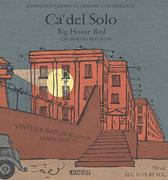 There is no escape from this Big House, a thick, fragrant, rustic libation that envelops the palate like honey. Despite its heft, this is a beverage with balance and grace, an elephant poised on one leg, gorgeous crimson in color, redolent of esoteric spices and ripe sugarplums, hints of rosemary and black raspberries persisting from its Piedmontese heritage.
Bonny-Doon Vineyard, which insists that “wine should be as much fun as government regulations allow,” is a pleasure to visit on line, with delightful visuals and cheerful prose, and such assets as wine clubs, 30-second Python-meets-South Park promos, and relentless advocacy on behalf of bottles with screw tops.
Befitting a winery that believes that “we should champion the strange, esoteric, ugly-duckling grape varieties of the world,” the current online-special is a naughty Framboisified Syrah Port called "Bouteille Call."
* With apologies to James Cagney.
Once, the term “big house” conjured ghosts of Paul Muni, Paul Newman and Clint Eastwood scheming to shed their prison grays. For those longest in their cups, the term might bring up memories of Chester Morris, pardoned for saving the guards in the great 1930 prison flicker, “The Big House.”
Now, at the Alehouse at least, “Big House” means just one thing: Ca' del Solo California Big House Red, a dense, richly erubescent vino from Bonny-Doon, the somewhat pixilated vintner from Santa Cruz. Ca' del Solo is what Bonny-Doon calls Italian-style wines; Big House is a blend faintly remindful of Gallo’s Hearty Burgundy, celebrated in less cosmopolitan days as the vessel on which many Americans traveled to vineland.
There is no escape from this Big House, a thick, fragrant, rustic libation that envelops the palate like honey. Despite its heft, this is a beverage with balance and grace, an elephant poised on one leg, gorgeous crimson in color, redolent of esoteric spices and ripe sugarplums, hints of rosemary and black raspberries persisting from its Piedmontese heritage.Bonny-Doon Vineyard, which insists that “wine should be as much fun as government regulations allow,” is a pleasure to visit on line, with delightful visuals and cheerful prose, and such assets as wine clubs, 30-second Python-meets-South Park promos, and relentless advocacy on behalf of bottles with screw tops.
Befitting a winery that believes that “we should champion the strange, esoteric, ugly-duckling grape varieties of the world,” the current online-special is a naughty Framboisified Syrah Port called "Bouteille Call."
* With apologies to James Cagney.
LAVoice: "Los Angeles To-Do List for 2005"
Mack Reed posted his "Visualize the Next Los Angeles - To-Do List for 2005" on LAVoice.org, and I banged out a few quick comments in reply: <http://lavoice.org/article454.html>
End of Enlightenment
"The aide (a senior adviser to President Bush) said that guys like me were 'in what we call the reality- based community,' which he defined as people who 'believe that solutions emerge from your judicious study of discernible reality.' I nodded and murmured something about enlightenment principles and empiricism. He cut me off. 'That's not the way the world really works anymore,' he continued. 'We're an empire now, and when we act, we create our own reality. And while you're studying that reality – judiciously, as you will – we'll act again, creating other new realities, which you can study too, and that's how things will sort out. We're history's actors ... and you, all of you, will be left to just study what we do." – Ron Suskind, New York Times Magazine, Oct. 17, 2004.
Profile in Courage
"We cannot simply suspend or restrict civil liberties until the War on Terror is over, because the War on Terror is unlikely ever to be truly over. September 11, 2001, already a day of immeasurable tragedy, cannot be the day liberty perished in this country." -- U.S. Apellate Judge Gerald Tjoflat, October 2004 (ruling in a case involving protesters at the School of the Americas).
The Arts: Subscribe to Goldstar Events emailings
The weekly email from Goldstar Events lists dozens of current cultural events -- the categories they list include Popular Music, Classic Rock, Jazz, Classical, Comedy, Theatre, Performing Arts, Film, Sports, Spas & Massage, Family and Unique Ideas -- all of them heavily discounted, a few free (i.e., for the cost of Goldstar's $2-$5 handling charge). Goldstar mailings are also available for Orange County, San Diego, South Bay/Long Beach, San Fernando Valley, Whittier Area, Inland Empire, San Francisco and East Bay, and Silicon Valley. <https://www.goldstarevents.com/splash?p=F37688N>
Dogs Gone
Most troubling about the campaign to unleash dogs upon the beach in Santa Monica is its disingenuousness. To bolster her case, for example, Santa Monica Daily press columnist Carole Orlin cites the safety record of pet visitations at nursing homes and hospitals, while failing to mention that these programs are motivated by hoped-for therapeutic benefits and are limited to a very small number of carefully monitored animals in highly controlled environments that are cleaned by professional staffs and protected by extensive liability insurance.
Do we really want to worry about the risk from additional semi-curbed canines on our crowded strand? Statistics show that nearly 2% of the population is bitten by a dog each year, the great majority of and most severe bites and attacks being suffered by children under 12 years old. If the mutt mavens are successful in their designs, some personal injury attorney can save everybody a lot of time by opening a kiosk right at the beach. Along those lines, I have a question: given the inevitability of dog bites if a large number of animals is introduced into a crowded venue, especially one heavily populated by casually supervised children (and with full appreciation that most severe dog attacks involve kids), won't the city and state governments be on the hook for potentially millions of dineros in damages if they knowingly create an inherently unsafe situation? Just asking.
Orlin also anecdotally points to her experience at the "completely open and dog friendly beach" in Carmel, from whence she returned "amazed at how beautiful and clean it was." Well, maybe. I remember the Carmel beach as sparsely attended, certainly when compared to ours, which is as heavily trafficked as Times Square. Closer to home, I myself am "amazed" at the amount of dogtritus already at the beach, especially on the sidewalks and bike path where dog owners can't fall back on the excuse that they lost it in the dunes.
Speaking of the sidewalks and bike path, isn't it also disingenuous to describe the off-leash proposal as being limited to "a 1/10-mile area of beach?" How are the pups going to get there? Dropped by helicopter? Catapulted from the palisades? No, they're going to walk there, depositing packages in the sand and on the byways as they go. And how are the animals going to be confined to the off-leash zone? Do the dogafiles propose barricading the beach at each end of the dog pound with fences? And, by the way, 1/10 of a mile doesn't sound like much, but if the fenced-in area extends from the street to the water line, what's being discussed is privatizing 50-60 acres of public beach.
The most disingenuous argument of the dog people Orlin puts this way: "Dog owners appear to want the same access to recreational opportunities as do tennis players, soccer players, volleyball players, surfers, sunbathers and others." As things stand now, though, everyone already has equal right to use to the beach. Including dog owners. It's the pooch park promoters who want to make some residents of Animal Farm more equal than others.
If dog owners are comparable to anyone, it is smokers, who are also welcome at the beach but have been asked to leave their filthy habit at home. Besides whatever messes are left by dogs that fail to reach the designated area before letting go, Orlin can't seriously think that dog owners, enough of whom already can't be bothered to pick up after their animals on sidewalks and streets and in neighbors' yards, will be able locate their pets' droppings in acres of sand, even if they want to.
Make no mistake: if the fidolators get their way, the beach will be dirtier. Parents of small children, to take one interested group, should ask themselves if they truly want to have more dogs at the beach (you haven't enjoyed the full, rich experience of parenthood until you've watched your little one pop a sand-encrusted "tootsie roll" he's found into his mouth). Turds aside, don't forget that many canines urinate copiously, and there is nothing much even the most conscientious dog owner can do about that. If you're already afraid to let your children play freely on your urine-soaked front lawn, do you really want the same concern on your treks to the beach? For that matter, does any of us look forward to spreading our blanket in a giant box of doggie litter that isn't even odor-absorbing and pine-scented?
Cleaning our beach is already a formidable job. We shouldn't be entertaining proposals that will make it harder. Some boosters of the canine corral seemed determined to press the issue, though, and they are organizing others to hound public officials about it. The rest of us may want to let the city council and the coastal commission know we think about it, too.
Do we really want to worry about the risk from additional semi-curbed canines on our crowded strand? Statistics show that nearly 2% of the population is bitten by a dog each year, the great majority of and most severe bites and attacks being suffered by children under 12 years old. If the mutt mavens are successful in their designs, some personal injury attorney can save everybody a lot of time by opening a kiosk right at the beach. Along those lines, I have a question: given the inevitability of dog bites if a large number of animals is introduced into a crowded venue, especially one heavily populated by casually supervised children (and with full appreciation that most severe dog attacks involve kids), won't the city and state governments be on the hook for potentially millions of dineros in damages if they knowingly create an inherently unsafe situation? Just asking.
Orlin also anecdotally points to her experience at the "completely open and dog friendly beach" in Carmel, from whence she returned "amazed at how beautiful and clean it was." Well, maybe. I remember the Carmel beach as sparsely attended, certainly when compared to ours, which is as heavily trafficked as Times Square. Closer to home, I myself am "amazed" at the amount of dogtritus already at the beach, especially on the sidewalks and bike path where dog owners can't fall back on the excuse that they lost it in the dunes.
Speaking of the sidewalks and bike path, isn't it also disingenuous to describe the off-leash proposal as being limited to "a 1/10-mile area of beach?" How are the pups going to get there? Dropped by helicopter? Catapulted from the palisades? No, they're going to walk there, depositing packages in the sand and on the byways as they go. And how are the animals going to be confined to the off-leash zone? Do the dogafiles propose barricading the beach at each end of the dog pound with fences? And, by the way, 1/10 of a mile doesn't sound like much, but if the fenced-in area extends from the street to the water line, what's being discussed is privatizing 50-60 acres of public beach.
The most disingenuous argument of the dog people Orlin puts this way: "Dog owners appear to want the same access to recreational opportunities as do tennis players, soccer players, volleyball players, surfers, sunbathers and others." As things stand now, though, everyone already has equal right to use to the beach. Including dog owners. It's the pooch park promoters who want to make some residents of Animal Farm more equal than others.
If dog owners are comparable to anyone, it is smokers, who are also welcome at the beach but have been asked to leave their filthy habit at home. Besides whatever messes are left by dogs that fail to reach the designated area before letting go, Orlin can't seriously think that dog owners, enough of whom already can't be bothered to pick up after their animals on sidewalks and streets and in neighbors' yards, will be able locate their pets' droppings in acres of sand, even if they want to.
Make no mistake: if the fidolators get their way, the beach will be dirtier. Parents of small children, to take one interested group, should ask themselves if they truly want to have more dogs at the beach (you haven't enjoyed the full, rich experience of parenthood until you've watched your little one pop a sand-encrusted "tootsie roll" he's found into his mouth). Turds aside, don't forget that many canines urinate copiously, and there is nothing much even the most conscientious dog owner can do about that. If you're already afraid to let your children play freely on your urine-soaked front lawn, do you really want the same concern on your treks to the beach? For that matter, does any of us look forward to spreading our blanket in a giant box of doggie litter that isn't even odor-absorbing and pine-scented?
Cleaning our beach is already a formidable job. We shouldn't be entertaining proposals that will make it harder. Some boosters of the canine corral seemed determined to press the issue, though, and they are organizing others to hound public officials about it. The rest of us may want to let the city council and the coastal commission know we think about it, too.
Turn Yards Into Parks
Little in urban life is more dreary than the sight of a lawn. Even when well-tended, their uniformity is deadening to the spirit; thus, they are well-suited to the tedium of suburbs but inappropriate to the more bracing landscape of the city. More often than not, a yard is not the verdant meadow that was intended, luxuriant and enticing, but a tufted and scrabbled wasteland, like the carpet of a fleabag hotel.
In the southern California community where I live, concern over the "pedestrian experience" has expressed itself in the harassment of homeowners, miscreants who use high hedges and lines of trees as shields from noise and fumes on busy thoroughfares. Although some of this shrubbery has been in place for decades, property owners suddenly face, without the benefit of public discussion, at least not in this century, of the desirability or not of such vegetation, the possibility of costly fines or expensive removal.
The lifestyle police argue that their intervention is required because high hedges are antisocial, creating areas of private space that are, well, too private. Although there must be reasonable limits on private property rights, it isn't clear that the hedge row is the place where the line should be drawn. In pursuit of the vaunted pedestrian experience, why should an ugly four foot copse be permitted while a beautifully designed and cared for twelve footer is criminalized? Doesn't any fence have the effect of confining the passerby to a narrow ribbon of concrete? And is there any legitimate lifestyle exigency (there may be safety concerns) that requires regulating the height of barriers other than those that actually intersect the public's space? If I don't want to look in my neighbor's window or permit her to peek in mine, is that anyone's business but ours?
Here are two proposals that, if adopted, would not only improve the pedestrian orientation of residential streets, but also offer additional benefits in water conservation, improved air quality, protection for native flora and fauna, and greatly expanded public space. Either scenario could be realized by means of tax incentives, cash payments, abatements, zoning exemptions, or similar forms of positive reinforcement:
Turn lawns into parks and native plant refuges.
Imagine, if you will, a street in your neighborhood, perhaps the one you use to walk to the market or take your daily constitutional. Instead of crabgrass and sandpits, each yard features a garden of native plants: here cacti, there succulents, the occasional lemonadeberry or manzinita, beds of chinese houses and fiesta flowers beyond.
In addition to inducements favoring such uses, the city could offer the assistance of gardeners, nurseries, publications, free compost, etc., to assure that even those with limited means, time or experience would be able to provide the community with beautified walkways. Where there was interest, neighborhood groups might be able to facilitate and coordinate block-long conversions.
Similarly, in the few cases where a building is set back deeply from the street, a landowner might be moved to offer the front yard as a park, a municipally maintained dell being preferable to the typical sunbaked expanse rendered inhospitable by the reek of dog urine mixed with feces flakes. If such a facility were carefully designed to encourage contemplative uses and were limited to daylight hours, with the right incentives what landowners wouldn't be pleased to have the responsibility for their troublesome and demanding front yards taken over by the parks department?
Such an arrangement would need clear boundaries to protect both the property owner and the city, but there is no reason to think the obstacles couldn't be overcome, as they are routinely for office and apartment buildings.
In the southern California community where I live, concern over the "pedestrian experience" has expressed itself in the harassment of homeowners, miscreants who use high hedges and lines of trees as shields from noise and fumes on busy thoroughfares. Although some of this shrubbery has been in place for decades, property owners suddenly face, without the benefit of public discussion, at least not in this century, of the desirability or not of such vegetation, the possibility of costly fines or expensive removal.
The lifestyle police argue that their intervention is required because high hedges are antisocial, creating areas of private space that are, well, too private. Although there must be reasonable limits on private property rights, it isn't clear that the hedge row is the place where the line should be drawn. In pursuit of the vaunted pedestrian experience, why should an ugly four foot copse be permitted while a beautifully designed and cared for twelve footer is criminalized? Doesn't any fence have the effect of confining the passerby to a narrow ribbon of concrete? And is there any legitimate lifestyle exigency (there may be safety concerns) that requires regulating the height of barriers other than those that actually intersect the public's space? If I don't want to look in my neighbor's window or permit her to peek in mine, is that anyone's business but ours?
Here are two proposals that, if adopted, would not only improve the pedestrian orientation of residential streets, but also offer additional benefits in water conservation, improved air quality, protection for native flora and fauna, and greatly expanded public space. Either scenario could be realized by means of tax incentives, cash payments, abatements, zoning exemptions, or similar forms of positive reinforcement:
Turn lawns into parks and native plant refuges.
Imagine, if you will, a street in your neighborhood, perhaps the one you use to walk to the market or take your daily constitutional. Instead of crabgrass and sandpits, each yard features a garden of native plants: here cacti, there succulents, the occasional lemonadeberry or manzinita, beds of chinese houses and fiesta flowers beyond.
In addition to inducements favoring such uses, the city could offer the assistance of gardeners, nurseries, publications, free compost, etc., to assure that even those with limited means, time or experience would be able to provide the community with beautified walkways. Where there was interest, neighborhood groups might be able to facilitate and coordinate block-long conversions.
Similarly, in the few cases where a building is set back deeply from the street, a landowner might be moved to offer the front yard as a park, a municipally maintained dell being preferable to the typical sunbaked expanse rendered inhospitable by the reek of dog urine mixed with feces flakes. If such a facility were carefully designed to encourage contemplative uses and were limited to daylight hours, with the right incentives what landowners wouldn't be pleased to have the responsibility for their troublesome and demanding front yards taken over by the parks department?
Such an arrangement would need clear boundaries to protect both the property owner and the city, but there is no reason to think the obstacles couldn't be overcome, as they are routinely for office and apartment buildings.
Crossing Main
How many more decades must pass before the mid-block crosswalk, long promised for Main Street between Hill Street and Ashland Avenue, will be installed at last? Although we have been trained by experience to have low expectations about follow-through by city staff, in this case there are grandfathers who were in diapers when the proposal was first broached.
It's not as though the idea is unprecedented. Mid-block crosswalks already exist on Main -- between Ocean Park Blvd. and Hollister and between Ashland and Pier -- causing both those sections of the drag to be considerably more pedestrian friendly than the rest. The crossing to the north, connecting the Galley Restaurant and Edgemar, has a pedestrian-controlled signal (known locally as "the god light" because it's quick response time makes walkers feel like gods when they push the button to arrest traffic). In front of Joe's Diner (at Kinney), crossers halt the cars by stepping into the marked lane. For the the long-anticipated crosswalk in the Ashland-Hill block, linking the area in front of the World Cafe's parking lot booth (next to LF Stores) with FITO across the street, either method of interrupting traffic would be acceptable, as would a stop sign.
As long as they already have their cans and brushes out (although to suggest this may be to invite another generation of studies by consultants and commissions), city staff could also put a path across Main between the northeast corner of the Victorian and Amelia's (on the block between Hill and Ocean Park), ending the petty harrassment of citizens by expensive jaywalking citations during Sunday farmers' market. As a side effect, both crossings would slow traffic, further benefiting walkers. Although these suggestions have the disadvantage of not costing millions of dollars to implement, like transit malls and traffic calming impedimentia, they would have an immediate and positive impact on the experience of shoppers and strollers on Main Street. (Published Santa Monica Mirror 2004-08-25)
It's not as though the idea is unprecedented. Mid-block crosswalks already exist on Main -- between Ocean Park Blvd. and Hollister and between Ashland and Pier -- causing both those sections of the drag to be considerably more pedestrian friendly than the rest. The crossing to the north, connecting the Galley Restaurant and Edgemar, has a pedestrian-controlled signal (known locally as "the god light" because it's quick response time makes walkers feel like gods when they push the button to arrest traffic). In front of Joe's Diner (at Kinney), crossers halt the cars by stepping into the marked lane. For the the long-anticipated crosswalk in the Ashland-Hill block, linking the area in front of the World Cafe's parking lot booth (next to LF Stores) with FITO across the street, either method of interrupting traffic would be acceptable, as would a stop sign.
As long as they already have their cans and brushes out (although to suggest this may be to invite another generation of studies by consultants and commissions), city staff could also put a path across Main between the northeast corner of the Victorian and Amelia's (on the block between Hill and Ocean Park), ending the petty harrassment of citizens by expensive jaywalking citations during Sunday farmers' market. As a side effect, both crossings would slow traffic, further benefiting walkers. Although these suggestions have the disadvantage of not costing millions of dollars to implement, like transit malls and traffic calming impedimentia, they would have an immediate and positive impact on the experience of shoppers and strollers on Main Street. (Published Santa Monica Mirror 2004-08-25)
Edifice Wrecks
What's curious about the Santa Monica Public Library now being built -- I mean, aside from the fact that there was no demonstrable need for the thing, that it required a building that had only recently cost millions of dollars to retrofit to be torn down, and that it now itself is millions of more dollars over budget -- besides all that, the construction of a big central athenaeum flies in the face of this burg's rhetorical commitment to neighborhoods, pedestrian orientation, and slow growth.
Unfortunately, the edifice complex afflicting the city elite inevitably leads to such ill-conceived and overblown projects as the transit mall, the civic center and the library.
In the latter case, how much more fitting it would have been to create a network of satellite reading rooms around town, backed up by an efficient distribution system. Even after the central book depository comes on line, there will still be a need for small, local, high-tech libraries. Such mini-libraries (booktiques, call them) would help to increase access to the Internet; provide more -- and more convenient -- locales for library patrons to read, study and create; encourage walking and bike riding; and save many, many unnecessary automobile trips.
Booktiques needn't be nearly as large nor as permanent as the neighborhood library branches already on Main, Montana and Ocean Park. In fact, it's better that they're not. Storefronts, warehouses, churches, community rooms, abandoned gas stations...almost any publicly accessible space could easily be converted to library uses. Once the infrastructure was put in place to deliver books physically and transmit information digitally, booktiques would be simple to set up and remove, unlike the present library configuration, giving librarians the ability to respond relatively quickly to changing demands for their services.
The next time the city council and staff sit down to divvy up budget dollars, maybe they can spare a few bucks for booktiques (imagine, if you will, that the $85 million currently being poured into the central library building was being used instead to innovate ways to relocate "the library" into every corner of the community). Creating attractive destinations for pedestrians and bikers, which is one thing booktiques would be, is a far more effective traffic mitigator, for example, than cluttering the streets with more circles, islands and bumpers at intersections.
What's needed, as it is in nearly every aspect of public life hereabouts, is the application of creative thinking. The same old same old may be a fair description of the bureaucratic safety zone, but there should be other criteria required of planning projects than that they be big and expensive and have been done before. (Published Santa Monica Mirror 2004-07-22).
Unfortunately, the edifice complex afflicting the city elite inevitably leads to such ill-conceived and overblown projects as the transit mall, the civic center and the library.
In the latter case, how much more fitting it would have been to create a network of satellite reading rooms around town, backed up by an efficient distribution system. Even after the central book depository comes on line, there will still be a need for small, local, high-tech libraries. Such mini-libraries (booktiques, call them) would help to increase access to the Internet; provide more -- and more convenient -- locales for library patrons to read, study and create; encourage walking and bike riding; and save many, many unnecessary automobile trips.
Booktiques needn't be nearly as large nor as permanent as the neighborhood library branches already on Main, Montana and Ocean Park. In fact, it's better that they're not. Storefronts, warehouses, churches, community rooms, abandoned gas stations...almost any publicly accessible space could easily be converted to library uses. Once the infrastructure was put in place to deliver books physically and transmit information digitally, booktiques would be simple to set up and remove, unlike the present library configuration, giving librarians the ability to respond relatively quickly to changing demands for their services.
The next time the city council and staff sit down to divvy up budget dollars, maybe they can spare a few bucks for booktiques (imagine, if you will, that the $85 million currently being poured into the central library building was being used instead to innovate ways to relocate "the library" into every corner of the community). Creating attractive destinations for pedestrians and bikers, which is one thing booktiques would be, is a far more effective traffic mitigator, for example, than cluttering the streets with more circles, islands and bumpers at intersections.
What's needed, as it is in nearly every aspect of public life hereabouts, is the application of creative thinking. The same old same old may be a fair description of the bureaucratic safety zone, but there should be other criteria required of planning projects than that they be big and expensive and have been done before. (Published Santa Monica Mirror 2004-07-22).
The new city council must discipline the bureaucrats at last
Someone contemplating the retreat from the communitarian ideals that animated the renters' rights movement might do worse than reflect on these quotes from John Adams:
"The representative assembly," he wrote with revolutionary ardor in 1776 (and no doubt with some small intention of drumming up support for his enterprise), "should be in miniature an exact portrait of the people at large. It should think, feel, reason and act like them."
By 1787, however, reeling from the near-anarchy of the toothless Confederation, Adams believed that the "proposition that [the people] are the best keeper of their liberties is not true. They are the worst conceivable, they are no keepers at all. They can neither act, judge, think, or will."
Similarly did "the People's Republic of Santa Monica" descend from the eden of participatory democracy to the current abyss of shoddy and mediocre dictatorship by bureaucrats. When the SMRR leadership's trust in the people faltered, it removed a counterweight to the city staff's arrogance and trumpery.
The incoming council needs to make a new start by terminating city manager Susan McCarthy and the most autocratic department managers, not limited to those running the planning department. If McCarthy continues to occupy her office at city hall, the council might as soon stay home. It will be business as usual in the dysfunctional village by the sea.
It is way past time the citizens of Santa Monica took the power back from the hired help.
"The representative assembly," he wrote with revolutionary ardor in 1776 (and no doubt with some small intention of drumming up support for his enterprise), "should be in miniature an exact portrait of the people at large. It should think, feel, reason and act like them."
By 1787, however, reeling from the near-anarchy of the toothless Confederation, Adams believed that the "proposition that [the people] are the best keeper of their liberties is not true. They are the worst conceivable, they are no keepers at all. They can neither act, judge, think, or will."
Similarly did "the People's Republic of Santa Monica" descend from the eden of participatory democracy to the current abyss of shoddy and mediocre dictatorship by bureaucrats. When the SMRR leadership's trust in the people faltered, it removed a counterweight to the city staff's arrogance and trumpery.
The incoming council needs to make a new start by terminating city manager Susan McCarthy and the most autocratic department managers, not limited to those running the planning department. If McCarthy continues to occupy her office at city hall, the council might as soon stay home. It will be business as usual in the dysfunctional village by the sea.
It is way past time the citizens of Santa Monica took the power back from the hired help.
Weather: The Santa Anas
"Named after Southern California's Santa Ana Canyon and a fixture of local legend and literature, the Santa Ana is a blustery, dry and warm (often hot) wind that blows out of the desert. In Raymond Chandler's story Red Wind, the title being one of the offshore wind's many nicknames, the Santa Anas were introduced as 'those hot dry [winds] that come down through the mountain passes and curl your hair and make your nerves jump and your skin itch. On nights like that every booze party ends in a fight. Meek little wives feel the edge of the carving knife and study their husbands' necks. Anything can happen.' Local legends associate the hot, dry winds with homicides and earthquakes, but these are myths.
"Another popular misconception that the winds are hot owing to their desert origin. Actually, the Santa Anas develop when the desert is cold, and are thus most common during the cool season stretching from October through March. High pressure builds over the Great Basin (e.g., Nevada) and the cold air there begins to sink. However, this air is forced downslope which compresses and warms it at a rate of about 10C per kilometer (29F per mile) of descent. As its temperature rises, the relative humidity drops; the air starts out dry and winds up at sea level much drier still. The air picks up speed as it is channeled through passes and canyons...." -- from the website.
<http://www.atmos.ucla.edu/~fovell/ASother/mm5/SantaAna/winds.html>
"Another popular misconception that the winds are hot owing to their desert origin. Actually, the Santa Anas develop when the desert is cold, and are thus most common during the cool season stretching from October through March. High pressure builds over the Great Basin (e.g., Nevada) and the cold air there begins to sink. However, this air is forced downslope which compresses and warms it at a rate of about 10C per kilometer (29F per mile) of descent. As its temperature rises, the relative humidity drops; the air starts out dry and winds up at sea level much drier still. The air picks up speed as it is channeled through passes and canyons...." -- from the website.
<http://www.atmos.ucla.edu/~fovell/ASother/mm5/SantaAna/winds.html>
Media: IPSM Observed
Impractical Proposals SM benefited from kind notice last week from former LATimesman Kevin Roderick in his local media and lifestyle zine L.A. Observed, which does a great job covering local media and news. "Today's Blog" for October 21, for example, reports on the shutdown of an anonymous insider website about the daily activities, indiscretions and mishaps of Elay's mayor and councilmembers that has been must reading at City Hall; a note on the efforts to clean up the environmental damage at Rocketdyne's Santa Susana Field Lab near Chatsworth (Roderick is author of The San Fernando Valley: America's Suburb, so he pays close attention to doings in the Valley); a link to a Hollywood business story with a Black Dahlia twist; a reminder to listen to 89.3 KPCC's excellent weekly Journalist Roundtable that morning and Kitty Felde's Talk of the City look at the Indian gambling Propositions 68 and 70 in the afternoon; and a tip on an upcoming New York Review of Books-sponsored panel of journalists at Occidental College on "The Media and Iraq: What Went Wrong?" <http://www.laobserved.com/>
SM Library: Free access at library
The Santa Monica Public Library has added free wireless access at the temporary main library and the three neighborhood branches. To get on line, patrons need their own wi-fi-ready computer or PDA. The library already offers free internet access on some of its own computers at all four locations. The info line is 310-458-8600.
Blog: Baghdad Burning
If you were alive during the Vietnam era, this may have a familiar ring:
"The bombs being dropped on Fallujah don't contain
explosives, depleted uranium or anything harmful - they
contain laughing gas - that would, of course, explain
[Pentagon chief Donald] Rumsfeld's misplaced optimism
about not killing civilians in Fallujah. Also, being a
'civilian' is a relative thing in a country occupied by
Americans. You're only a civilian if you're on their
side. If you translate for them, or serve them food in
the Green Zone, or wipe their floors - you're an
innocent civilian. Just about everyone else is an
insurgent, unless they can get a job as a 'civilian'."
- Riverbend, an Iraqi civilian girl,
author of the blog Baghdad Burning
<http://riverbendblog.blogspot.com/>
"The bombs being dropped on Fallujah don't contain
explosives, depleted uranium or anything harmful - they
contain laughing gas - that would, of course, explain
[Pentagon chief Donald] Rumsfeld's misplaced optimism
about not killing civilians in Fallujah. Also, being a
'civilian' is a relative thing in a country occupied by
Americans. You're only a civilian if you're on their
side. If you translate for them, or serve them food in
the Green Zone, or wipe their floors - you're an
innocent civilian. Just about everyone else is an
insurgent, unless they can get a job as a 'civilian'."
- Riverbend, an Iraqi civilian girl,
author of the blog Baghdad Burning
<http://riverbendblog.blogspot.com/>
Theater: Last Night for "The Tansparency of Val"
"Life starts. People tell you things. Girls become boys. Facts become thoughts. Is my mother attractive? Is licorice really food? In Stephen Belber's new comedy, Transparency of Val, 'Val' is born. Within minutes, he learns part of the entire history of the world. By then, having finished college, he is faced with the task of actually living. It's not quite the coconut he was taught, what with all the twisted Buddhists, sexually-amorphous mates, and frighteningly friendly Nazis. But Val's a survivor, and like most good people, he'll endure. Unless he goes insane.
"Transparency of Val, no less sweeping in scope than Plato's 'Allegory of the Cave,' tackles the life cycle, sexual politics, race relations, foreign affairs, and modern religion. And it's a comedy! Playwright Stephen Belber, no longer content with the realism that drove his previous dramas like Tape and Finally, chooses a dramatic style which allows him to tackle so many broad issues. Like every good absurdist, he begs a number of fundamental questions without presuming any answers." -- from the program.
The LA Weekly: "Playwright Stephen Belber puts a ‘90s spin on the Candide story....So long as Belber keeps his eye on the satiric ball, his play is lively and funny, but it keeps veering into allegory, fantasy, absurdism and New Age truisms....Director Kelly Ann Ford gives the piece a slick and clever production, well served by a solid cast (including Bob Wilson in several roles), but the play’s warring elements never quite gel."
Backstage West: "...Please keep your hands and arms inside the car at all times.
Dutifully warned, one sits back for a spin on playwright Stephen Belber's philosophically comic roller coaster. Val, a quickly developing newborn played with infectiously wide-eyed wonder by Guy Busick, learns all he needs to know about life within the first 10 minutes of Belber's tautly constructed first act....best are the scenes in which Ford lets the dramatic side run its course naturally. The cast's
handling, Busick's in particular, of Val's parents' separation and his father's eventual death are touching oases in Belber's otherwise fast-moving tale."
West Coast Ensemble, wcensemble.org
522 N. La Brea Ave., Hlywd.;
Tues.-Thurs., 8 p.m.; thru Nov. 11. (323) 525-0022.
"Transparency of Val, no less sweeping in scope than Plato's 'Allegory of the Cave,' tackles the life cycle, sexual politics, race relations, foreign affairs, and modern religion. And it's a comedy! Playwright Stephen Belber, no longer content with the realism that drove his previous dramas like Tape and Finally, chooses a dramatic style which allows him to tackle so many broad issues. Like every good absurdist, he begs a number of fundamental questions without presuming any answers." -- from the program.
The LA Weekly: "Playwright Stephen Belber puts a ‘90s spin on the Candide story....So long as Belber keeps his eye on the satiric ball, his play is lively and funny, but it keeps veering into allegory, fantasy, absurdism and New Age truisms....Director Kelly Ann Ford gives the piece a slick and clever production, well served by a solid cast (including Bob Wilson in several roles), but the play’s warring elements never quite gel."
Backstage West: "...Please keep your hands and arms inside the car at all times.
Dutifully warned, one sits back for a spin on playwright Stephen Belber's philosophically comic roller coaster. Val, a quickly developing newborn played with infectiously wide-eyed wonder by Guy Busick, learns all he needs to know about life within the first 10 minutes of Belber's tautly constructed first act....best are the scenes in which Ford lets the dramatic side run its course naturally. The cast's
handling, Busick's in particular, of Val's parents' separation and his father's eventual death are touching oases in Belber's otherwise fast-moving tale."
West Coast Ensemble, wcensemble.org
522 N. La Brea Ave., Hlywd.;
Tues.-Thurs., 8 p.m.; thru Nov. 11. (323) 525-0022.
Public Policy: The (Running) Cost of the War in Iraq
"War affects everyone, not just those directly involved in the fighting. This webpage is a simple attempt to demonstrate one of the more quantifiable effects of war: the financial burden it places on our tax dollars." -- from the website. <http://costofwar.com/>
You'll get pie in the sky when you die -- Joe Hill
The Preacher and the Slave
Long-haired preachers come out every night,
Try to tell you what's wrong and what's right;
But when asked how 'bout something to eat
They will answer with voices so sweet:
The starvation army they play,
They sing and they clap and they pray
'Till they get all your coin on the drum
Then they'll tell you when you're on the bum:
Holy Rollers and jumpers come out,
They holler, they jump and they shout.
Give your money to Jesus they say,
He will cure all diseases today.
If you fight hard for children and wife --
Try to get something good in this life --
You're a sinner and bad man, they tell,
When you die you will sure go to hell.
Workingmen of all countries, unite,
Side by side we for freedom will fight;
When the world and its wealth we have gained
To the grafters we'll sing this refrain:
Long-haired preachers come out every night,
Try to tell you what's wrong and what's right;
But when asked how 'bout something to eat
They will answer with voices so sweet:
You will eat, bye and bye,
In that glorious land above the sky;
Work and pray, live on hay,
You'll get pie in the sky when you die.
The starvation army they play,
They sing and they clap and they pray
'Till they get all your coin on the drum
Then they'll tell you when you're on the bum:
Holy Rollers and jumpers come out,
They holler, they jump and they shout.
Give your money to Jesus they say,
He will cure all diseases today.
If you fight hard for children and wife --
Try to get something good in this life --
You're a sinner and bad man, they tell,
When you die you will sure go to hell.
Workingmen of all countries, unite,
Side by side we for freedom will fight;
When the world and its wealth we have gained
To the grafters we'll sing this refrain:
You will eat, bye and bye,
When you've learned how to cook and to fry.
Chop some wood, 'twill do you good,
And you'll eat in the sweet bye and bye.
-- Joe Hill (1911)
Jazz: Thom Rotella
And speaking of jazz, guitarist Thom Rotella continues to host a Sunday Jazz Guitar Brunch at La Vecchia Cucina, featuring guest guitarists....
November 7 - Larry Koonse
November 14 - John Pisano
November 21 - Mitch Holder
November 28 - Thom Rotella solo
Sundays 11am-2:30pm
(no cover charge) at
La Vecchia Cucina
2654 Main Street
Santa Monica
310.399.7979
<http://www.lavecchiacucina.com/>
<http://www.thomrotella.com/>
November 7 - Larry Koonse
November 14 - John Pisano
November 21 - Mitch Holder
November 28 - Thom Rotella solo
Sundays 11am-2:30pm
(no cover charge) at
La Vecchia Cucina
2654 Main Street
Santa Monica
310.399.7979
<http://www.lavecchiacucina.com/>
<http://www.thomrotella.com/>
It's not that bad
It's undeniably true that the driving issues in this campaign, besides security, were gun control, abortion and, most crucially, gay marriage. Karl Rove and his minions were extremely skillful at realizing a strategy that they outlined after the last election to build up a rock solid base of support among evangelicals.
How policies, such as the free use of guns and the criminalization of abortion, that together will result in uncountable deaths and untold suffering, become the "moral" choice I leave you to ponder. Why aren't the pulpits thundering about poverty and unjust war and the death of innocents in general? According to the New York Times, "voters who cited honesty as the most important quality in a candidate broke 2 to 1 in Mr. Bush's favor."
The most mendacious administration in American history gets the award for integrity.
A gang of crooks led by a known liar is the chosen guardian of moral values.
God works in mysterious ways, indeed.
The Democrats are not without responsibility, of course. Kerry tried to fudge every one of those same issues, especially abortion and gay marriage. And gay activists, by stressing marriage -- a vestige of religious ooga booga that maybe the state should get out of altogether -- over rights, about which most Americans agree, played into Rove's hands.
The administration will attempt to do the following: make the tax cuts for the rich permanent; privatize social security; pack the Supreme Court with right-wingers; overrule Roe v. Wade; expand the military; invade Iran; institute a draft; beef up the Patriot Act; continue to dismantle health and environmental protection laws; unloose the exploiters on those few public lands not yet despoiled; attempt to initiate a national sales tax as the final nail in the coffin of the progressive taxes; turn health care over to private business; and on and on.
You'll note that most of this agenda is about power and money, very little -- beyond tossing the bone of abortion to the Christian right -- about "morality."
Progressives are actually in a great position. We are more organized and unified than at any time since at least the 1930s. We agree with at least half the people on the kind of country we want to live in. And we have the high moral ground on the issues that actually affect the way people live.
What is needed is a clear articulation of the values that drive most progressives.
And the creation of organizations for influencing policy and politics independent of the fatally compromized Democratic Party.
How policies, such as the free use of guns and the criminalization of abortion, that together will result in uncountable deaths and untold suffering, become the "moral" choice I leave you to ponder. Why aren't the pulpits thundering about poverty and unjust war and the death of innocents in general? According to the New York Times, "voters who cited honesty as the most important quality in a candidate broke 2 to 1 in Mr. Bush's favor."
The most mendacious administration in American history gets the award for integrity.
A gang of crooks led by a known liar is the chosen guardian of moral values.
God works in mysterious ways, indeed.
The Democrats are not without responsibility, of course. Kerry tried to fudge every one of those same issues, especially abortion and gay marriage. And gay activists, by stressing marriage -- a vestige of religious ooga booga that maybe the state should get out of altogether -- over rights, about which most Americans agree, played into Rove's hands.
The administration will attempt to do the following: make the tax cuts for the rich permanent; privatize social security; pack the Supreme Court with right-wingers; overrule Roe v. Wade; expand the military; invade Iran; institute a draft; beef up the Patriot Act; continue to dismantle health and environmental protection laws; unloose the exploiters on those few public lands not yet despoiled; attempt to initiate a national sales tax as the final nail in the coffin of the progressive taxes; turn health care over to private business; and on and on.
You'll note that most of this agenda is about power and money, very little -- beyond tossing the bone of abortion to the Christian right -- about "morality."
Progressives are actually in a great position. We are more organized and unified than at any time since at least the 1930s. We agree with at least half the people on the kind of country we want to live in. And we have the high moral ground on the issues that actually affect the way people live.
What is needed is a clear articulation of the values that drive most progressives.
And the creation of organizations for influencing policy and politics independent of the fatally compromized Democratic Party.
Jazz: Carl Saunders at Clancy's...
...with Andy Martin and Jerry Pinter!!!
Carl Saunders is one of the trumpet greats. After high school, joined Stan Kenton's Orchestra, then spent 20 years in Vegas where he played lead in show bands for the likes of Ella Fitzgerald, Tony Bennet and Frank Sinatra (also for Paul Anka and Robert Goulet, but let's not go there). His big band credits include Si Zentner, Harry James, Maynard Ferguson, Benny Goodman and Charlie Barnet.
The Group: Andy Martin(trmb), Jerry Pinter(s), Christian Jacobs(p), Kevin Axt(b), Santo Savino(d).
Friday, November 05, 2004 - 8:00pm to Midnight - $10.00 Cover
Clancy's Jazz at the Crab Shack
219 North Central Avenue
Glendale, CA 91203
818-242-CRAB
(Just off the 134 at Central/Brand Avenue)
Carl Saunders is one of the trumpet greats. After high school, joined Stan Kenton's Orchestra, then spent 20 years in Vegas where he played lead in show bands for the likes of Ella Fitzgerald, Tony Bennet and Frank Sinatra (also for Paul Anka and Robert Goulet, but let's not go there). His big band credits include Si Zentner, Harry James, Maynard Ferguson, Benny Goodman and Charlie Barnet.
The Group: Andy Martin(trmb), Jerry Pinter(s), Christian Jacobs(p), Kevin Axt(b), Santo Savino(d).
Friday, November 05, 2004 - 8:00pm to Midnight - $10.00 Cover
Clancy's Jazz at the Crab Shack
219 North Central Avenue
Glendale, CA 91203
818-242-CRAB
(Just off the 134 at Central/Brand Avenue)
Today Is the First Day of the Rest of Your (Political) Life
Progressives need to take a step back from the Democratic Party.
Who cares which corporatist they nominate? They will continue to lose until they start to provide a viable alternative to corporate power.
I doubt that there ever was a time in our history when the labor, civil rights, peace and environmental movements have been as unified; too bad they bet it all on a nag.
Now these movements need to secure that unity by getting together behind a simple program:
single payer health insurance,
an increase in the minimum wage, and
the internationalization of American labor and environmental laws.
Lament that Bush won; shed tears for the country; but have no regrets that Kerry lost. He's just another symptom of our political dysfunction.
Joe Hill said, "Don't mourn. Organize!"
Who cares which corporatist they nominate? They will continue to lose until they start to provide a viable alternative to corporate power.
I doubt that there ever was a time in our history when the labor, civil rights, peace and environmental movements have been as unified; too bad they bet it all on a nag.
Now these movements need to secure that unity by getting together behind a simple program:
single payer health insurance,
an increase in the minimum wage, and
the internationalization of American labor and environmental laws.
Lament that Bush won; shed tears for the country; but have no regrets that Kerry lost. He's just another symptom of our political dysfunction.
Joe Hill said, "Don't mourn. Organize!"
Roosevelt: On the wages of fear
"...This is preeminently the time to speak the truth, the whole truth, frankly and boldly. Nor need we shrink from honestly facing conditions in our country today. This great Nation will endure as it has endured, will revive and will prosper. So, first of all, let me assert my firm belief that the only thing we have to fear is fear itself -- nameless, unreasoning, unjustified terror which paralyzes needed efforts to convert retreat into advance. In every dark hour of our national life a leadership of frankness and vigor has met with that understanding and support of the people themselves which is essential to victory. I am convinced that you will again give that support to leadership in these critical days." -- President Franklin D. Roosevelt, March 4, 1933
Election: List of ballot recommendations
President/Vice President: To defeat Bush, John Kerry and John Edwards
(but go to VotePair.Org <http://www.votepair.org/>and trade your vote with a third party (Green, Libertarian or Nader) voter in a swing state -- see Keep the Protest Alive, Trade Your Vote).
U.S. Senate: Barbara Boxer
The Props (see earlier posts, below):
Prop 1A: No
Prop 59: Yes
Prop 60: Yes
Prop 60A: No
Prop 61: Yes
Prop 62: No
Prop 63: Yes
Prop 64: No
Prop 65: No
Prop 66: Yes
Prop 67: No
Prop 68: No
Prop 69: No
Prop 70: No
Prop 71: No
Prop 72: Yes
Los Angeles County
Measure A: No.
Judges:
Office 18: Mildred Escobedo
Office 29: Gus Gomez
Office 52: Laura F. Priver
Office 53: Daniel Zeke Zeidler
Office 69: Donna Groman
City of Los Angeles
Measure O: Yes.
City of Santa Monica
City Council: Michael Feinstein, Herb Katz
(only: see Michael Feinstein and Herb Katz for City Council)
Rent Board: Jeff Sklar
Measure N: Increases the hotel occupancy tax from 12 to 14 percent (same as other municipalities): Yes
Santa MonicaCommunity College District
Measure S (authorizes the college district -- encompassing Santa Monica and Malibu -- to issue $135 million in bonds to replace or repair deteriorating buildings, construct and equip laboratories and meet new needs in emerging technologies): Yes
(but go to VotePair.Org <http://www.votepair.org/>and trade your vote with a third party (Green, Libertarian or Nader) voter in a swing state -- see Keep the Protest Alive, Trade Your Vote).
U.S. Senate: Barbara Boxer
The Props (see earlier posts, below):
Prop 1A: No
Prop 59: Yes
Prop 60: Yes
Prop 60A: No
Prop 61: Yes
Prop 62: No
Prop 63: Yes
Prop 64: No
Prop 65: No
Prop 66: Yes
Prop 67: No
Prop 68: No
Prop 69: No
Prop 70: No
Prop 71: No
Prop 72: Yes
Los Angeles County
Measure A: No.
Judges:
Office 18: Mildred Escobedo
Office 29: Gus Gomez
Office 52: Laura F. Priver
Office 53: Daniel Zeke Zeidler
Office 69: Donna Groman
City of Los Angeles
Measure O: Yes.
City of Santa Monica
City Council: Michael Feinstein, Herb Katz
(only: see Michael Feinstein and Herb Katz for City Council)
Rent Board: Jeff Sklar
Measure N: Increases the hotel occupancy tax from 12 to 14 percent (same as other municipalities): Yes
Santa MonicaCommunity College District
Measure S (authorizes the college district -- encompassing Santa Monica and Malibu -- to issue $135 million in bonds to replace or repair deteriorating buildings, construct and equip laboratories and meet new needs in emerging technologies): Yes
Election: Here's how it's gonna be
At least we can still smile:

<http://www.clowntech.com/win04/vote.htm>
The Props: NO on 62 -- Primary Elections
YES on 60 -- Political Parties in Elections
By limiting choice in the general election to the top two vote-getters from the primaries, Prop 62 all but guarantees that third parties will never have a fair shot at gaining power.
In a community where one party possesses the allegiance of a significant portion of registered voters, it is not unlikely, if this initiative passes, that the selection of candidates on election day will be reduced to two of that party. Similarly, a low turnout in an uncontested primary could result in the top candidates from a hotly disputed but closely decided race among the opposition being the only choices in the general election, even if the disputatious party is not normally the favorite of a majority of voters in that district.
Prop 62 also allows any citizen, no matter how registered, to vote for any candidate of any party. But primaries are the mechanism the parties employ to choose their candidates and, by extension, most of their leaders. If it passes, this "reform" will lead inevitably to weaker party loyalties. And weaker parties make it harder for voters to judge candidates and to hold them accountable.
Also, when one party is particularly settled in its candidates -- this would most frequently be the case of a party that already holds a particular seat, its members will be released to make mischief for its competitors. As a Democrat, I am not especially pleased with the idea of Republicans and Independents picking my representatives. It's to be hoped that Republicans, Greens, Libertarians, and so on, feel the same.
In addition, there are sometimes factors at work other than the relative merit of the Democratic and Republican nominees. For example, if control of a legislature is in balance, you may wish to vote for the delegate from the party you hope will win the majority of the body in question, regardless of the individual merits the candidates on the ballot. Better a mediocre Democrat in your district and control of the House, than a fabulous Republican (should there be such) in your district and minority status in the House.
Here in California the incumbent Democratic Senator, Barbara Boxer, is running against a nonentity, but in a state where the question is closer, the matter of the Senate's role in consenting or not to the next several appointments to the Supreme Court ought to weigh heavily in the Democrat's favor, even if he is, to take an example so extreme as almost to undermine the argument, of the caliber of a Zell Miller. As you choose your senator this year, you may want to give a thought to the prospect of Chief Justice Scalia.
There is another factor. On occasion, you may not wish to vote for either of the top two primary vote-getters, whether they are both Republicans, both Democrats, or one from column A and one from column B. For some voters, the major parties too often serve up a choice between Tweedledum and Tweedledee. If Prop 62 is successful, your menu of candidates will be even narrower than it is already. Surely, no one save the most partisan Republican and Democrat can want that.
"Reform" nearly always is the code word applied by its backers to any change of procedure that seeks to put a limit on democracy. From charter cities to term limits, political reforms commonly have the effect of weakening the power of the people's representatives while concomitantly increasing the influence of ruling elites, special interests and bureaucrats. If we're going to have reform, let's have it target power not indulge it.
As an aside, if we consider greater choice to be a desirable goal, why not create a primary in which candidates who do not wish to be affiliated with a party can run and voters who do not wish to be affiliated with a party can vote? The top winner in this primary could then appear on the general election ballot along with the victors in the partisan races; Democrat, Republican, Peace & Freedom, Libertarian, Green, et al, now joined by an "Independent."
As for Prop 60, it would deserve to lose, too, if 62 weren't on the ballot and in danger of winning approval. The "Election Rights of Political Parties" initiative assures that any candidate who wins a primary gets a position on the general election ballot. No one can be excluded for receiving an insufficient number of votes in the primaries. Thus 60 will thwart 62's ambition to exclude all but the top two primary vote-getters. Prop 60 would fail for being needless if the possibility of a win by Prop 62 didn't acquire it relevancy; if 62 passes, then at least Prop 60 preserves the citizenry's current range of choices; if 62 fails, the passage of Prop 60 leaves us no worse off, something too rarely possible to say of a California referendum.
In a community where one party possesses the allegiance of a significant portion of registered voters, it is not unlikely, if this initiative passes, that the selection of candidates on election day will be reduced to two of that party. Similarly, a low turnout in an uncontested primary could result in the top candidates from a hotly disputed but closely decided race among the opposition being the only choices in the general election, even if the disputatious party is not normally the favorite of a majority of voters in that district.
Prop 62 also allows any citizen, no matter how registered, to vote for any candidate of any party. But primaries are the mechanism the parties employ to choose their candidates and, by extension, most of their leaders. If it passes, this "reform" will lead inevitably to weaker party loyalties. And weaker parties make it harder for voters to judge candidates and to hold them accountable.
Also, when one party is particularly settled in its candidates -- this would most frequently be the case of a party that already holds a particular seat, its members will be released to make mischief for its competitors. As a Democrat, I am not especially pleased with the idea of Republicans and Independents picking my representatives. It's to be hoped that Republicans, Greens, Libertarians, and so on, feel the same.
In addition, there are sometimes factors at work other than the relative merit of the Democratic and Republican nominees. For example, if control of a legislature is in balance, you may wish to vote for the delegate from the party you hope will win the majority of the body in question, regardless of the individual merits the candidates on the ballot. Better a mediocre Democrat in your district and control of the House, than a fabulous Republican (should there be such) in your district and minority status in the House.
Here in California the incumbent Democratic Senator, Barbara Boxer, is running against a nonentity, but in a state where the question is closer, the matter of the Senate's role in consenting or not to the next several appointments to the Supreme Court ought to weigh heavily in the Democrat's favor, even if he is, to take an example so extreme as almost to undermine the argument, of the caliber of a Zell Miller. As you choose your senator this year, you may want to give a thought to the prospect of Chief Justice Scalia.
There is another factor. On occasion, you may not wish to vote for either of the top two primary vote-getters, whether they are both Republicans, both Democrats, or one from column A and one from column B. For some voters, the major parties too often serve up a choice between Tweedledum and Tweedledee. If Prop 62 is successful, your menu of candidates will be even narrower than it is already. Surely, no one save the most partisan Republican and Democrat can want that.
"Reform" nearly always is the code word applied by its backers to any change of procedure that seeks to put a limit on democracy. From charter cities to term limits, political reforms commonly have the effect of weakening the power of the people's representatives while concomitantly increasing the influence of ruling elites, special interests and bureaucrats. If we're going to have reform, let's have it target power not indulge it.
As an aside, if we consider greater choice to be a desirable goal, why not create a primary in which candidates who do not wish to be affiliated with a party can run and voters who do not wish to be affiliated with a party can vote? The top winner in this primary could then appear on the general election ballot along with the victors in the partisan races; Democrat, Republican, Peace & Freedom, Libertarian, Green, et al, now joined by an "Independent."
As for Prop 60, it would deserve to lose, too, if 62 weren't on the ballot and in danger of winning approval. The "Election Rights of Political Parties" initiative assures that any candidate who wins a primary gets a position on the general election ballot. No one can be excluded for receiving an insufficient number of votes in the primaries. Thus 60 will thwart 62's ambition to exclude all but the top two primary vote-getters. Prop 60 would fail for being needless if the possibility of a win by Prop 62 didn't acquire it relevancy; if 62 passes, then at least Prop 60 preserves the citizenry's current range of choices; if 62 fails, the passage of Prop 60 leaves us no worse off, something too rarely possible to say of a California referendum.
The Props: 66 YES -- Limits on the Three Strikes Law
Under Three Strikes, as it has been applied in California, thousands of people have been condemned to unconscionably long prison terms for non-violent, petty crimes.
There are Californians serving life in prison for shoplifting a package of flashlight batteries. Or holding $2 worth of pot. Or helping somebody steal baby formula.
Baby formula.
In April, 52-year-old Delbert Meeks, who has AIDS and was homeless at the time of his arrest, and whose last felony, a robbery, was in 1991, had his 27 years-to-life sentence for failure to register as a sex offender upheld because it was his third strike.
Draconian prison stays for nonviolent crimes disrupt families and communities, worsen the effects of poverty, and generate more crime. Since California prisons make almost no attempt at rehabilitation and amount to little more than brutal training camps for criminals, many who were sent to jail for making trivial mistakes eventually return to the community bitter and hardened.
Third Strike is also grotesquely expensive. To house an inmate in the California penal system for 25 years costs about $600,000. The drain on California taxpayers is in the hundreds of millions of dollars, money that could be far better spent on keeping people out of jail.
Using scare tactics, ads by opponents of 66 charge that passage of the measure will spring thousands of violent criminals -- "murderers and rapists " -- from jail. Not true. The measure would simply require that inmates who are serving life terms imposed by non-violent third strike convictions be re-sentenced within six months of passage; some prisoners will be released, others will have sentences reduced; prosecutors can file new charges based on the original crime if they're dissatisfied with a particular outcome. Dangerous criminals will not be returned to the streets.
The bottom line is that Prop 66 returns to judges some of the discretion they need to make the punishment fit the crime. It's about time. YES.
There are Californians serving life in prison for shoplifting a package of flashlight batteries. Or holding $2 worth of pot. Or helping somebody steal baby formula.
Baby formula.
In April, 52-year-old Delbert Meeks, who has AIDS and was homeless at the time of his arrest, and whose last felony, a robbery, was in 1991, had his 27 years-to-life sentence for failure to register as a sex offender upheld because it was his third strike.
Draconian prison stays for nonviolent crimes disrupt families and communities, worsen the effects of poverty, and generate more crime. Since California prisons make almost no attempt at rehabilitation and amount to little more than brutal training camps for criminals, many who were sent to jail for making trivial mistakes eventually return to the community bitter and hardened.
Third Strike is also grotesquely expensive. To house an inmate in the California penal system for 25 years costs about $600,000. The drain on California taxpayers is in the hundreds of millions of dollars, money that could be far better spent on keeping people out of jail.
Using scare tactics, ads by opponents of 66 charge that passage of the measure will spring thousands of violent criminals -- "murderers and rapists " -- from jail. Not true. The measure would simply require that inmates who are serving life terms imposed by non-violent third strike convictions be re-sentenced within six months of passage; some prisoners will be released, others will have sentences reduced; prosecutors can file new charges based on the original crime if they're dissatisfied with a particular outcome. Dangerous criminals will not be returned to the streets.
The bottom line is that Prop 66 returns to judges some of the discretion they need to make the punishment fit the crime. It's about time. YES.
Election: Keep the Protest Alive -- Trade Your Vote
If you live in California, Illinois, New York, Massachusetts, Vermont, Connecticut, Rhode Island, Maryland or the District of Columbia, instead of holding your nose while you vote for Kerry, consider trading votes with someone in a swing state. Trading your Kerry vote with a Nader, Cobb or Badnarik supporter in a state that is still in play will do more to help defeat Bush than will casting your ballot for the senator in one of the indelibly blue states. A significant third party turnout will help to strengthen alternative politics and remind the Democrats, even in the face of victory, that there is a large block of Americans who want change. <http://www.votepair.org/>
The Props: 59 YES -- Public Records, Open Meetings
To one living in a town where the city council routinely veils itself in closed sessions and "hides in plain site" by holding seven-hour "public" meetings that extend long past the witching hour, when all good citizens have taken to their beds, Prop 59 seems long overdue. The California Sunshine Amendment strengthens public access and open meeting requirements by embedding them in the state constitution. The so-called Brown Act and other statutes enacted since the 1950s have proved inadequate to the job of securing open access to government information and assuring that the public business is conducted in public. In Santa Monica, for example, the burden falls generally on the public to make a fuss when the government secretes itself; by establishing a constitutional guarantee to open access and public meetings, Prop 59 puts the onus on the government to defend secrecy. Legal experts suggest that 59 will encourage the courts to be less forgiving of policies and procedures that restrict access. The initiative would have existing laws that grant access be interpreted broadly and restrictions narrowly, and allows only a handful exceptions for such things as confidential proceedings of the Ledge, matters of personal privacy, and information about the performance and qualifications of peace officers. YES.
The Props: 69 NO -- DNA Collecting
Here's a referendum in keeping with our times. Prop 69 would empower government agencies to take DNA samples involuntarily from all current incarcerees and anyone arrested anytime anywhere for anything in the future. The data could be stored forever. And note that's arrested, whether or not the individual is actually charged and tried for a crime. This data would become part of what they used to like to call in grammar school your permanent record, even if you were completely innocent.
Although language in the proposal says that an investigating agency must notify the medical lab that a person is no longer a suspect and that the specimens of DNA, blood, fingerprints, etc., must be expunged, this provision kicks in two years after the sample is submitted, so a person who was arrested and immediately cleared could still have samples floating around for up to two years. And that's if you believe the government will follow its own procedures. Not only are there no penalties if it doesn't, but the measure specifically says that matches made after the data should have been removed would still be valid for warrants and other actions by police and prosecutors. There are no penalties for mistakes, either, so authorities needn't worry about being careful.
The information collected from the guilty and the innocent alike would be stored in a single database. It isn't hard to imagine a scenario in which would occur the kinds of "mistakes" that, in Florida in 2000 and, apparently, again this year, caused thousands of guiltless citizens to be falsely labeled as felons and thus to wrongly lose their right to vote.
When it comes to police power, it is better to err on the side of too little than too much. Intrusive government access to the DNA data of ordinary citizens is a power we are safer not granting to the state, at least until there are absolutely ironclad safeguards in place to prevent misuse. Prop 69 comes nowhere near meeting that criterion. NO.
Although language in the proposal says that an investigating agency must notify the medical lab that a person is no longer a suspect and that the specimens of DNA, blood, fingerprints, etc., must be expunged, this provision kicks in two years after the sample is submitted, so a person who was arrested and immediately cleared could still have samples floating around for up to two years. And that's if you believe the government will follow its own procedures. Not only are there no penalties if it doesn't, but the measure specifically says that matches made after the data should have been removed would still be valid for warrants and other actions by police and prosecutors. There are no penalties for mistakes, either, so authorities needn't worry about being careful.
The information collected from the guilty and the innocent alike would be stored in a single database. It isn't hard to imagine a scenario in which would occur the kinds of "mistakes" that, in Florida in 2000 and, apparently, again this year, caused thousands of guiltless citizens to be falsely labeled as felons and thus to wrongly lose their right to vote.
When it comes to police power, it is better to err on the side of too little than too much. Intrusive government access to the DNA data of ordinary citizens is a power we are safer not granting to the state, at least until there are absolutely ironclad safeguards in place to prevent misuse. Prop 69 comes nowhere near meeting that criterion. NO.
Election: Feinstein and Katz for City Council
If the goal of creating a more efficient, fair and unified community is to be realized, for this election only one strategy makes sense: bullet vote for Michael Feinstein and Herb Katz.
That both Katz and Feinstein have shown themselves to be independent-minded and conscientious during their city council incumbencies is beside the point. They are the only candidates, besides Bobby Shriver, with a reasonable chance of winning against the divisive and elitist politics of Richard Bloom and Ken Genzer.
Shriver, with heavy spending and a brand name, is a shoo-in, even though no one has a clue what he will do in office.
The remaining seats will be occupied by three of the four incumbents. If we are going to begin to develop a new politics in this town, Bloom or Genzer must go (that will still leave Bloom or Genzer, plus Pam O'Connor and Kevin McKeown to represent SMRR's interests on the council).
The only way a new majority can emerge is if Feinstein and Katz are returned. Shriver has run on the promise of bringing a new civility to the council, and O'Connor, Katz, Feinstein and Bob Holbrook, despite very different political values, have a demonstrated ability to work together in a spirit of compromise. With five of seven members bent of solving the city's problems without rancor, as John Edwards might put it, hope would be on the way.
It may seem counter-intuitive to suggest reelecting incumbents as a way of assuring change, but unless Katz and Feinstein are sitting with Shriver on the new council, then the Bloom/Genzer-dominated majority that has presided over so much resentment and unhappiness in our town will still be in place. It will be business as usual in Santa Monica.
You get to pick four. Don't. Bullet vote for Katz and Feinstein. It's the surest way, indeed, the only way, to set Santa Monica on a new direction.
That both Katz and Feinstein have shown themselves to be independent-minded and conscientious during their city council incumbencies is beside the point. They are the only candidates, besides Bobby Shriver, with a reasonable chance of winning against the divisive and elitist politics of Richard Bloom and Ken Genzer.
Shriver, with heavy spending and a brand name, is a shoo-in, even though no one has a clue what he will do in office.
The remaining seats will be occupied by three of the four incumbents. If we are going to begin to develop a new politics in this town, Bloom or Genzer must go (that will still leave Bloom or Genzer, plus Pam O'Connor and Kevin McKeown to represent SMRR's interests on the council).
The only way a new majority can emerge is if Feinstein and Katz are returned. Shriver has run on the promise of bringing a new civility to the council, and O'Connor, Katz, Feinstein and Bob Holbrook, despite very different political values, have a demonstrated ability to work together in a spirit of compromise. With five of seven members bent of solving the city's problems without rancor, as John Edwards might put it, hope would be on the way.
It may seem counter-intuitive to suggest reelecting incumbents as a way of assuring change, but unless Katz and Feinstein are sitting with Shriver on the new council, then the Bloom/Genzer-dominated majority that has presided over so much resentment and unhappiness in our town will still be in place. It will be business as usual in Santa Monica.
You get to pick four. Don't. Bullet vote for Katz and Feinstein. It's the surest way, indeed, the only way, to set Santa Monica on a new direction.
The Props: Health Care
61 YES -- 63 YES -- 67 NO -- 72 YES
-> Selling the bond proposal as "for the kids" and with a promise that "it won't raise taxes," the campaign for Prop 61 is as cute as a baby's bum, despite the fact that only one of the arguments favoring it is true (a tax by any other name, etc.).
If 61 passes, the state will be authorized to sell $750 million in bonds to fund the construction, renovation and outfitting of pediatric hospitals. Repaying the measure will have cost us about $1.5 billion by the time the loan is repaid with interest in 30 years.
Prop 61 is not a close call despite the cost. We need more and better hospitals -- actually it's the boomers who are going to face a truly catastrophic hospital crisis -- and capital improvements are the one thing that bond measures are actually designed to do, even if it is preferable in general to pursue a policy of pay-as-you-go. YES.
-> Proposition 63 would levy an extra 1% tax on personal incomes over one million dollars. It will affect about 30,000 people out of 36 million.
The money is to be used to expand county mental health programs and is likely to have a positive impact on costs related to crime, health care and other public services.
It's estimated that the tax would raise about $275 million in the current fiscal year, with the annual return increasing to $800 million by 2006-07. That's if the economy doesn't tank, of course, or that rich people don't move away or not come here because of high taxes.
In general, making tax policy by plebiscite is a bad idea. And watching the majority gang up on a tiny minority isn't a pretty sight, either. But the four decades-long campaign by the rich to avoid their tax obligations has left the progressive tax structure a shambles. Prop 63 is a not very elegant attempt to restore some balance.
Soak the rich? Why not? We so rarely get the chance. YES.
-> To fund the 911 system, the state currently adds a surcharge to telephone bills for calls within the state. Proposition 67 would add another 3% to the surcharge. The tax has a $.50 limit per month for residential phones and "Lifeline" customers are exempted entirely, but there's no limit for cell phone or business users.
Because public hospitals and emergency rooms are insufficiently compensated, caring for uninsured patients is causing some private hospitals and many emergency room doctors to go broke, so it is intended that most of the expected $500 million in added yearly income from Prop 67 will be used to reimburse the doctors and hospitals for the cost of emergency and trauma care.
Opponents of 67 are lying about the cost, but unfortunately this particular formula is a pretty bad idea anyway, if for another reason. Taxing one area of the economy to patch up another helps to produce a crazy-quilt of tax regulations that makes planning nearly impossible.
At first blush, this proposal narrowly passes muster because at least telephone service is nearly universal. Unlike Prop 63, Prop 67 hits almost everyone and even builds in a little progressivity by exempting "lifeline" subscribers.
But in practice it is too likely that small businesses and cell phone users will end up paying considerably more than their fair share. The big corporations are making their calls from huge phone banks in Omaha and Uttar Pradesh. For small business, the phone's still on the desk. And, increasingly, since it's usually pointless for an individual to have more than one phone, small businesses and residents alike are replacing their landline device with a cell phone they can have with them everywhere. Neither group is protected by a cap.
We need those emergency rooms, though. So vote NO on 67, but get on your legislator's case. It's not that we can't afford to have a hospital system that's the envy of the world. It's only that we lack the political will. NO.
-> Prop 72 is a referendum on a law signed last year by Gov. Grey that requires employers with 200 or more workers to provide them with health insurance. Beginning in 2006, these businesses must pay at least 80 percent of the cost of employees' coverage. Companies with 50 to 199 workers would have to cover workers beginning in 2007. Employers with 20 to 49 workers would be required to provide insurance only if the state provided a tax credit to make up for the cost.
While not a substitute for a single-payer national health plan, Prop 72 is better than nothing, and will help to cover some people until the national Democratic Party gets back on track. And, although it seems like business is being asked to carry the burden for society, in fact, because the law will negatively impact company bottom lines (although there will be positive effects on productivity), the state will lose several hundred million dollars a year in tax revenue that will have to be made up by the rest of us in higher taxes or reduced services. YES.
If 61 passes, the state will be authorized to sell $750 million in bonds to fund the construction, renovation and outfitting of pediatric hospitals. Repaying the measure will have cost us about $1.5 billion by the time the loan is repaid with interest in 30 years.
Prop 61 is not a close call despite the cost. We need more and better hospitals -- actually it's the boomers who are going to face a truly catastrophic hospital crisis -- and capital improvements are the one thing that bond measures are actually designed to do, even if it is preferable in general to pursue a policy of pay-as-you-go. YES.
-> Proposition 63 would levy an extra 1% tax on personal incomes over one million dollars. It will affect about 30,000 people out of 36 million.
The money is to be used to expand county mental health programs and is likely to have a positive impact on costs related to crime, health care and other public services.
It's estimated that the tax would raise about $275 million in the current fiscal year, with the annual return increasing to $800 million by 2006-07. That's if the economy doesn't tank, of course, or that rich people don't move away or not come here because of high taxes.
In general, making tax policy by plebiscite is a bad idea. And watching the majority gang up on a tiny minority isn't a pretty sight, either. But the four decades-long campaign by the rich to avoid their tax obligations has left the progressive tax structure a shambles. Prop 63 is a not very elegant attempt to restore some balance.
Soak the rich? Why not? We so rarely get the chance. YES.
-> To fund the 911 system, the state currently adds a surcharge to telephone bills for calls within the state. Proposition 67 would add another 3% to the surcharge. The tax has a $.50 limit per month for residential phones and "Lifeline" customers are exempted entirely, but there's no limit for cell phone or business users.
Because public hospitals and emergency rooms are insufficiently compensated, caring for uninsured patients is causing some private hospitals and many emergency room doctors to go broke, so it is intended that most of the expected $500 million in added yearly income from Prop 67 will be used to reimburse the doctors and hospitals for the cost of emergency and trauma care.
Opponents of 67 are lying about the cost, but unfortunately this particular formula is a pretty bad idea anyway, if for another reason. Taxing one area of the economy to patch up another helps to produce a crazy-quilt of tax regulations that makes planning nearly impossible.
At first blush, this proposal narrowly passes muster because at least telephone service is nearly universal. Unlike Prop 63, Prop 67 hits almost everyone and even builds in a little progressivity by exempting "lifeline" subscribers.
But in practice it is too likely that small businesses and cell phone users will end up paying considerably more than their fair share. The big corporations are making their calls from huge phone banks in Omaha and Uttar Pradesh. For small business, the phone's still on the desk. And, increasingly, since it's usually pointless for an individual to have more than one phone, small businesses and residents alike are replacing their landline device with a cell phone they can have with them everywhere. Neither group is protected by a cap.
We need those emergency rooms, though. So vote NO on 67, but get on your legislator's case. It's not that we can't afford to have a hospital system that's the envy of the world. It's only that we lack the political will. NO.
-> Prop 72 is a referendum on a law signed last year by Gov. Grey that requires employers with 200 or more workers to provide them with health insurance. Beginning in 2006, these businesses must pay at least 80 percent of the cost of employees' coverage. Companies with 50 to 199 workers would have to cover workers beginning in 2007. Employers with 20 to 49 workers would be required to provide insurance only if the state provided a tax credit to make up for the cost.
While not a substitute for a single-payer national health plan, Prop 72 is better than nothing, and will help to cover some people until the national Democratic Party gets back on track. And, although it seems like business is being asked to carry the burden for society, in fact, because the law will negatively impact company bottom lines (although there will be positive effects on productivity), the state will lose several hundred million dollars a year in tax revenue that will have to be made up by the rest of us in higher taxes or reduced services. YES.
The Props: Prop A NO -- Public Safety, Emergency Response and Crime Prevention
The use of a regressive 1/2 cent rise in the sales tax negates the desirability of a measure that unexpectedly seeks to provide some funds for programs to prevent crimes, rather than just to apprehend perpetrators. But many of these dollars are required to meet unfunded federal mandates in the war on terror. Let the grandstanders in the beltway come up with ways to pay for these measures, instead of forcing local governments to squeeze a few more pennies out of the poor. NO.
The Props: 65 NO -- 1A NO -- Local Government Revenues
Municipalities, counties and special districts providing such services as schools, libraries, water, sanitation, police and fire protection, etc., are funded by dedicated revenue streams from sales and property taxes, vehicle license fees, etc. Not so dedicated, as it turns out, though, since over the past dozen years Sacramento has been able to raid these funds to the tune of $40 billion. Too often left short of dollars for essential services, the local entities struck back by sponsoring the petition drive that secured Prop. 65 a place on the ballot.
The measure would force the state to give back to local governments $2.9 billion that it has taken just during the last two years. The loss of these funds has seriously weakened essential city and county services and kept local governments in a constant state of uncertainty and crisis. Giving the money back to the cities and counties sounds like a good idea, until you consider the fact that the practical effect would be to throw the state into financial chaos.
In addition, 65 includes no workable mechanism to deal with real fiscal emergencies, such as a major earthquake, instead requiring the calling of a state-wide special election at which an impossible-to-meet (and anti-democractic) two-thirds minimum number of votes would be needed to pass an override.
Prop 65 is a very bad solution to a very real problem. 1A is a weaker version of the same idea, with fewer guarantees to local authorities, cooked up when the Governator and the Ledge freaked out over the prospect of the passage of 65. NO and NO.
The Props: 64 -- NO
Limit on Private Enforcement of Unfair Business Competition Laws
In an attempt to gut California's vital consumer protection laws, Big Business is exploiting the natural outrage inspired by the exploits of gang of unethical lawyers who exploited a loophole in those laws to bully small businesses into settling fraudulent claims without a fight. Big corporations too often engage in exploitive, unfair and dishonest business practices and, despite the good intentions of some public regulators, it is ultimately the threat of lawsuits by private attorneys that keeps many corporations on the straight and narrow. The law firm that is the justification for this proposition is out of business, by the way, and the attorneys have all been disbarred. Prop 64 is a bad idea. NO.
The Props: 60A -- Government Property -- NO
Prop 60A's answer to California's ongoing fiscal crisis is to auction off California's long-term assets for short-term gain. The initiative also prohibits the profits from the sale of old and obsolete equipment (e.g., computers, copy machines, desks, vehicles, etc.) from being used for any other purpose than paying off the debt. Measures like this are designed to limit the authority and flexibility of our elected officials, and that's exactly what it will do. NO.
The Props: NO on 68 & 70 -- Indian Gaming
Prop 68 is being sold as a 25% tax on Indian gaming revenue. This is not money we'll ever see.
The tax is supposed to be negotiated between the governor and the tribes within three months of passage, but if the parties fail to make a deal -- and there's no reason the Indians should agree to anything, plus the 90-day deadline makes an agreement almost impossible anyway -- a provision kicks in that amends the state constitution to allow the owners of existing card clubs and race tracks to deploy 30,000 gaming devices throughout the state.
Even more cynically, this scam will give the gangsters promoting it a permanent monopoly on gaming in California.
Voters opposed to legalized gambling may be persuaded this measure sets limits, but it is intended to do the opposite. If it passes, those 30,000 gaming "devices" will mean anything goes in the already licensed card clubs and race tracks. The only "limitation" is that profits will be reserved to those already in the business.
Prop 68 is the initiative process at its scummiest: besides the bait and switch character of the ballot measure itself, it is being promoted with a smarmy "just make them pay their fare share" rhetoric that encourages resentment toward Native Americans.
There's no question that Indian casinos should be required to pay taxes -- their businesses depend on the upkeep of the same roads, power grid, etc., as the rest of us, but Prop 68 is not the mechanism to do the job.
The governor has indicated he is serious about getting a tax commitment from the tribes; he should be held to it. Indian gambling can always be revisited in another referendum, if necessary.
Like 68, Prop 70 expands the reach of gaming while purporting to rein it in.
Prop 70 would allow Indian tribes to negotiate 99-year agreements with the governor, but the state and the sovereign nations can negotiate any arrangements they want already. In exchange for whatever payments/taxes they commit to, the Indians would be handed a monopoly to run Vegas-style casinos in the state. The payments to the general fund would cease, however, if the state permitted non-tribal casino-type gambling to be established off the reservation.
Under current law, Indian casinos are limited to slots and a few games of cards. With the passage of 70, they can add craps, roulette and the full panoply of Vegas-type devices for fleecing the public.
While the tribes' statewide gaming monopoly would seem to protect communities that oppose gambling from the instrusion of massive casinos, it's important to remember that there are tribal lands throughout the state, including the middle of urban regions like the Coachella Valley and the Bay Area. Still, if you're opposed to legalized gambling you may want to vote for Prop 70 because it does limit somewhat the extent to which gambling casinos can be built anywhere.
Prop 70 is a much better proposition -- for the state and the tribes -- than the despicable 68. At least 70's backers are honest about their intentions. But the initiative unnecessarily ties the hands of the governor and legislature. The state is in a strong position to work out a fair payment plan with the sovereign nations; Prop 70 does nothing to strengthen its hand.
Some voters appear to believe that they must choose between 68 and 70, but that isn't so. The most desirable outcome is that both fail. NO and NO.
The tax is supposed to be negotiated between the governor and the tribes within three months of passage, but if the parties fail to make a deal -- and there's no reason the Indians should agree to anything, plus the 90-day deadline makes an agreement almost impossible anyway -- a provision kicks in that amends the state constitution to allow the owners of existing card clubs and race tracks to deploy 30,000 gaming devices throughout the state.
Even more cynically, this scam will give the gangsters promoting it a permanent monopoly on gaming in California.
Voters opposed to legalized gambling may be persuaded this measure sets limits, but it is intended to do the opposite. If it passes, those 30,000 gaming "devices" will mean anything goes in the already licensed card clubs and race tracks. The only "limitation" is that profits will be reserved to those already in the business.
Prop 68 is the initiative process at its scummiest: besides the bait and switch character of the ballot measure itself, it is being promoted with a smarmy "just make them pay their fare share" rhetoric that encourages resentment toward Native Americans.
There's no question that Indian casinos should be required to pay taxes -- their businesses depend on the upkeep of the same roads, power grid, etc., as the rest of us, but Prop 68 is not the mechanism to do the job.
The governor has indicated he is serious about getting a tax commitment from the tribes; he should be held to it. Indian gambling can always be revisited in another referendum, if necessary.
Like 68, Prop 70 expands the reach of gaming while purporting to rein it in.
Prop 70 would allow Indian tribes to negotiate 99-year agreements with the governor, but the state and the sovereign nations can negotiate any arrangements they want already. In exchange for whatever payments/taxes they commit to, the Indians would be handed a monopoly to run Vegas-style casinos in the state. The payments to the general fund would cease, however, if the state permitted non-tribal casino-type gambling to be established off the reservation.
Under current law, Indian casinos are limited to slots and a few games of cards. With the passage of 70, they can add craps, roulette and the full panoply of Vegas-type devices for fleecing the public.
While the tribes' statewide gaming monopoly would seem to protect communities that oppose gambling from the instrusion of massive casinos, it's important to remember that there are tribal lands throughout the state, including the middle of urban regions like the Coachella Valley and the Bay Area. Still, if you're opposed to legalized gambling you may want to vote for Prop 70 because it does limit somewhat the extent to which gambling casinos can be built anywhere.
Prop 70 is a much better proposition -- for the state and the tribes -- than the despicable 68. At least 70's backers are honest about their intentions. But the initiative unnecessarily ties the hands of the governor and legislature. The state is in a strong position to work out a fair payment plan with the sovereign nations; Prop 70 does nothing to strengthen its hand.
Some voters appear to believe that they must choose between 68 and 70, but that isn't so. The most desirable outcome is that both fail. NO and NO.
Subscribe to:
Posts (Atom)


